Showing posts with label Publishing. Show all posts

Monday, August 04, 2014

The siren call of "damned faster horse" ... or, the temptation of living with the horse-drawn bookmobile

2014.02.06-IMG_8740
"If I'd asked customers what they wanted, they would have said "a faster horse". - Attributed to Henry Ford
In trying to move things forward, managers and industries often find themselves hitting the wall of customers (and their own staff) who like things just as they are and have no interest in taking advantage of innovations and changes that would not just incrementally, but logarithmatically improve service/products/outcomes, etc.

When fighting these battles, the change agent often comes up against the classic problems outlined in The Innovator's Dilemma. Now, even though some of the examples and details Clayton Christensen outlined in his theory has come under some scrutiny recently (see "The Disruption Machine: What the gospel of innovation gets wrong" by Jill Lepore in The New Yorker), it's still quite clear that in broad strokes and from the 30,000 foot level, it remains valid. This is especially true when looking at industries where there truly paradigmatic shifts in technology -- as, for example in the transportation industry of Ford's time or publishing or libraries -- occurring.

IMG_20140630_101244879.jpg
Publishing
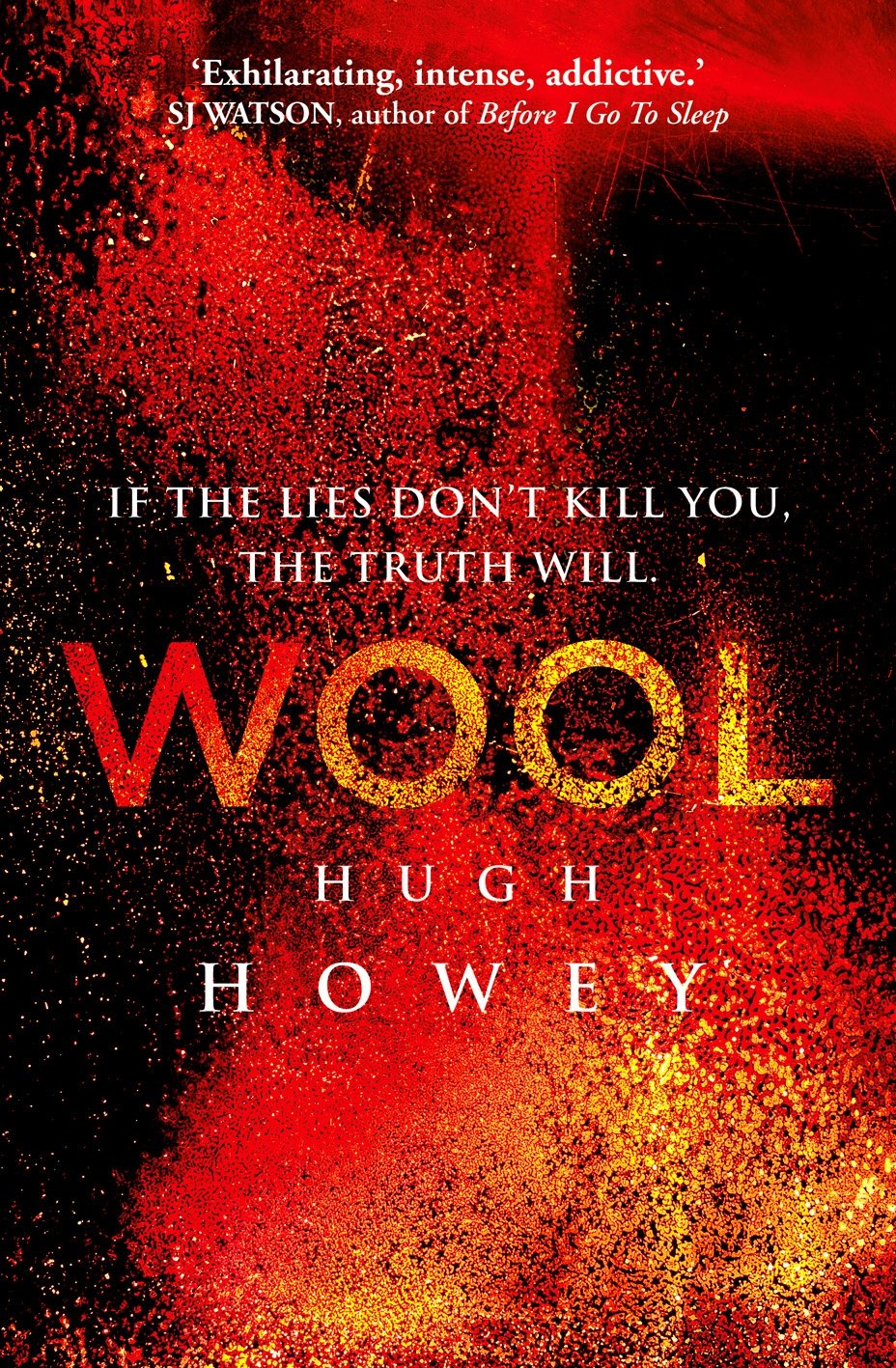
So, take Big Five publishing to start. Author Hugh Howey has done a great job of summarizing the arguments that Big Publishing, as currently configured, is trying to "make the horse faster" (primarily for their own stockholder benefit and not for authors or readers - see, for example Hachette's investor slides). Likewise, The Passive Voice blog further highlights these issues. And, lastly, in a post that the Hachette True Believers will discount, Amazon has actually laid out the situation clearly (and done the math for those who can't or refuse to do it) showing that cheaper ebooks sell more and generate more income for authors and publishers (and Amazon).

Libraries
In my own industry, libraries, the changes brought about by the interwebs and digital content creation are causing a similar "faster horse" conundrum for librarians and their customers (and, I'll add, their funders). In some ways, libraries have a bigger problem. The thing that the public most identifies (still) with libraries is books, but significant numbers of readers are moving away from print books, publishers maintain a deathgrip (broadly speaking) on ebooks. To whit, see the OCLC report:
"Library brand = books. Seventy-five percent (75%) of information consumers—across all ages—believe that libraries equal books. And that brand association is growing stronger." (Tipping Point, 2014, p.91). 
The Tipping Point report goes on in great detail on how to address some of these issues, but many of those steps are not "a faster horse" but radical rethinking of core values.

And speaking of core values, I'll also mention equally valuable OCLC report, Reordering Ranganathan: Shifting User Behaviors, Shifting Priorities. Here, the authors, Connaway and Faniel, point out that the core value of librarianship as expressed by Ranganathan in 1931 still hold value, but are in need of not just reinterpretation, but also a reordering that puts "saving the time of the reader" at the top of the list.

So, while I'm at it, I should also add the third of the recent OCLC reports that summarized and recapitulated much of the recent thinking about why libraries need to avoid the siren call of the "faster horse" and look to new possibilities. That report is The Evolving Scholarly Record (Lavoie, et al., 2014)  which posits that the content of the scholarly record that libraries have done such a good job of capturing and stewarding is changing and that if libraries wish to remain essential agents in the cycle of scholarly communication, whole new areas of collecting, service, and organization will be needed.

So the question remains, do you sit back and give administrators and customers the faster horse, or vault forward to areas that will keep the profession thriving?


OCLC Reports Cited:


Friday, June 07, 2013

A Tale of Two Book Expo Americas: dazed reeling or reading relief?

2008-12-25-dscn7386
Center of the publishing universe (?)
Book Expo America just concluded the other day (June 1, 2013) and reading the media reports, helps to, well, clarify nothing about the state of "The World of Books."

From the NY Times, we get the story, "A Reading of Relief at Annual Book Show" which assures us that the Book World is in fine shape, that the evil ebooks are being beaten back, and that bookstores are on the rise.

Meanwhile, over at the Huffington Post, we're told: "The State of Books: BEA 2013 Shows Industry Still Reeling".

Each story has some truths of course, but overall, I believe that Michael Glitz's HuffPo piece is the more clear-eyed and fact based take on the annual publishing meeting. The Times Julie Bosman throws puffballs at  (mostly senior) publishing execs who help her paint the state of publishing as a glowing, rosy world.

Sadly, when Bosman turns to others for quotes, she talks to a librarian who makes the (IMHO) the cardinal error of conflating "print" and "publishing":
“When you work in a library, you constantly hear that print is dying, and then you come here and feel so much energy,” said Barbara Moralis, a librarian at Northampton Community College in Bethlehem, Pa., as she waited in a long line to meet the author Andrew Gross. “Publishing is not dead.”
2013.06.01-IMG_3820
Old School publishing
Well ... no, she's sorta right, more books than ever are published. Moreover, there are more good/great books being published outside the world of Big 5.5 publishing (and more less than good, lazy books being published by those same 5.5).

As I've noted elsewhere (here, and the related pieces), The problem with the Big 5.5 publishers is that they’re not making clear what the role of the publisher is in the ecosystem of editing, distribution, author development, and manufacture (print or e). Those four subjects have been locked in a vertically integrated stack for the last 150+ years and a spate of disruptive technologies (ebooks being only the last in the line) are breaking that stack up. Big 5.5 publishers are not showing (yet, or likely to) agility to meet the challenges of those disruptions.

2011.03.30-IMG_2031
The end of Civilisation (?)
Michael Levin (also writing in the HuffPo) is an author and businessman. His piece, "In New York, The Real Vanity Publishers Converge" cuts the publishing execs (and our poor librarian) no slack in his scathing take on the press coverage of BEA 13:
"So if the publishers' new business plan is to stick their heads like onions in the ground (another Yiddish curse) and hope that Amazon, tweeting, texting, smartphones, ebooks, and that new-fangled Internet the kids are so excited about all go away, then they better stock up on the ganja. That's because their whole industry, foolishly led and now downright delusional, is going up in smoke."

Monday, May 20, 2013

The Battle of the Books redux, eBooks vs pBooks and The Author's (Only True) Home is in the Brick and Mortar Bookstore (Part III)

Three shelves of books
Shelf space
To kick off this third installment, let's start with a quote from Neal Stephenson ...
The great serialized novelists of the 19th Century were like rock stars or movie stars. The printing press and the apparatus of publishing had given these creators a means to bypass traditional arbiters and gatekeepers of culture and connect directly to a mass audience. And the economics worked out such that they didn't need to land a commission or find a patron in order to put bread on the table. The creators of those novels were therefore able to have a connection with a mass audience and a livelihood fundamentally different from other types of artists. - Neal Stephenson in Some Remarks: Essays and Other Writing
... and then a little snippet from the Dean of St. Patrick's:
By this expedient, the public peace of libraries might certainly have been preserved if a new species of controversial books had not arisen of late years, instinct with a more malignant spirit, from the war above mentioned between the learned about the higher summit of Parnassus. - Jonathan Swift, The Battle of the Books
Print ain't dead yet
... esp. lithographs
I chose the Swift quote because we have a new battle of the books, but this time the Ancients are not Aristotle and Virgil and the Moderns are not Hobbes and Dryden. Rather, the combatants are print and electronic. As a frame of reference, let's look at a recent entrant in the "(print) books aren't dead" genre, a Salon piece (20 March 2013) entitled "Books aren’t dead yet Self-publishing fans and the tech-obsessed keep getting it wrong: Big authors want to be in print -- and bookstores" by Laura Miller.

I don't mean to single out Miller, as she is just one of many who go on at length to denigrate positive changes in the publishing and world of books with dubious facts and a misty-eyed view of one of the most cutthroat and un-business-like business this side of the music industry.

The piece focuses on a number of recent sensations (E.L. James, Hugh Howey [minor quibble, she mis-spell's Howey's name as "Howie"], Amanda Hocking) have moved on from ghetto of self-publishing to the Big 5.5. And though she does asterisk that with the move is often for good reasons (seven figure advances!) she never hits home the point that it is nearly always on the authors' terms (such as keeping all e-rights - see Hugh Howey in the Huffington Post on that topic). Miller's piece itself was a response to "Book Publishers Scramble to Rewrite Their Future" by Evan Hughes (in a 19 March 2013 article in WIRED).

So, let's unpack Miller's title a bit. First off, she doesn't really mean "books" aren't dead, she means PRINT books aren't dead. Print is, of course, a little bit vague of a term, encompassing as it does hardcover, paperback, mass-market paperback, etc., and yes, she is correct, PRINT books are not dead, and, because of the varied nature of "print" it will probably be hard to find that point in them when anyone can say "He's dead Jim."

Digging further into the title, Miller's says "big" authors want to be in print and in bookstores. Big is relevant too (as my Aussie friends would say, "about as long as a piece of string") and, true, of course, any author would want to be in a bookstore (or probably any place where they could find a reader, preferably a paying reader) for their hard work.

Let's look a little closer at these two topics: eBooks vs pBbooks and The Author's (Only True) Home is in the Brick and Mortar Bookstore.

Barnes and Noble
Enduring Works
EBOOKS VS PBOOKS
With just a little looseness with facts. Miller notes that "ebooks are 25% of market." The American Association of Publishers (AAP) -- which is hardly the cold, laser-eyed robotic proponent of all things "e" or "i" (see for instance their stance on the FASTR legislation) has the relevant statistics on that. In the most recent stats from the AAP (2012), adult fiction and non-fiction e-books are 28.5% of the total book market in that category. Feh, you say, she's just rounding down a bit. But if you do the math (not hard math), that's a mis-stating error of 12.28% -- that's not rounding, that's just wrong. (FYI the statistics from AAP report has been summarized by Galleycat here).

Moreover, in the same AAP report, the 28.5% is an increase over 2011 (when the share was 22.84%) of 36%. A market growth of 36% also calls into question Millers assertion that:
"But the early-adapter boom is showing signs of flagging and the growth of the e-book market appears to be leveling out. E-books are definitely here to stay, but it seems that many, many readers — a threefold majority, in fact — still prefer print." 
My hunch is that this "flagging" is based on the flattening curve of dedicated ereaders. The explosion in tablet sales (iPad, iPad Mini, Nexus and all their kindred Kindle Fires and Nooks) is where those ebooks are being read. So, yes, very roughly, three quarters of the book market are not ebooks, but that is a 24.78% increase in one year.

Carrion Comfort: Borders Books out of business sale
Bye bye Borders
Mass market paperbacks are going away, hardcovers are going away. When will trade paper and ebooks totally dominate the market and regulate the rest to the same quaint niche occupied by vinyl records? Because "past performance doesn't guarantee future returns", I won't trend line the 2011/12 numbers and say, oh, 2016 (which is what the trend line predicts) that ebooks completely dominate the market, but it will be sooner than many who claim "print will always be with us" might be comfortable with.

THE AUTHOR'S (ONLY TRUE) HOME IS IN THE BRICK AND MORTAR BOOKSTORE (and we don't mean that nasty Barnes and Noble!)
"Furthermore," Miller continues, "to switch to Amazon-style self-publishing would mean getting shut out of bookstores -- not a big deal for an author whose books weren't there to begin with, but a major loss for the likes of, say, Stephen King, who has always made his love of and gratitude toward booksellers well-known. Bookstores are where fans meet popular authors and get their books signed, cementing their devotion."

Well, yeah yeah yeah, Stephen King does love book stores, who doesn't? But how many of King's books are sold in the small and indie bookstore (which we do need more of, but with a radical refactoring) in those locations?

La Commedia (2013 style)
Dan Brown's Inferno @ Target
I had the privilege of having dinner recently with a noted author, one of those "name above the title" types with legions of fans waiting to scoop of the next work and add to the millions of books sold. As we discussed publishing and the book market, the author noted that 70% of sales were ebooks and that of the remaining 30% the vast majority were sold (no, not at 82 Charing Cross Road) but at Walmart, Target (and, I would guess but it wasn't said), airports.

This provides anecdotal back up to more figures from the AAP report, namely that hardcover sales are now 26.28% of the market (down 1.53% since 2011); and more significantly, mass-market paperbacks are now down to a touch over 9% (a decrease of 16%!). I should also note that the AAP report also counts audiobook downloads, which, in 2012 represented 2.43% of the market, not a format that makes the print book lovers dewy-eyed I'm guessing.

Note that all of the above is, again, adult fiction/non-fiction. To really get an idea of where the trend (which, again Miller says is "flagging") is to look at children and young adult (YA) books.

Ebooks are only 16.17% of the YA market now, but that number represents a 177% increase over 2011. 177%, that increase is coming from future book buyers. I might also add, that unlike in the adult books, the ebook growth didn't come from cannibalizing other formats (the only category that dropped in the C/YA stats was board books, down 6.61%, I'm not sure what to make of that number).

eBooks at ALA
eBooks for K-12
So, if we were doing a data smackdown between Miller and Evan Hughes, the AAP numbers, which are probably the best we can get from an industry that can be notoriously opaque in revealing market information, I think we need to give the win to Hughes.

Miller hides behind the "book sniffer" argument that the only true book is a print book; that the only place to buy a book is the quaint indie bookstore (in an swipe at Barnes & Noble, an example - the only remaining one perhaps -- of the  "relatively impersonal chain stores"); that the only true publisher is a multi-national corporation that will strictly dictate who gets published, how they get published, when they get published, author and readers be damned.

Authors and readers are rebooting their relationship. Amazon, SmashWords, and a few others are fostering this new relationship. As Gershwin could have said, "Writers gotta write, readers gotta read, I'm gonna love one book til I die ..." and yes, I mean the book, the perhaps Platonic notion of the book, be it print, pixels on a screen, or the wonder of e-ink.

See the earlier parts of this series:
END PART III
Barnes and Noble
20 - 30% Off

Friday, March 22, 2013

Some thoughts on trade publishing: Kelly Hand (@khwriter), and the virtuous circle (part II)


Kelly Hand's novel, The Au Pair Report is self-published and available on Amazon as well as SmashWords. Hand's novel, about the trials and tribulations of a Washington, DC au pair coordinator (with a dollop of dysfunctional family life thrown in) is a delightful book and a great read. It covers that area, a "little bit (two inches wide) of ivory" made famous by Jane Austen, but in this case it's not Austen's early 19th century England, but the gentrified/gentrifying areas of DC, Capitol Hill, and Upper Northwest. Narrated from perspective of the 30 something Liza Hart, au pair coordinator, mother of a toddler, and daughter of a bi-polar mother, there's some good insider stories of life in Washington as well as enough universal truths to make us all glad we are not au pairs with Host Families from Hell. 

Having met Hand at a party, I know that she had approached various publishers with The Au Pair Report with - sadly - no success and had turned to an option, self-publishing, that is both more respected and viable than in the past. Correction (See Hand's comment below). She had went directly to self-publishing after a previous project.

2008-07-06-dscn4792Now, Hand's charming novel is unlikely to give James Patterson (whose industrial style of writing was described in part I of this topic) a contest for the top of the charts, but is a strong entry in category of literary novel that, with the rare exception, ever strikes the fancy of a mass audience. I could easily find comparisons to (traditionally) published Washington authors Mary Kay Zuravleff (The Bowl is Already Broken and The Frequency of Souls) or Susan Richards Shreve (The Train Home). What made publishers turn down Hand's book? I'm sure there were many reasons, but by turning down this well-crafted book, the gate-keeping function of publishing was keeping a good book out of the hands of interested readers. 

What would a traditional publisher have offered Hand and Hugh Howey (discussed in Part I of this topic)? A few things come to mind:
  • Editing (well, certainly not needed in this case; my only quibble with Hand's work in the story editing was an overuse of pseudonyms for obviously real public figures that was just distracting)
  • Access to markets (certainly not the big non-bookstores; possibly the network of remaining independent bookstores; maybe Barnes and Noble); but then would the amount of print sales increase readership (and revenue for the author) in any significant ways?
  • Publicity (well, I doubt that a publisher would take out ads on the Washington Metro for Hand's book -- as they do for the Pattersons, Grishams, et al.); increasingly, publicity from publishers is just marketing to a pre-sold audience. Howey himself has fully taken advantage of social media and in creating his own publicity machine, builds excitement and audience for his work
And so, while we wait for the publishing industry to reboot, we can enjoy books such as written by Hand (pun intended).

Monday, March 11, 2013

Some thoughts on trade publishing: @HughHowey, and the virtuous circle (part I)


UPDATE (2013.03.11:20:19):
I have to insist that you all read Hugh Howey's "How WOOL Got A Unique Publishing Deal" on the HuffPost. This article neatly ties up a couple of threads in this post.

A few weeks ago, I read article in the United Airlines Hemispheres magazine (January 2013) about author James Patterson. He's not someone on my radar screen, but it was a fascinating article that highlighted so much of what's wrong with publishing (writ large). Now, I have nothing against James Patterson, and in fact, see that he's taken honest advantage of many of the larger failures of the industry.

Some facts from the article:
  • 1 in every 17 hardcover books sold in the US is by Patterson (or written in conjunction with his team of partners)
  • current publishing contract is for 3 years, $150 million, and calls for 17 books
What I wonder is how much work the publishers but into those books. The Patterson brand has a huge (obviously) built in audience; his team of collaborators are most likely top-notch and don't need to avail themselves of what the Big 5.5 (I'm at 5.5 since I don't think that the Penguin/Random House merger has been mutually digested) call "editing". One thing they offer, I would guess is access to the markets where hardcovers are sold, namely, Walmart, Target, grocery stores and other brick and mortar non-book stores. Also, outlets for paperbacks (including all the previous, plus airports, the dwindling number of small chain bookstores, independent bookstores, Barnes & Noble (online and brick and mortar), and, of course, Amazon.

I'd like to contrast Patterson's story with that of the authors of a couple of books I recently read. 

The first may be known to many of you. Hugh C. Howey is the author of a number of books, adult fiction and young adult. Most prominently, he is the creator of the Wool series of science fiction novels. The first, Wool: Knitting, was self-published as a short story/novella. The response from readers -- for this fairly unknown author -- was so strong and positive that he created four more installments in the Wool series (gathered together as the Wool: Omnibus Edition) as well as a trilogy of prequels (The Shift series) and to be completed with the Dust series which is just getting underway).

2012.05.03-IMG_2043I myself discovered the series when my ever-cool colleague @Bathlander tweeted about Howey and Wool. For a small investment, $.99 on Amazon, I picked up the first installment, was quickly hooked and purchased the omnibus edition. Finishing up the prequel series (with the first volume of the third series to be in the next few months), I was stunned by Howey's inventive creation of an entire world (short view: sometime in the future, humanity seems to be reduced to a small population living underground in a 150 story silo -- or are they?).

Howey's command of language and characterization raises his work beyond the potboiler style many feel pigeonholes SciFi as a lesser genre. In all aspects, Howey and the Wool volumes are as literary and inventive a world and show as strong a command of the possibilities of language as an acknowledged "literary master" such as Margaret Atwood shows in her speculative fiction (for example, The Handmaid's Tale or the sublime Oryx and Crake) or the "big three" of Arthur C. Clarke, Isaac Asimov, and Robert Heinlein or the brilliant, but sometimes dated/period work of Ray Bradbury and Philip K. Dick.

So, as a self-published author Howey has not only achieved success in the world of ebooks, but the Wool series has been picked up by Simon & Shuster for print distribution and thus he joins the small, but growing world of authors who have created their own success and then had that success validated by the publishing establishment.

A particularly interesting aspect of Howey's work is that the world he has created has inspired a cadre of "fan fiction" building on his work. "FanFic" can be a mixed bag (for anyone who's read it) ranging from good to awful. Howey encourages (as all smart and unthreatened writers should) his readers in this pursuit. Howey  however, has taken it to a new level. On a recent blog post, Howey recounts how on encountering "The Runner" by WJ Davies, he not only encouraged the Davies in his work, but, convinced of the quality, implored him to actually sell the work. I picked up "The Runner" also (while waiting for the third volume of the Shift series to appear) and I would concur with Howey's take on the quality of the work (but also note that it is not up to that of Howey's).

Now here is a truly virtuous circle that is an exemplum for the publishing industry for the 21st century. Author, reader, reader/author all benefiting both creatively, and, in this case (which is of course not typical), financially.

END PART I

Continued it:

Saturday, April 30, 2011

Velocity of Change

Velocity by martin_kalfatovic
Velocity, a photo by martin_kalfatovic on Flickr.
Velocity is the measurement of the rate and direction of change. To measure velocity, you need to know both the magnitude and direction if you want to assign a value.

The current report on e-books from the Book Industry Study Group (BISG), released on 28 April 2011 has a lot of interesting information that can help to measure the "velocity of change" in the book industry as it relates to epublishing. BISG gives us a number of measurements on the magnitude (increased sales, higher percentage of readers) and direction (upwards). Taken together, I think it's safe to say that the velocity of change (in the ebook field) is rapidly increasing.

I'll note:

  • 13% of print book buyers have downloaded an e-book
  • 66% of respondents have moved mostly to e-books
  • book sales have INCREASED in the past six months


A quote from Scott Lubeck (BISG Executive Director):
"This is a market in fast motion and identifying trends early is the key to gaining a competitive edge," said Scott Lubeck, BISG's Executive Director. "This on-going BISG baseline study of consumer behavior toward e-books and e-book reading devices is essential to understanding both the velocity of change and its significance to every stakeholder in the book industry."

Friday, April 22, 2011

Louise Miles of Freshwater Bio. Association at BioOne meeting

Do It Yourself: A Small Society’s Experience Publishing with Open Journal Systems by Louise Miles, Editorial Manager, Freshwater Biological Association, UK

Overview of what the FBA is and how they're using OJS (Open Journal Systems) for publishing.

FBA is based on Lake Windermere in the UK Lake District; founded in 1929, registered charity since 1966. Mission is to advance freshwater science and encourage as many people as possible to manage water resources.

Have been publishing for over 75 years; for researchers, students and enthusiasts. Science series, occasional series, and special series (reference and proceedings). "Freshwater Reviews" begun in 2008, joined BioOne in 2010.A new titles, "Inland Waters" launched just this year, joint effort of FBA and International Society of Limnology.

Open Source vs. Out-source
- Open source pros: maximum control, adaptable, can be cost-effective; cons: expensive, time consuming, susceptible to loss of expertise
- Out-source pros: efficients, no need for specialist staff, bug buying power, marketing; cons: limited financial return, tie-in periods, loss of control, contractual restrictions- Half-way house option (e.g. BioOne): offers benefits that are the best of both of the above.

Open Journal Systems (OJS)
- used by 7,500+ journal titles
- highly customizable
- open source and free- has subscription management tools, but you should look into all options and be prepared to stick to what you've chose for a while
- does all the managment of the backend systems related to article submission

Outlined the benefits of BioOne for organizations like the FBA.

Keven Meinershagen at BioOne meeting talking about mobile and scholarly publishing

The Mobile Mutation: Examining the Evolution and Current State of Mobile Content Delivery by Kevan Meinershagen, Technical Services Manager, Allen Press

Fun and entertaining presentation on mobile things.

Overview of the genesis of mobile technology. Notes that cell phones started to become computers with the advent of SMS (text messaging). There are more cell phones in the US than there are households with televisions. Most people will access the "internet" via mobile devices by 2014.

So, should be clear now that mobile is the future, even if not the present, so, how should content creators and deliverers work in that world?

Worries:
- variety of devices on the market, not just different phones, but cars and other things
- screen sizes (vary greatly, differnt resolutions and aspect ratios)
- product lifecycle is amazingly fast
- flux in the OS market
- how to you implement location-based IP restrictions on devices that are inherently not based on location?

Impact for scholarly publishers:
- density of information on mobile is a problem (can you read a long paper on mobile?)
- most mobile use is for social activities

Scholarly publishing strategies:
- mobile optimized version of the full site
- use mobile for discover and social tools
- use different apps for specific services

Good presentation on European Journal of Taxonomy at the BioOne meeting

European Journal of Taxonomy: A Model for Collaborative Publication by Laurence Bénichou, Publications Manager and Deputy Head, Scientific Publications, Muséum national d’Histoire naturelle, Paris and Michèle Ballinger, Editorial Manager, Scientific Publications, Muséum national d’Histoire naturelle, Paris.

Overview of how the EJT was started and organizations involved.

MNHN have about 368K printed works; 68 million scientific specimens; world's largest herbarium; 1,880 employees; 2 million visitors a year; 350 students in a degree granting program. Publishes both monographs and journals. Most publishing occurs in the areas of speciality of the museum.

EJT grew out of the EDIT project (European Distributed Institute of Taxonomy). Member institutions already either publish or host the publication of many journals.

Description of how the publication and editorial process for EJT works. Does not differ in most ways from any typical scholarly not for profit science publication.

Scholary publishing costs and who pays:
- Research (institutions)
- Peer review (institutions)
- editing/layout/dissemination (commercial or institutional publisher)
- Customer/consumer (institutions through libraries or researcher affiliation)

3/4 costs are always footed by research institutions; 4/4 when the publishers is the institution.

Problems with moving to electronic only:
- nomenclature rules about name publication
- library exchange programs
- long term preservation of electronic publications
- lack of resources and technical staff

Who would benefit from the establishment of EJT?
- small journals w/out impact factor
- journals with high impact factors that can't publish all qualified papers
- journals commercially outsourced that have lost editorial control (in attempt to increase the impact factor)

EJT launched to address all these issues.

EJT task group formed to create a joint journal from 7 institutions (Belgium, France, UK, Spain, and Denmark)

EJT is a fully electronic publication with fast track publication in descriptive taxonomy; global focus by based in Europe. Uses XML for efficient data exchange. Makes content available in multiple formats and with extractable data elements for repurposing by various other 3rd parties (e.g. EOL, BHL, ZooBank, etc.)

Benefits of EJT:
- users get easy access to content
- authors have better visibility
- taxonomic field gets increased visibility
- publishers have the benefit of showing expertise, importance of mission, etc.

Key aspects of EJT:
- Free OA where neither the authorr or reader pays
- empowers publishing staff
- sets up a cross-institutional strategy at the European level

Mark Kurtz, BioOne on the topic of new models for Open Access publishing

The Lighthouse in Scholarly Publishing:
Exploring a New Model for Open Access Sustainability
Mark Kurtz, Director of Business Development, BioOne

Excellent philosophical discussion about the nature of "knowledge as a public good." Notes below do not give Mark's erudite presentation justice.

Some thoughts:
- knowledge if non-rivalrous in consumption (in the abstract sense)
- is it non-excludable (practically impossible to limit consumption to certain person)? In the abstract sense, yes it is; but when it is "encoded" (placed in books, journals, etc.), no it is not.

Most of the people in the room would probably agree that scholarly communication is a public good (if only we could work out the economic model).

"He who lights his taper at mine does not diminish mine" T. Jefferson

But how do we pay for the tapers? So how do we define the problematic? In scholarly communication it is the "Free rider" problem. Why should I pay for something if someone else is?

Solutions that have been tried:
- selective incentives (exclusive benefits), value added services (positive) and nuisance notices (negative)
- Compelling payment (taxation)
- Assurance contracts (members pledge to contribute to a collective good, if the threshold is met, the service is provided, if not, nothing happens). Let's look at the history of subscriptions (which are a form of assurance contracts); 17th century England found the patronage method of publication failing and the solicited subscription began (John Minsheau, Guide into Tongues, 1617 first known subscribed book). Printed subscriber lists add in a form of value added service.

Did 17th century subscriptions provide public goods? No, they provided a "club good"
- non-rivalrous? Yes
- Non-excludable No
- These are termed "club goods" (provide a public good to a small group of people)

Modern nonprofit subscription model is more like a club good than the commercial subscription model.

For commercial publishers, the subscription model is a totally different type of model that is a value-optimized pricing strategy as opposed to a product-cost model.

How can nonprofit publishing achieve something greater than what has been done (e.g. by BioOne) and should they try?
The Lighthouse Model
- archetypal pure public good
- social value
- non-rivalrous and non-excludable
- free-rider not a problem since impossible to monetize
- require government intervention to fund
- only government can truly fund public goods

But what if they're not?
- Economist Ronald Coase gave an alternate example from England where shipping companies, and NGO's formed to build lighthouses
- allowed free riders, but through the pooling of resources by some parties who really needed them

The Lighthouse model for scholarly publishing
- BioOne proposes testing the Coasian solution to BioOne's OA collection
- annually, a group of stakeholders would decide how much content to provide and how much it would cost to provide this information
- the OA sustanability surcharge would equitabily distributed among suscribers to BioOne.1 and BioOne.2, but not to non-subscribeers

How would this work?
- 2% surcharge on invoiced accounts
- add an $85/institution surcharge with a maximum off $500
- revenue would go into a restrcted fund used only for OA publishing

Caveats and Marginalia
- this is not THE solution to OA publishing
- might prove a scalable model for the BioOne community
- even failure of the test would have value
- successful test might have wider implications
- it's an admittedly quirky "third way"

Questions and Feedback
Question: will there be an opt out option?
Answer: No, that would be too complicated

Question: any differences for consortia or country-wide deals?
Answer: Consortia, no, it scales there; but for the large deals, it will have to be done differently

Question: We're seeing a decline in memberships to societies since they can get journal content via libraries; will this model further impact society membership?
Answer: Big question and problem. Most BioOne use still comes through the academe. End-users are increasingly unaware of the concepts of "journal", aggragator (Ebscohost, etc.) or even library. All they know is author and article. This is the bigger issue and problem for societies.

Question: Will this make for more BioOne OA content?
Answer: Yes, there will be some increased content.

Question: What percentage of BioOne subscrptions come from state funded consortia?
Answer: Hard question to answer because of many variables

James Mullins, Dean of Libraries at Purdue on libraries and presses

2010-06-04-IMG_8090 by martin_kalfatovic
2010-06-04-IMG_8090, a photo by martin_kalfatovic on Flickr.
Confronting Old Assumptions to Assume New Roles: Physical and Operational Integration of the Press and Libraries at Purdue University by Dr. James Mullins, Dean of Libraries and Professor, Purdue University

My notes from his talk.


UPresses and Uni Libraries have always had a symbiotic relationship; co-existed in academe unaware of challenges each other faced; grudgingly realized their dependencies; often unware of how the other functions.

Number of US UP presses as increased steadily since the 1860s (Cornell UP first; JHU the first major one), but leveled off at about 87/88 in the 1980s and has stayed the same since then. Big explosion of presses in the 1960s. UPresses are currently re-aligning to focus more on publishing university generated content and more collaboration with libraries.

See "Imagining a University Press System to Support Scholarship in the Digital Age" by Clifford Lynch in Journal of Electronic Publishing. Volume 13, Issue 2, Fall 2010. http://bit.ly/gvAs6w

Gave a case study of Purdue University. Library: increasingly centralized; 36 libraries in 1960s; down to 12 in 2011; hope to be down to 5 in a few years.

Press: founded in 1960 and reported to dean of graduate school; 1990s, changed reporting to U librarian. Moved Press to the central campus; services all covered by library budget; shared business office; all titles available electronically; 40% of authors from Purdue; mostly open access journals.

Used three strategies: spatial (good space on campus), governance (editorial andd advisory board drawn from university), financial and staffing (integrating into administration of the library), to fully integrate the press with the mission of the university.


Revised the editorial board to reflect the university (previously heavy on liberal arts, not a strength of Purdue), now more representative of the university. Included the Purdue CIO; early discussions had Press moving under CIO since things were going electronicaly; argument that press was  more closely aligned to libraries than technology won out.

Established a managment advisory board of both Purdue faculty as well as outsiders from other publishing and professional associations.

Changes from 2006/07 to 2010/11: Libraries STOPPED chargebacks to press for IT and legal services in 2010/11 as it was integrated into library. Increased editorial staff from 1 to 3. Allocated $50K to new press editor as "venture capital" to make experimental changes.

Press now has no overhead (covered by library budget); sales income only needs to cover publishing costs (print and distribution). Raised nearly $1 million in external fundding for press.

Opportunities include new forms of publication enabled by combining the skills and resources of press and llibrary

Have developed new systems and services that are joint library/press initiatives (Jint Transportation Research Program & Human Animal Bonding Research) that take advantage of skill sets on both sides to build new things. Have also attracted external funding sources.

Developing a strategic plan for 2011-2016; planning process treats the press and library on an equal basis.

Challenges include question of undermining the press brand by having too much Purdue authorship; where does "mission" stop and "cost recovery" begin? What is the collection development policy of the press, how to focus service and resources? And others as of yet unknown?

Question about ebooks:
Answer: Look at them as the savior of the scholarly publishing industry. Students are not using scholarly books because access is too difficult; using databases is easier and more rewarding. Content in books is inaccessible. So, by having electronic books, that content will be more findable and make them more used.

Question about library space, what happens to all the library spaces as you move to virtual collections:
Answer: Purdue UG survey: libraries are now perceived as a total space that is both the virttual and physical. At Purdue, now moving collections to less central locations; new library spaces have almost no collections and are learning spaces, meeting places, teaching adjunct spaces. Working closely with deans of schools so that library is seen as a partner in these projects. Mullins feels this is a return to how libraries were in the 1930s and earlier when libraries were great spaces for working and not "supermarkets" of books.

Question about where does the LIBRARIAN fit into this view?
Answer: Purdue filling 8 new library positions (all in data managment, e-science, and data curation); at Purdue they are faculty and expected to work alongside faculty; library staff directly embedded in all programs; library staff participated in generating $8 million in research grants. Physical libraries are almost totaly run by non-professional staff; librarians work primarily with data managment issues and scholarly publishing.

Question about how consolidation of library spaces worked.
Answer: "Stuck" with large legacy buildings that don't really work. Branch library staff had less work when most journal collections went to electronic. Moved technical services work to former branch staff

Question about subventions in press activities; how common is the Purdue model of library doing the subvention of press activities? (e.g. not relying on revenue for press costs)
Answer: Very unusual model at this time; not many similar models at this time.

Monday, March 14, 2011

How to start worrying and hate New Media

2010-06-24-IMG_8543So, I was reading James Fallow's Learning to Love the (Shallow, Divisive, Unreliable) New Media in The Atlantic (FYI, probably the best long-form dig-deep media outlet - notice I didn't say "magazine" - out there) and was struck by the opening which referenced a Ted Koppel Washington Post piece that was basically about the "good old days of broadcast media." Fallow's then goes on for a number of pages that basically condemns "new media" for its pandering to "trendy" news and creation of "news".

Now of course we all know that Koppel rode the gravy train of needless sensationalism with his own "America Held Hostage" TV show (which eventually turned into "Nightline").

Fallows eventually gets around to mentioning this - many many pages later, but by that time he's so discredited his thesis that I didn't care much anymore.

The article is worth reading, if for nothing else, the counter arguments that it will help you build.

Nota Bene: in the same issue, you'll find an excellent piece by Newton Minow (yes, he of The Skipper's SS Minnow from Gilligan's Island fame), "A Vaster Wasteland" which tells why our new media have trumped the old media that brought us the "vast wasteland":
Our first must be to expand freedom, in order to strengthen editorial independence in news and information. Freedom of thought is the foundation of our national character, and at its best the Internet represents the full flowering of that freedom. The Internet itself is the result of an open system that has encouraged technological innovation and creative energy we could never have dreamed of—and, happily, the FCC, under its talented chairman, Julius Genachowski, is leading public-interest advocates and industry groups to both meet the practical needs and uphold the democratic values at stake. 

Monday, January 31, 2011

Ebooks sales surpass paperback on Amazon


Kindle
Originally uploaded by martin_kalfatovic
As reported on TechCrunch

Has the pixel to print tipping point been reached? Last July we reported that Amazon’s Kindle eReader books had surpassed hardcover books in terms of sales, selling 143 Kindle books for every 100 hardcover books. Now that lead also holds for paperbacks as well with 115 Kindle books being sold for every hundred paperbacks.


The statistic for hardcover books itself has doubled, with three times as many Kindle books as sold as paperbacks in 2010. Free Kindle books are excluded from this number or it would be much higher.

The Kindle store now has over 810,000 books, with over 670,000 of them priced at $9.99 or less. This number includes 107 New York Times bestselllers.

Because of its aggressive focus on digital Amazon had its first ever $10 billion quarter. Amazon CEO Jeff Bezos predicted this digital to print milestone would happen in the second quarter of this year, so it has come ahead of expectations but, in any case, was inevitable.

Thursday, December 02, 2010

QotD: "The move from printed books to e-books has accelerated, and seems unlikely to stop anytime soon"

Great quote for the always interesting Scholarly Kitchen blog, so good I need to repeat it:
"The move from printed books to e-books has accelerated, and seems unlikely to stop anytime soon." - Kent Anderson
In a discussion of the move by the NY Times to add a "e-book" category to the best seller lists.

Another takeaway:
The Association of American Publishers reported recently that book sales were down 21% in September 2010 compared to a year before. Overall, book sales are up 3.8% for 2010, but this number keeps whittling lower as the year goes on. Most of the overall growth has come from sale of e-books, which were up 158% for September (2010 vs. 2009) and a total of 188% for 2010 overall compared to the year before.
So, for those of you in libraryland, think about this ... you need to start dealing with e-books, you need to stop thinking about growth space for shelving print publications. You need to start hiring staff that can handle the tasks that will come with information in digital only format. When push comes to crunch, is it libraries or IT departments that will manage scholarly information? Don't ponder this too long.

Read it all.

Monday, October 04, 2010

QotD: We're all gonna die one day anyway and we'll lose all our stuff


2010-08-22-IMG_9455
Originally uploaded by martin_kalfatovic
Great quote from Tim O'Reilly (thanks to Gluejar @ Go to Hellman) for reporting on this:
To me, you gotta care about something more than preserving your business. Because, obviously companies have made these types of transitions, and this is just my personal response. We're all gonna die one day anyway and we'll lose all our stuff. So don't worry too much about it. Just do something that lights you up, and lights up your customers, and lights up the world and scale to that. Because what's going to happen is people who are lit up by the future are going to be pursuing that future, and the people who hold onto the past are going to hold on too long. - Tim O'Reilly (interview, 29 Sep 2010)