Showing posts with label Smithsonian. Show all posts

Monday, November 13, 2017

Bracing for Impact: Smithsonian Digitization Fair 2017

Bracing for Impact: Smithsonian Digitization Fair 2017

The Smithsonian Institution's Digitization Program Office organized the Institution's Digitization Fair on 18-19 October 2017 in the S. Dillon Ripley Center in Washington, DC. The theme of this year's fair was "Bracing For Impact". The fair explored how digitized collections can affect lives in significant and measurable ways by:

  • Showcasing examples where digitized collections have initiated creativity, innovation and change in some area of human endeavor;
  • Exploring ways museums, archives and libraries can maximize the impact of their digitized collections; and
  • Investigating ways museums, archives and libraries can measure the impact of their digitized collections

I participated on day two during the panel, Facilitating Impact: Open Access. My talk, “'The Gift of Time': Impact through Open: The Biodiversity Heritage Library" spoke to the importance of providing open access to scientific and cultural property when not impeded by legitimate legal or other concerns.


Dr. David Skorton, Secretary, Smithsonian Institution, provided a welcome to participants and attendees and was followed by an introduction by Diane Zorich, Director, Digitization Program Office. The first day opened with a keynote by Brian Mathews, Vice President, Platform Engineering, Autodesk, Inc. and was followed by a responder panel composed of:

  • Moderator: Victoria Portway, Head of Digital Experiences, National Air & Space Museum, Smithsonian Institution
  • Desi Gonzalez, Manager of Digital Engagement, The Andy Warhol Museum
  • John Hessler, Curator of the Jay I. Kislak Collection of the Archaeology & History of the Early Americas, Geography and Map Division, Library of Congress

The remainder of the first day was comprised of the following panels:

Panel One: Showcasing Impact in Art, Education and Research

  • Moderator: Effie Kapsalis, Chief of Content and Communications Strategy, Smithsonian Institution Archives
  • Corey Kilbane, Chemistry Teacher and Science Innovation Coach, William Penn Charter School
  • Alan Newman, Chief, Digital Media, National Gallery of Art
  • Michael Weinberg, General Counsel, Shapeways


Panel Two: Showcasing Impact with Emerging Platforms

  • Moderator: Elizabeth Neely, Senior Director Integrated Content, American Alliance of Museums
  • Paul Frandsen, Research Data Scientist, Biodiversity, Office of the Chief Information Officer, Smithsonian Institution
  • Meghan McCarthy, Project Lead, NIH 3D Print Exchange
  • Rolf Mueller, Associate Professor, Department of Mechanical Engineering, Virginia Tech


Panel Three: Manufacturing Impact

  • Moderator: Shannon Perich, Curator, Photographs, National Museum of American History, Smithsonian Institution
  • Josh Hadro, Deputy Director, New York Public Library Labs
  • Leah Weinryb Grohsgal, Senior Program Officer and National Digital Newspaper Program Coordinator, National Endowment for the Humanities
  • Gerald "Stinger" Guala, Branch Chief Eco-Science Synthesis, Director Integrated Taxonomic Information System, United States Geological Survey

Panel Four: Measuring Impact

  • Moderator: Stephanie Norby, Director, Smithsonian Center for Learning and Digital Access
  • Ricardo Punzalan, Assistant Professor, College of Information Studies, University of Maryland
  • Madlyn Runburg, Director of Education Initiatives, Natural History Museum of Utah
  • Harry Verwayen, Deputy Director, Europeana

The day closed with a Closing Keynote Address: Open Access Oceans: Framing Stories for Impact by Erika Woolsey, CEO & Co-Founder, The Hydrous

The second day started with a keynote by Dr. Ian Owens, Director of Science, Natural History Museum, London. Dr. Owens, in his talk, "The New Enlightenment," spoke on the importance of natural history collections and how digitization will assist and change the ways collections are used. He also pointed out the importance of the Biodiversity Heritage Library as a component of these collections. A responder panel built on Owens talk:

  • Moderator: Maureen Kearney,  Associate Director for Science, National Museum of Natural History, Smithsonian Institution
  • Catherine Eagleton, Associate Director for Curatorial Affairs, National Museum of American History, Smithsonian Institution
  • Scott Miller, Deputy Under Secretary for Collections & Interdisciplinary Support, Smithsonian Institution

This was followed by panels on the following topics:

Panel One: Showcasing Impact

  • Moderator: Mark Kornmann, Director, Office of Public Engagement, National Air & Space Museum, Smithsonian Institution
  • Laura Coyle, Head of Cataloging and Digitization, National Museum of African American History & Culture, Smithsonian Institution
  • Karen Lemmey, Curator of Sculpture, Smithsonian American Art Museum, Smithsonian Institution
  • Stephanie Norby, Director, Smithsonian Center for Learning and Digital Access
  • Matilda McQuaid, Museum Curator, Textiles, Cooper Hewitt Smithsonian Design Museum

Panel Two: Facilitating Impact: Open Access

  • Moderator: Anne Collins Goodyear, Co-Director, Bowdoin College Museum of Art
  • Rachel Allen, Deputy Director, Smithsonian American Art Museum, Smithsonian Institution
  • Lauryn Guttenplan, Associate General Counsel, Smithsonian Institution
  • Martin Kalfatovic, Associate Director, Smithsonian Libraries; Program Director Biodiversity Heritage Library, Smithsonian Institution

Panel Three: Resourcing for Digitization Impact

  • Moderator: Al Horvath, Under Secretary for Finance and Administration, Smithsonian Institution
  • Meghan Ferriter, National Digital Initiatives, Library of Congress
  • Robert Horton, Asst. Director, Collections & Archives, National Museum of American History, Smithsonian Institution
  • Jaap Otte, Senior Gift Officer, Smithsonian Institution
  • William Tompkins, Director, National Collections Program, Smithsonian Institution

Friday, November 10, 2017

Smithsonian | Leibniz Association Meetings, October 2017

Smithsonian Secretary David Skorton (r) and 
Leibniz Association President Matthias Kleiner (l)
Nancy E. Gwinn and Martin R. Kalfatovic attended a two day meeting, "Aim, Scope, and Challenges of Research Museums: An exchange between the Smithsonian Institution and the Leibniz Association " on 30-31 October. Anne Evenhaugen also participated in the meetings as part of her Emerging Leadership Development Program. Organized by Scott Miller, Deputy Undersecretary for Collections and Interdisciplinary Support (DUSCIS), the meeting brought together a number of Smithsonian staff and representatives from a number of the 91 institutional members of the Leibniz Association. The Leibniz Association is a union of German non-university research institutes from various branches of study and has a number of similarities to the Smithsonian Institution.

The meeting opened with a discussion between Smithsonian Secretary David Skorton and
Leibniz Association President Matthias Kleiner. The two discussed areas of overlap, common goals, and areas of collaboration between the two organizations. The first session was "Understanding of Research Museums at Smithsonian and Leibniz". Participants introduced themselves and Scott Miller provided an overview of the Smithsonian while Sunhild Kleingärtner (German Maritime Museum) did the same for the Leibniz Association.

There followed a number of focus sessions:

Focus: Evaluation Systems and Metrics
  • Smithsonian Speakers: Martin Kalfatovic (Bibliometrics, SRO), Amy Marino (Metrics and dashboards, Smithsonian Profiles)
  • Leibniz: Britta Horstmann (Leibniz Head Office)
Stephanie Norby, Smithsonian Education
Focus: Collections 
  • Smithsonian Speakers: Bill Tompkins (collections space), Diane Zorich (mass digitization), Martin Kalfatovic (Biodiversity Heritage Library)
  • Leibniz: Christoph Häuser (Leibniz-MfN) (German national digitization program); Helmut Trischler (Leibniz-DM)
Focus: Exhibitions
  • Smithsonian Speakers: Rex Ellis (National Museum of African American History and Culture)
  • Leibniz: Ruth Schilling (Leibniz-DSM); Daniel Hess (Leibniz-GNM)
There followed a discussion: Discussion / Questions: What status does research have in your exhibitions? How do research and exhibitions interact? What social role and responsibility do museums have with regard to a culture of remembrance (Erinnerungskultur)?

Focus: Research Themes for Potential Collaboration 
  • Smithsonian speakers: Stephanie Norby and Carol O’Donnell (education), Bob Koestler and Paula DePriest (materials conservation)
  • Leibniz: Alexandra Busch (Leibniz-RGZM, interdisciplinary research, e.g., Educational Research, Biodiversity, Cultural Heritage as a Resource), Stefan Brüggerhoff (Leibniz-DBM, collection-based research, e.g. Material Conservation Research, Historical Authenticity)

Summary and Concluding Remarks
The meetings concluded with a session on looking at further collaborations and next steps. Smithsonian Provost John Davis joined the group for this portion of the discussion. There was a discussion about possible collaborative projects around the German+American experience. The planned exhibition research from SAAM around Alexander von Humboldt.

Other topics for further conversations included education, material conservation, audience metrics, interactions of collections and research, staff exchange (specifically on the technical, digitization, and administrative), funding and business models, initiate a Smithsonian/Leibniz communication platform

* * * * *

Leibniz Association participating organizations:
  • Leibniz Association Head Office and Central Staff
  • Leibniz Association Senate 
  • Federal Ministry of Education and Research
  • Ministry of Culture and Science of the State of North Rhine-Westphalia
  • Deutsche Forschungsgemeinschaft (DFG) 
  • Deutsches Museum, Munich
  • Museum für Naturkunde Berlin
  • Senckenberg Gesellschaft für Naturforschung
  • Zoological Research Museum
  • German Maritime Museum
  • ermanisches National Museum
  • Museum für Naturkunde
  • Römisch-Germanisches Zentralmuseum 
Alexandra Busch, Director for Research
Römisch-Germanisches Zentralmuseum
* * * * *

The Smithsonian Research Online and Biodiversity Heritage Library presentations are available here:

Thursday, December 10, 2015

The Smithsonian Institution: Diffusing Knowledge in Partnership with the @DPLA (presentation)

The Smithsonian Institution: Diffusing Knowledge in Partnership with the DPLA. Martin R. Kalfatovic. Digital Programs Advisory Committee, Smithsonian Institution, Washington, DC, 10 December 2015


Monday, August 10, 2015

Happy birthday, @Smithsonian Institution! Keep on "increasing and diffusing" for Americans and the world!

2014.02.28-IMG_9688
"On August 10, 1846, the United States Congress passed the legislation (9 Stat. 102) founding the Smithsonian Institution as an establishment dedicated to the "increase and diffusion of knowledge," and President James K. Polk signed it into law the same day. This legislation was the culmination of over a decade of debate within the Congress, and among the general public, over an unusual bequest. When the English chemist and mineralogist, James Smithson, died in 1829, he left a will stating that if his nephew and sole heir died without heirs, his estate should go to the United States “to found at Washington, under the name of the Smithsonian Institution, an establishment for the increase and diffusion of knowledge." Smithsonian Archives. General History

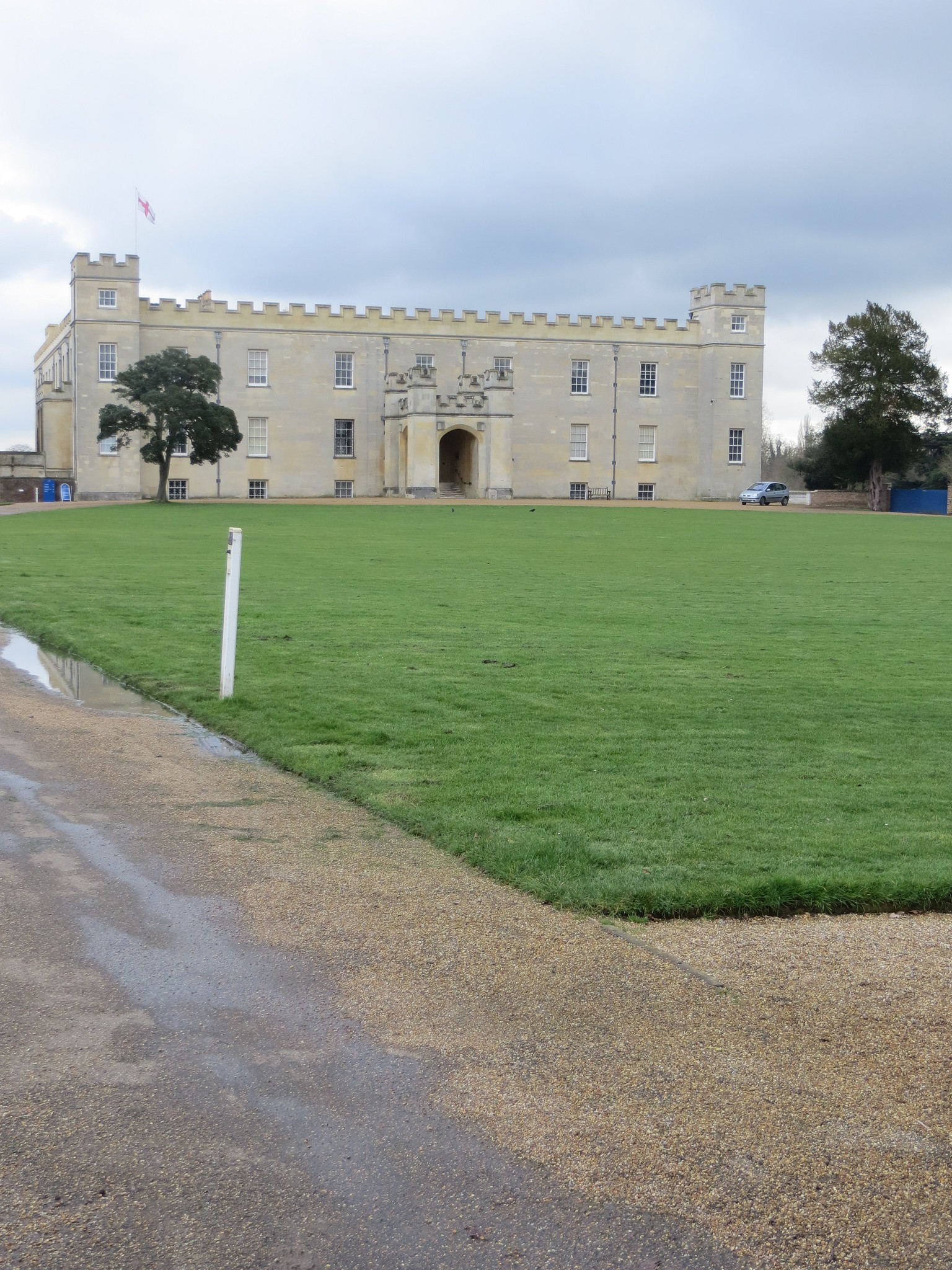
In case you were wondering, the building on the right is not the famed Castle of the Smithsonian in Washington, but rather Syon House in west London, one of the family homes of the Duke of Northumberland. Had the Duke acknowledged James Smithson, perhaps this is the building we'd associate him with instead of this one:


2013.03.10-IMG_0143

Monday, June 01, 2015

The Smithsonian's @NMNH Dodo, exhibited first at the Lewis & Clark Exposition, 1905

"The United States National Museum has recently purchased, for exhibition at the Lewis and Clark Centennial Exposition, the skeleton of a dodo, Didus ineptus. The specimen lacks the back part of the skull and the ribs, and the pelvis is imperfect behind. Some of the phalanges have been restored. As mounted, the height of the skeleton is 0.66 m. Beside this skeleton, the National Museum possesses a cast of the foot and of the dried head which are in the museum of Oxford University, and also a cast of the skull in the Royal Zoological Museum at Copenhagen (Nos. 16,954, 55, 57). By the aid of these casts and the excellent drawings published by Owen in the Transactions of the Zoological Society of London, it is anticipated that the skeleton can be completely restored without difficulty."
F. W. True. "Dodo Skeleton" in Smithsonian Miscellaneous Collections, Volume 47 (1905), Plate LXXVI, p. 17.

Recently (November 2014), the Smithsonian's National Museum of Natural History opened a new exhibition, "The Last American Dinosaurs: Discovering a Lost World"

Originally, the dodo skeleton was exhibited at the Lewis and Clark Centennial Exposition in Portland Oregon (which opened on this date in 1905). You can find information about the Smithsonian's exhibition there at Smithsonian Institution Archives collection.

Here's the collection record (you can search for "V 16856" here to find the record):

Catalog Number:USNM V 16856
Collection Name:Aves Indian Ocean
Kingdom:Animalia
Phylum:Chordata
Class:Aves
Order:Columbiformes
Family:Columbae
Common Name:Dodo
Scientific Name (As Filed):Raphus cucullatus (Linneaus)
Country:Mauritius
Geologic Age:
EraSystemSeriesStage
CenozoicRecent
Skeletal Morphology:Complete skull and skeleton
Specimen Count:1
Record Last Modified:12 Jan 2015 13:01:00

IMG_20150123_100259603IMG_20150123_100304720

Friday, December 12, 2014

@DukeU 's Erich Jarvis on "Shaking up the bird family tree" at @smithsonian Inst. for Biodiversity Genomics launch


@NMNH 's J Coddington on what we know about species, @Biodivlibrary key data point

At launch of Institute for Biodiversity Genomics

John Kress, @Smithsonian 's Interim Under Secretary for Science on launch of InsBiodivGenomics

Launch of the @Smithsonian 's Institute for Biodiversity Genomics

Pierre Comizzoli with opening remarks
I attended the launch of the Smithsonian's new Institute for Biodiversity Genomics (along with Gil Taylor, Julia Blase, and Kristen Bullard from Smithsonian Libraries).

The launch started with opening remarks from Pierre Comizzoli (Acting Director, Grand Challenges Consortium for Science).

That was followed by a fascinating talk by Erich Jarvis (Duke University), lead author on an important new article in Science on "Shaking Up the Bird Family Tree". 

John Kress (Interim Under Secretary for Science) have an introduction to the Smithsonian's work in genomics and talked about what the new institute would do (work with the Smithsonian's matchless collection of specimens and research scientists, collaborate with partners worldwide, and use the Smithsonian's convening power to bring together important thinkers in this area.

The launch concluded with a talk by Jonathan Coddington (Director, The Global Genome Initiative) on the importance of genomics in biodiversity. Nice to see the Biodiversity Heritage Library listed as a key data point in biodiversity data projects.

John Kress

Jonathan Coddington

Erich Jarvis 

Avian biodiversity

Monday, August 04, 2014

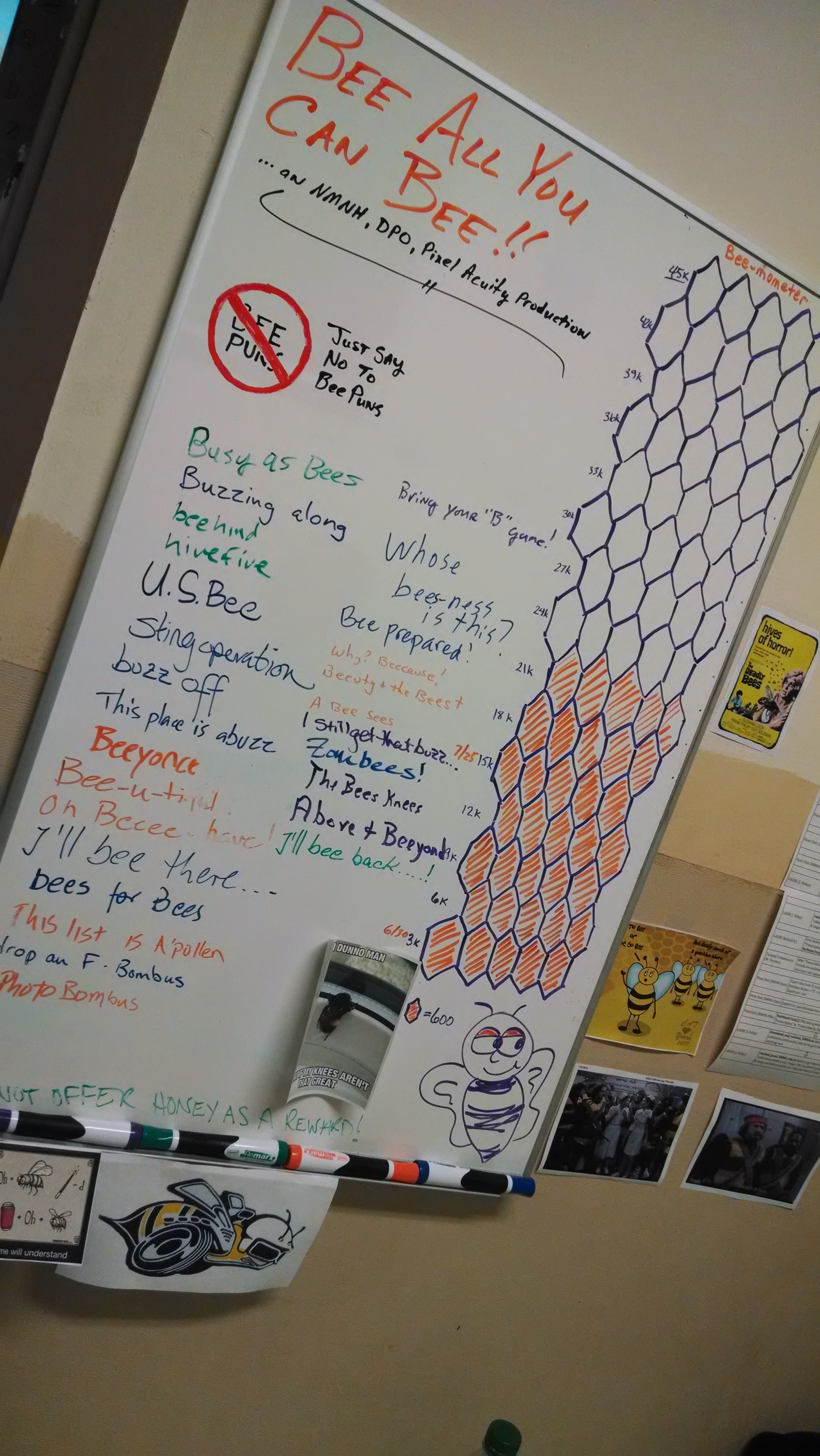
Buzzzzz! Bee digitization by the @SIxDIGI team at the Smithsonian's @NMNH #SIxRCPP

IMG_20140731_153455015.jpgI took a trip up to the 6th floor of the Smithsonian's National Museum of Natural History last week to take a look at the Digitization Program Office's rapid capture project for the honeybee collection of the museum. The team is making very good time on the project and what was going to just be a test project is on target to digitize all 46,000+ bees in the collection.

Below is Ken Rahaim showing how the bees are staged before getting digitized.

Here are a few snaps of the project in action.


IMG_20140731_152629786.jpgIMG_20140731_152759974_HDR.jpg