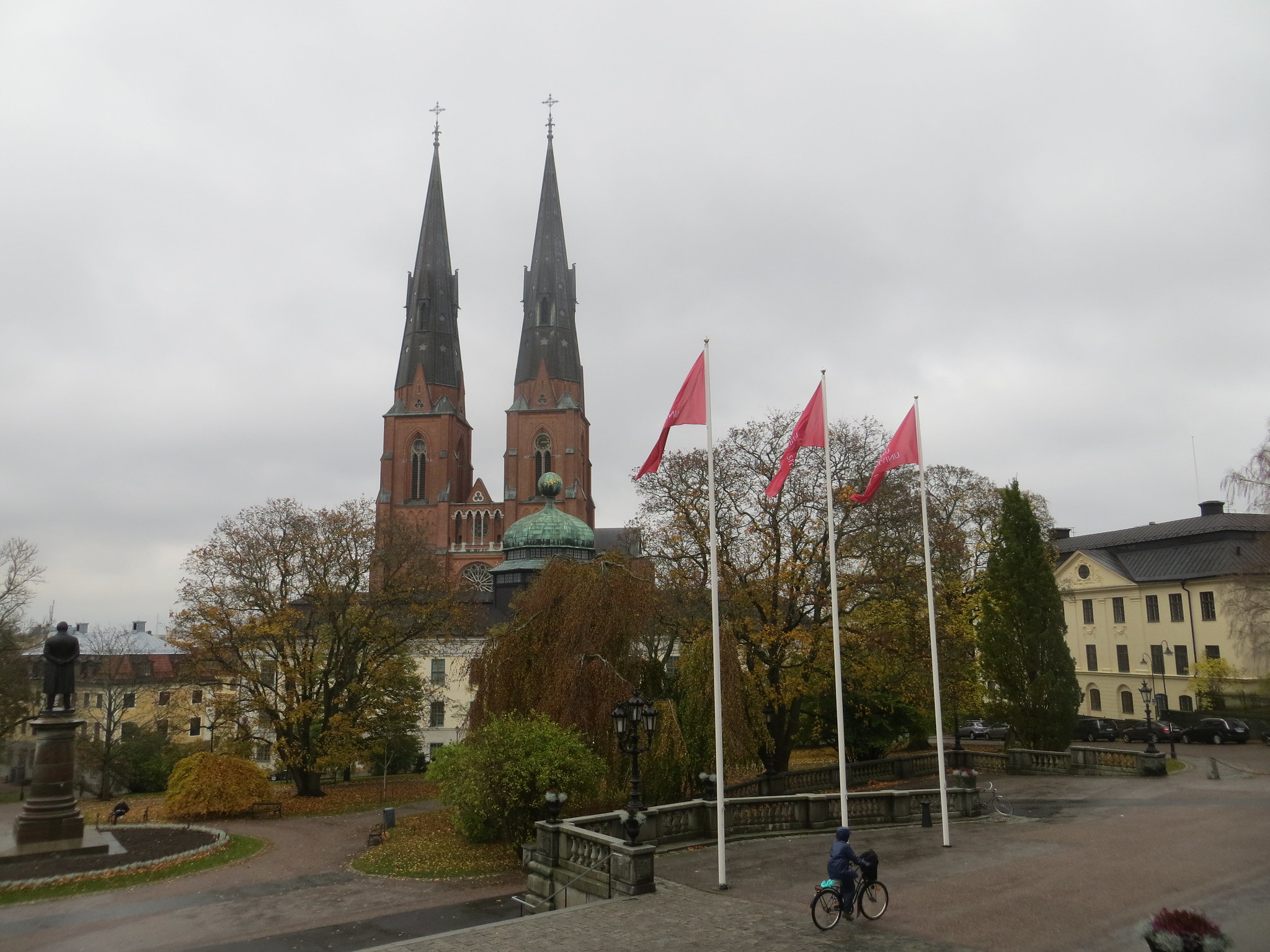
 "Linnaeus died on January 10, 1778, "aged seventy, seven months and seven days, with the nation to guard his good name." The remains of this celebrated man were interred at Upsala Cathedral, and the funeral procession was composed of members of the whole university, the pall being supported by sixteen doctors of physic, all of whom had been his pupils. A general mourning took place at Upsala, and the king, Gustavus III., ordered a medal to be struck expressive of the public loss, one side of which exhibits the bust of the great naturalist, with his name; the reverse shows Cybele in an attitude of grief, holding in her left hand a key, and surrounded by animals and plants." Through the Fields with Linnæus: A Chapter in Swedish History by Florence Cady (1887), Volume 2, p.370

Showing posts with label Uppsala. Show all posts
Showing posts with label Uppsala. Show all posts
Sunday, October 26, 2014
"Linnaeus died ... The remains of this celebrated man were interred at Upsala Cathedral" #Uppsala
"Linnaeus died on January 10, 1778, "aged seventy, seven months and seven days, with the nation to guard his good name." The remains of this celebrated man were interred at Upsala Cathedral, and the funeral procession was composed of members of the whole university, the pall being supported by sixteen doctors of physic, all of whom had been his pupils. A general mourning took place at Upsala, and the king, Gustavus III., ordered a medal to be struck expressive of the public loss, one side of which exhibits the bust of the great naturalist, with his name; the reverse shows Cybele in an attitude of grief, holding in her left hand a key, and surrounded by animals and plants." Through the Fields with Linnæus: A Chapter in Swedish History by Florence Cady (1887), Volume 2, p.370

QotD: "Though this garden would have had a very different aspect in Linnaeus's time, it is too small to have ever been a regular botanical garden" #Uppsala
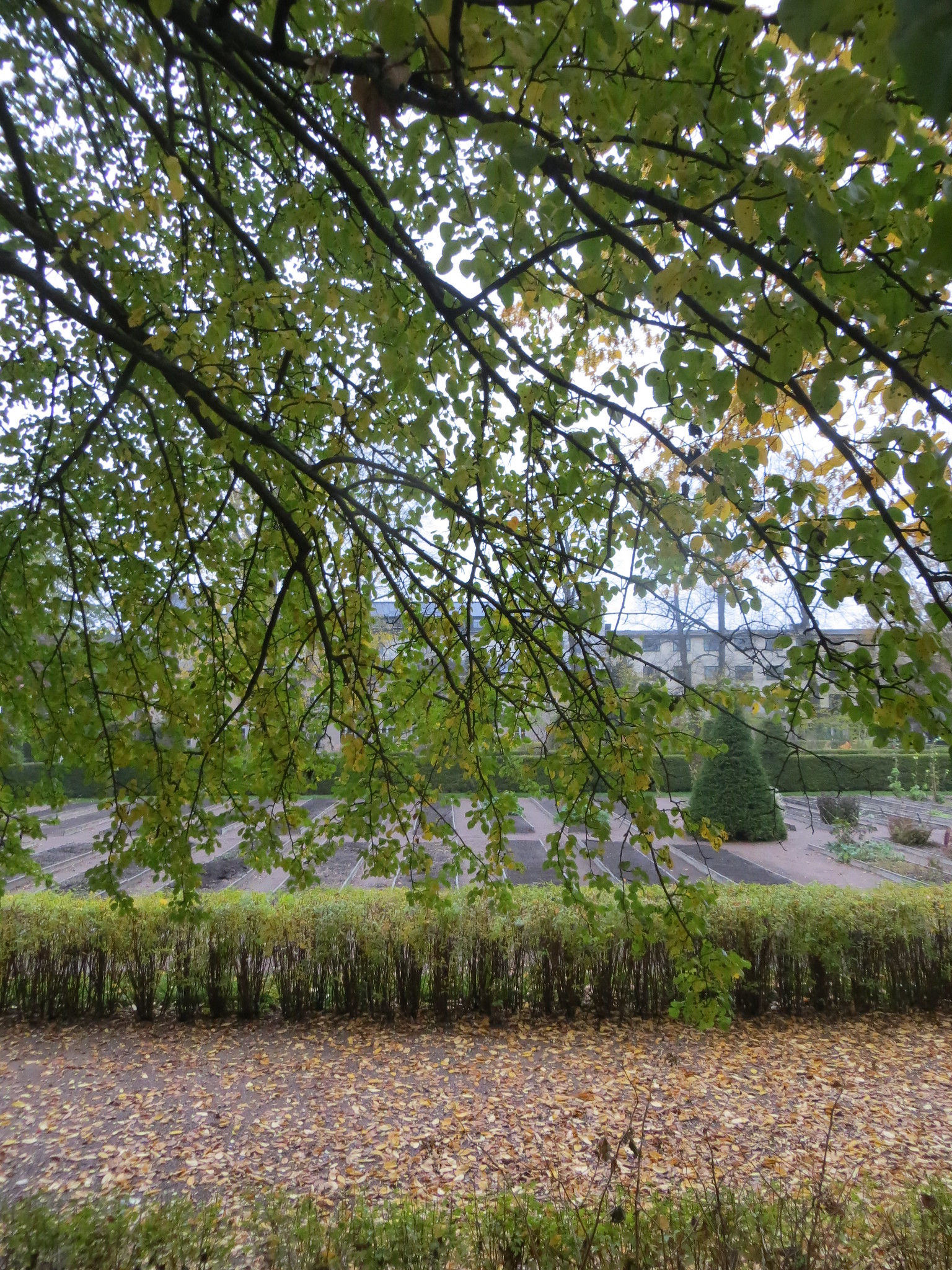 "The small enclosure by the house in the lower town, called Linne's house, on the other side of the river, which is here rendered almost stagnant by a series of locks and weirs, is part of the Linneanska Tradgarden, Linnaeus's botanical garden, which the guide-book says may conveniently be visited on the way to Gamla (old) Upsala. Truly it will not take long to inspect these grounds, for the private garden is merely a small oblong pleasure ground behind the house, with a grass-plot surrounded by a double row of cut lime trees. Though this garden would have had a very different aspect in Linnaeus's time, it is too small to have ever been a regular botanical garden." Through the Fields with Linnæus: A Chapter in Swedish History by Florence Cady (1887), Volume 2, p.155
Some of the weirs on the Fyris River in Uppsala ... they've now built some fish ladders around each of these small dams.

QotD: "The Swedish Government honoured Linnaeus highly, and built him a house at the entrance of the botanical garden" #Uppsala
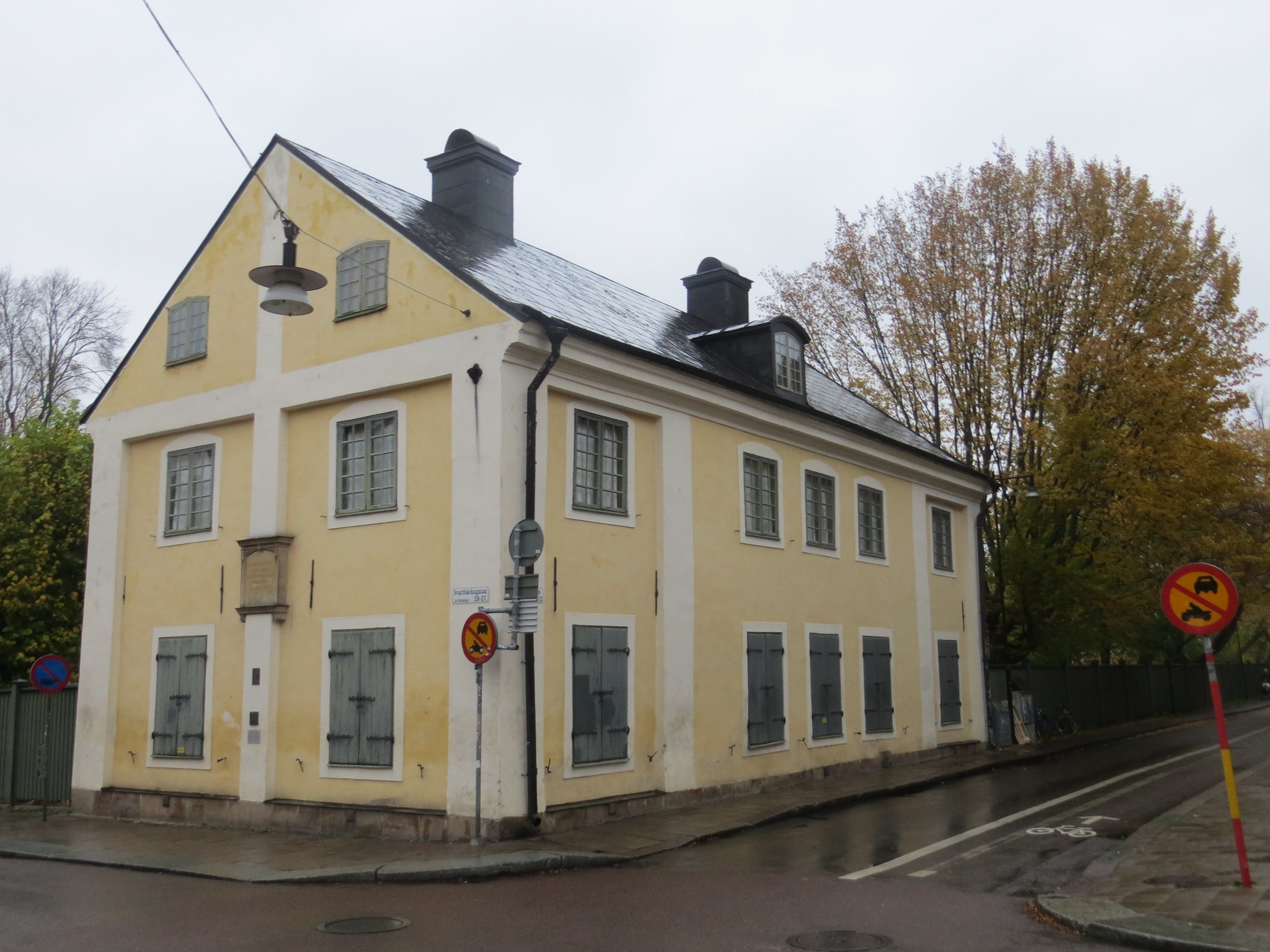 'The Swedish Government honoured Linnaeus highly, and built him a house at the entrance of the botanical garden, of which beautiful premises (the house and private garden) he took possession on July 18, 1743. This raises the question, Is this the plain small house at the corner of the Svartbacksgatan, No. 27, which tradition and a slab in the wall point out as the residence of Linnaeus at Upsala? or is this where he dwelt while the house that they call "beautiful" was in building? The low narrow windows of this small house could not have held many plants. These windows have been modernised, but one sees the original shallow brick arches still. The house has not been otherwise much altered since the time when Linnaeus lived here.'
Through the Fields with Linnæus: A Chapter in Swedish History by Florence Cady (1887), Volume 2, pp.153-54


Saturday, October 25, 2014
When in Sweden, eat pizza ... and falafel!
 |
| 60 Kvdrat |
 |
| Il Forno |
 And so as not to be just Italian, I found a fabulous food truck, Dr. Falafel at the foot of the Cathedral that racked up a wicked falafel sandwich. I had the chicken and falafel the first day and the single falafel on my second day.
The Uppsala version of Strindberg's The Red Room ... Life in Uppsala

"The sun was standing over the Liljeholm, throwing sheaves of rays towards the east; they pierced the columns of smoke of Bergsund, flashed across the Riddarfjörd, climbed to the cross of the Riddarholms church, flung themselves on to the steep roof of the German church opposite, toyed with the bunting displayed by the boats on the pontoon bridge, sparkled in the windows of the chief custom-house, illuminated the woods of the Liding Island, and died away in a rosy cloud far, far away in the distance where the sea was In days long past...". - August Strindberg, The Red Room (1879)

QotD: "In days long past, on the occasion of the Old Norse Festival at Upsala, he had proposed a toast in verse on woman, and thereby furnished an important contribution to the literature of the world" Strindberg

"In days long past, on the occasion of the Old Norse Festival at Upsala, he had proposed a toast in verse on woman, and thereby furnished an important contribution to the literature of the world; it was printed in as many provincial papers as the author considered necessary for his immortality. This had made him a poet, and when he had taken his degrees, he bought a second-class ticket to Stockholm, in order to make his début in the world and receive his due. Unfortunately the Stockholmers do not read provincial papers. The young man was unknown and his talent was not appreciated. As he was a shrewd man—his small brain had never been exuberantly imaginative—he concealed his wound and allowed it to become the secret of his life." August Stringberg, The Red Room (1879)

Three great howes, each rising some fifty-eight feet above the earthen floor / are seen from far across the well-tilled fenceless flats

Three great howes, each rising some fifty-eight feet above the earthen floor and spreading more than two hundred feet upon it, are seen from far across the well-tilled fenceless flats, over which the wind blows clouds of dust. Many smaller mounds form a rude crescent stretching across the open plain with the great hills in the centre. They are doubtless the last resting-places of many kings about whose "howing" we read in the sagas. Though of old the capital of all the land, Upsala is but a tiny village now, so unimportant that it is known as Gamla (old) Upsala, for the neighbouring city of Ostra-aros (East mouth), whose cathedral spires are the most prominent features of the landscape, has usurped the proper name.
The Kungshogar or Hills of Kings, as the three great tumuli have immemorially been called, are distinguished as those of Odin, Thor and Frey, but these detail names date from much more recent years. They were opened, Odin's in 1846, and Thor's in 1874. They proved to be of the first part of the Later Iron Age, that is the period just before Viking days.
Capitals of the northlands, tales of ten cities (1914) by Ian C. Hannah, p.180
The picture above of of the three mounds, Thor (far left), Frey (middle), and Odin (right). In the photo below, you can see the spire of "new" Uppsala.

QotD: "It is singular that / the Swedes / have produced no distinguished painters or composers -- but, indeed, a Linnæus."
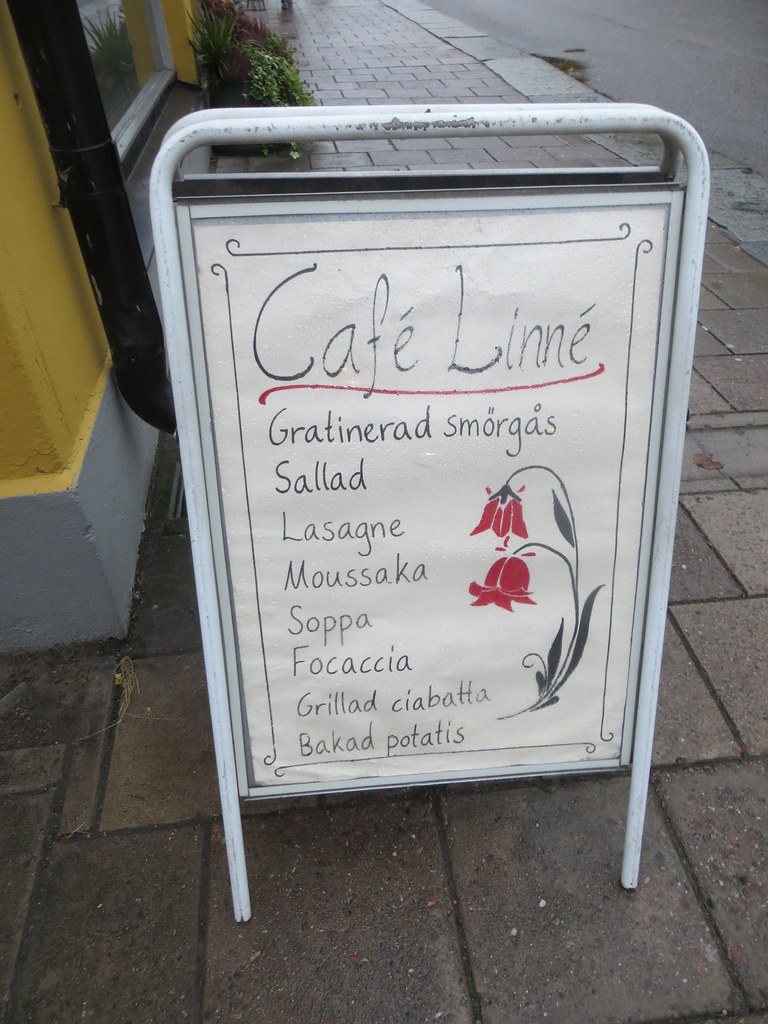
"I have seen, even beyond Umeå, some fine specimens of cactus, pelargonium, calla, and other exotics. It is singular that, with the universal passion of the Swedes for flowers and for music, they have produced no distinguished painters or composers -- but, indeed, a Linnæus." - Northern Travel Summer and Winter Pictures of Sweden, Denmark and Lapland (1869) by Bayard TaylorNot true of course by our more 21st century standards! And Uppsala certainly has Linnaeus! Hotels, cafes, streets, etc., etc.
A few years earlier (and again in the 1870s), Bayard Taylor (1825-1878) was an American poet, literary critic, translator, and travel author. He published a couple of books on Egypt which is where I'd first heard of him when writing my book on Egyptian travel accounts, Nile Notes of a Howadji (1992).


QotD: "A cold, pale, yellow light lay upon the landscape; the towers of Upsala Cathedral ... rose dark against the sky"

"A cold, pale, yellow light lay upon the landscape; the towers of Upsala Cathedral, and the massive front of the palace, rose dark against the sky, in the south-west; a chill autumnal wind blew over the plains, and the yellowing foliage of the birch drifted across the mysterious mounds, like those few golden leaves of poetry, which the modern bards of the North have cast upon the grave of the grand, muscular religion of the earlier race. There was no melodious wailing in the wind, like that which proclaimed "Pan is dead!" through the groves of Greece and Ionia; but a cold rustling hiss, as if the serpent of Midgard were exulting over the ruin of Walhalla. But in the stinging, aromatic flood of the amber-coloured mead, I drank to Odin, to Balder, and to Freja". - Northern Travel Summer and Winter Pictures of Sweden, Denmark and Lapland (1869) by Bayard TaylorA few years earlier (and again in the 1870s), Bayard Taylor (1825-1878) was an American poet, literary critic, translator, and travel author. He published a couple of books on Egypt which is where I'd first heard of him when writing my book on Egyptian travel accounts, Nile Notes of a Howadji (1992).

Subscribe to:
Posts (Atom)