 |
| Shelf space |
To kick off this third installment, let's start with a quote from Neal Stephenson ...
The great serialized novelists of the 19th Century were like rock stars or movie stars. The printing press and the apparatus of publishing had given these creators a means to bypass traditional arbiters and gatekeepers of culture and connect directly to a mass audience. And the economics worked out such that they didn't need to land a commission or find a patron in order to put bread on the table. The creators of those novels were therefore able to have a connection with a mass audience and a livelihood fundamentally different from other types of artists. - Neal Stephenson in Some Remarks: Essays and Other Writing
... and then a little snippet from the Dean of St. Patrick's:
By this expedient, the public peace of libraries might certainly have been preserved if a new species of controversial books had not arisen of late years, instinct with a more malignant spirit, from the war above mentioned between the learned about the higher summit of Parnassus. - Jonathan Swift, The Battle of the Books
 |
| ... esp. lithographs |
I chose the Swift quote because we have a new battle of the books, but this time the Ancients are not Aristotle and Virgil and the Moderns are not Hobbes and Dryden. Rather, the combatants are print and electronic. As a frame of reference, let's look at a recent entrant in the "(print) books aren't dead" genre, a
Salon piece (20 March 2013) entitled "
Books aren’t dead yet Self-publishing fans and the tech-obsessed keep getting it wrong: Big authors want to be in print -- and bookstores" by Laura Miller.
I don't mean to single out Miller, as she is just one of many who go on at length to denigrate positive changes in the publishing and world of books with dubious facts and a misty-eyed view of one of the most cutthroat and un-business-like business this side of the music industry.
The piece focuses on a number of recent sensations (E.L. James, Hugh Howey [minor quibble, she mis-spell's Howey's name as "Howie"], Amanda Hocking) have moved on from ghetto of self-publishing to the Big 5.5. And though she does asterisk that with the move is often for good reasons (seven figure advances!) she never hits home the point that it is nearly always on the authors' terms (such as keeping all e-rights - see Hugh Howey in the
Huffington Post on that topic). Miller's piece itself was a response to "
Book Publishers Scramble to Rewrite Their Future" by Evan Hughes (in a 19 March 2013 article in
WIRED).
So, let's unpack Miller's title a bit. First off, she doesn't really mean "books" aren't dead, she means PRINT books aren't dead. Print is, of course, a little bit vague of a term, encompassing as it does hardcover, paperback, mass-market paperback, etc., and yes, she is correct, PRINT books are not dead, and, because of the varied nature of "print" it will probably be hard to find that point in them when anyone can say "He's dead Jim."
Digging further into the title, Miller's says "big" authors want to be in print and in bookstores. Big is relevant too (as my Aussie friends would say, "about as long as a piece of string") and, true, of course, any author would want to be in a bookstore (or probably any place where they could find a reader, preferably a paying reader) for their hard work.
Let's look a little closer at these two topics:
eBooks vs pBbooks and
The Author's (Only True) Home is in the Brick and Mortar Bookstore.
 |
| Enduring Works |
EBOOKS VS PBOOKS
With just a little looseness with facts. Miller notes that "ebooks are 25% of market." The
American Association of Publishers (AAP) -- which is hardly the cold, laser-eyed robotic proponent of all things "e" or "i" (see for instance
their stance on the
FASTR legislation) has the relevant statistics on that. In the most recent stats from the AAP (2012), adult fiction and non-fiction e-books are 28.5% of the total book market in that category. Feh, you say, she's just rounding down a bit. But if you do the math (not hard math), that's a mis-stating error of 12.28% -- that's not rounding, that's just wrong. (FYI the statistics from AAP report has been summarized by Galleycat
here).
Moreover, in the same AAP report, the 28.5% is an increase over 2011 (when the share was 22.84%) of 36%. A market growth of 36% also calls into question Millers assertion that:
"But the early-adapter boom is showing signs of flagging and the growth of the e-book market appears to be leveling out. E-books are definitely here to stay, but it seems that many, many readers — a threefold majority, in fact — still prefer print."
My hunch is that this "flagging" is based on the flattening curve of dedicated ereaders. The explosion in tablet sales (iPad, iPad Mini, Nexus and all their kindred Kindle Fires and Nooks) is where those ebooks are being read. So, yes, very roughly, three quarters of the book market are not ebooks, but that is a 24.78% increase in one year.
 |
| Bye bye Borders |
Mass market paperbacks are going away, hardcovers are going away. When will trade paper and ebooks totally dominate the market and regulate the rest to the same quaint niche occupied by vinyl records? Because "past performance doesn't guarantee future returns", I won't trend line the 2011/12 numbers and say, oh, 2016 (which is what the trend line predicts) that ebooks completely dominate the market, but it will be sooner than many who claim "print will always be with us" might be comfortable with.
THE AUTHOR'S (ONLY TRUE) HOME IS IN THE BRICK AND MORTAR BOOKSTORE (and we don't mean that nasty Barnes and Noble!)
"Furthermore," Miller continues, "to switch to Amazon-style self-publishing would mean getting shut out of bookstores -- not a big deal for an author whose books weren't there to begin with, but a major loss for the likes of, say,
Stephen King, who has always made his love of and gratitude toward booksellers well-known. Bookstores are where fans meet popular authors and get their books signed, cementing their devotion."
Well, yeah yeah yeah, Stephen King does love book stores, who doesn't? But how many of King's books are sold in the small and indie bookstore (which we do need more of, but with a radical refactoring) in those locations?
 |
| Dan Brown's Inferno @ Target |
I had the privilege of having dinner recently with a noted author, one of those "name above the title" types with legions of fans waiting to scoop of the next work and add to the millions of books sold. As we discussed publishing and the book market, the author noted that 70% of sales were ebooks and that of the remaining 30% the vast majority were sold (no, not at 82 Charing Cross Road) but at Walmart, Target (and, I would guess but it wasn't said), airports.
This provides anecdotal back up to more figures from the AAP report, namely that hardcover sales are now 26.28% of the market (down 1.53% since 2011); and more significantly, mass-market paperbacks are now down to a touch over 9% (a decrease of 16%!). I should also note that the AAP report also counts audiobook downloads, which, in 2012 represented 2.43% of the market, not a format that makes the print book lovers dewy-eyed I'm guessing.
Note that all of the above is, again, adult fiction/non-fiction. To really get an idea of where the trend (which, again Miller says is "flagging") is to look at children and young adult (YA) books.
Ebooks are only 16.17% of the YA market now, but that number represents a 177% increase over 2011. 177%, that increase is coming from future book buyers. I might also add, that unlike in the adult books, the ebook growth didn't come from cannibalizing other formats (the only category that dropped in the C/YA stats was board books, down 6.61%, I'm not sure what to make of that number).
 |
| eBooks for K-12 |
So, if we were doing a data smackdown between Miller and Evan Hughes, the AAP numbers, which are probably the best we can get from an industry that can be notoriously opaque in revealing market information, I think we need to give the win to Hughes.
Miller hides behind the "book sniffer" argument that the only true book is a print book; that the only place to buy a book is the quaint indie bookstore (in an swipe at Barnes & Noble, an example - the only remaining one perhaps -- of the "relatively impersonal chain stores"); that the only true publisher is a multi-national corporation that will strictly dictate who gets published, how they get published, when they get published, author and readers be damned.
Authors and readers are rebooting their relationship. Amazon,
SmashWords, and a few others are fostering this new relationship. As Gershwin could have said, "Writers gotta write, readers gotta read, I'm gonna love one book til I die ..." and yes, I mean the book, the perhaps Platonic notion of the book, be it print, pixels on a screen, or the wonder of e-ink.
See the earlier parts of this series:
END PART III
 |
| 20 - 30% Off |


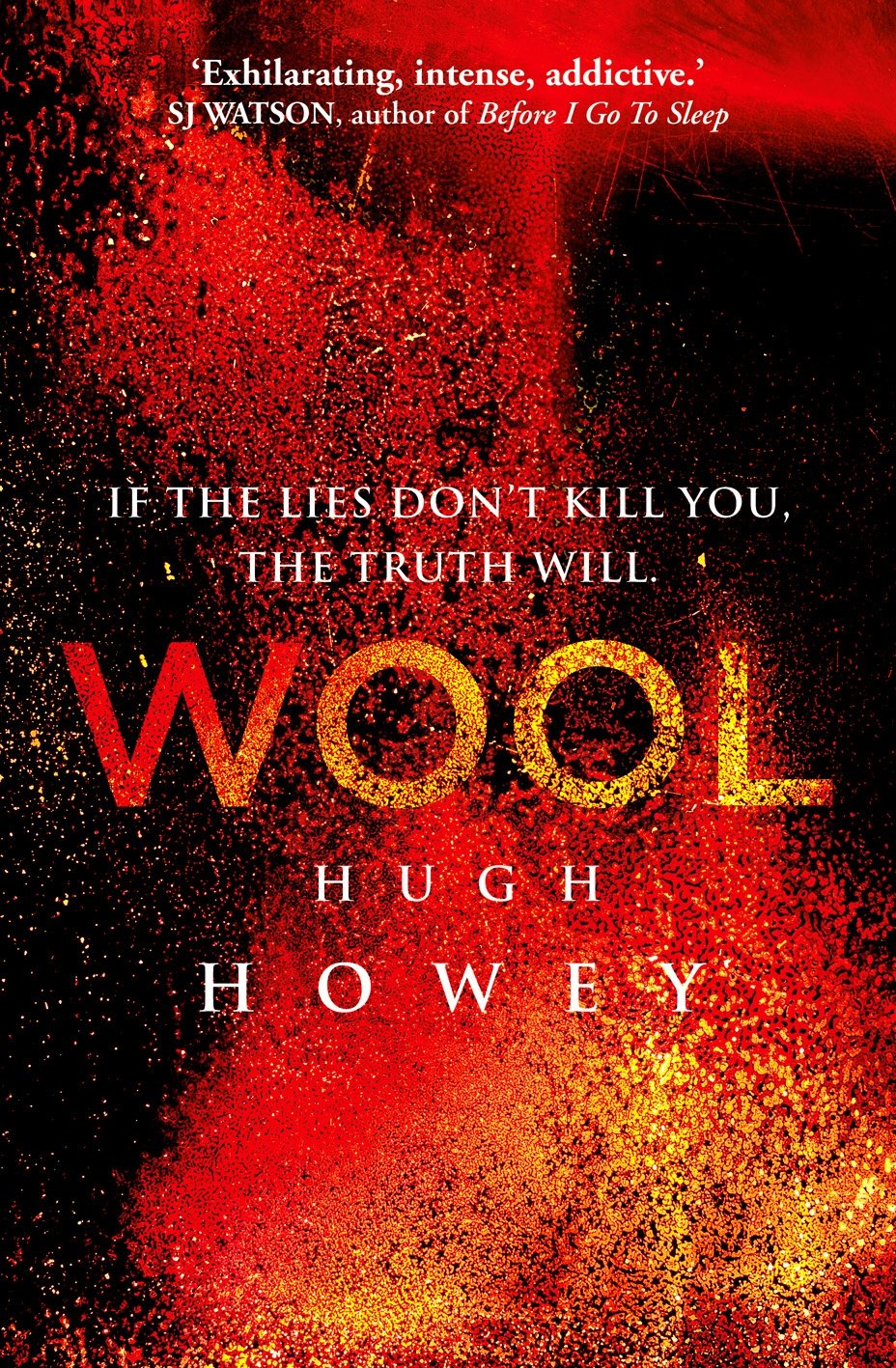
 I myself discovered the series when my ever-cool colleague @Bathlander tweeted about Howey and Wool. For a small investment, $.99 on Amazon, I picked up the first installment, was quickly hooked and purchased the omnibus edition. Finishing up the prequel series (with the first volume of the third series to be in the next few months), I was stunned by Howey's inventive creation of an entire world (short view: sometime in the future, humanity seems to be reduced to a small population living underground in a 150 story silo -- or are they?).