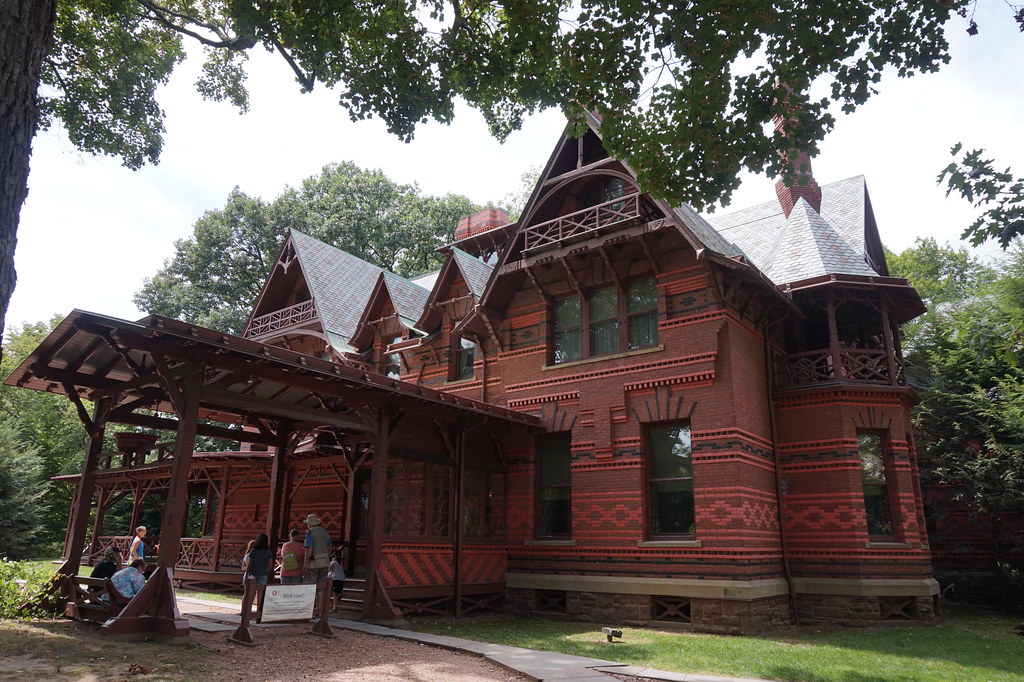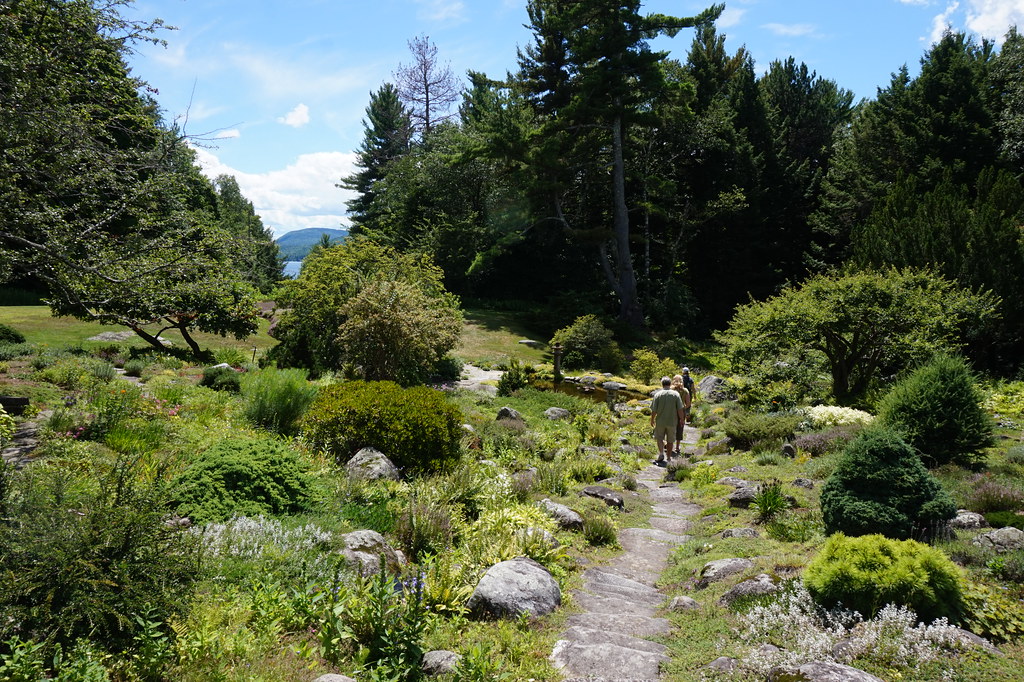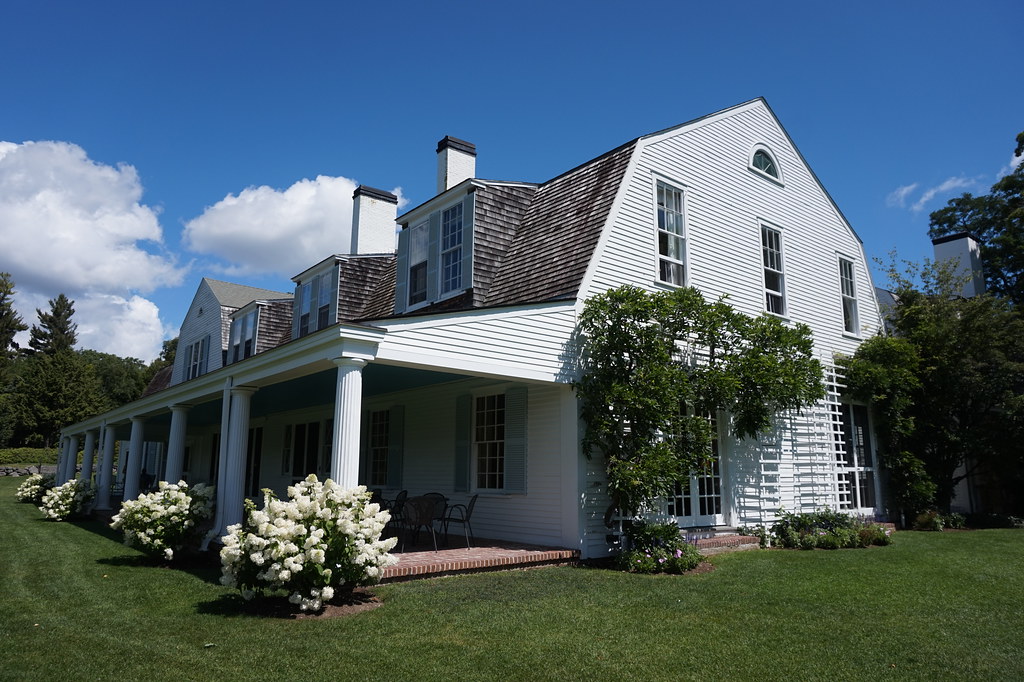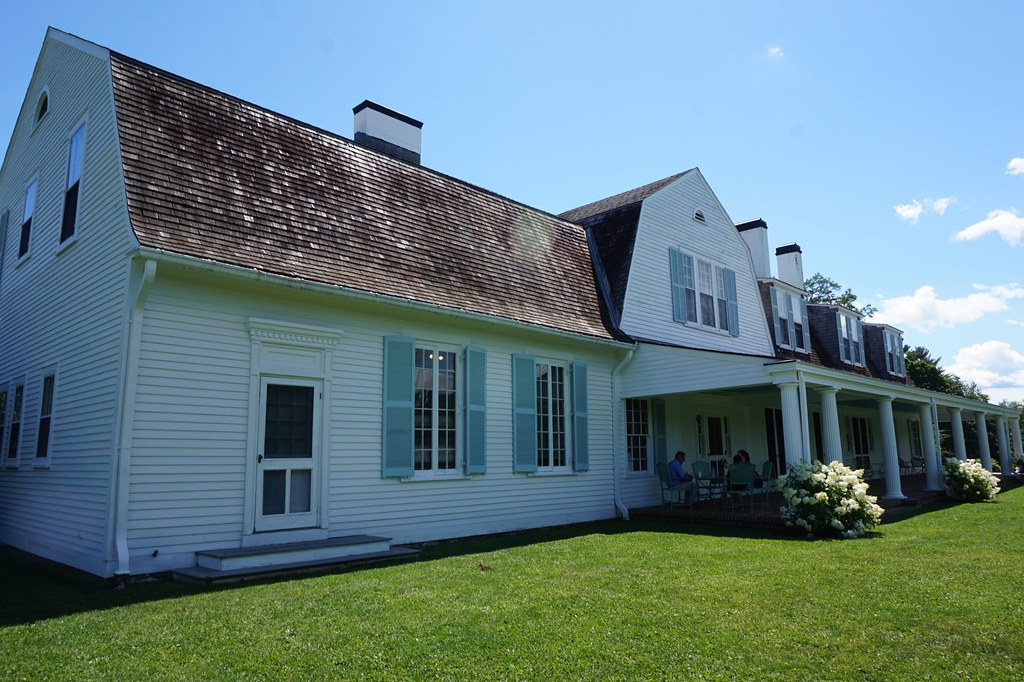
Showing posts with label Historic Sites. Show all posts

Tuesday, August 16, 2016

I suppose that the high-water mark of my youth in Columbus, Ohio, was the night the bed fell on my father. - James Thurber

While in Columbus, Ohio, for business, I stopped by the James Thurber house. It had just closed when I got there (and then there was a huge thunderstorm), so I didn't get to go in. Some nice cartoon dog sculptures around the outside.

2016.08.13-DSC08478 2016.08.13-DSC08477 

 Here are some quotes from My Life and Hard Times (1933):

The Night the Bed Fell
I suppose that the high-water mark of my youth in Columbus, Ohio, was the night the bed fell on my father. It makes a better recitation (unless, as some friends of mine have said, one has heard it five or six times) than it does a piece of writing, for it is almost necessary to throw furniture around, shake
doors, and bark like a dog, to lend the proper atmosphere and verisimilitude to what is admittedly a somewhat incredible tale. Still, it did take place.

2016.08.13-DSC08471 2016.08.13-DSC08472

The Car We Had to Push
Many autobiographers, among them Lincoln Steffens and Gertrude Atherton, describe earthquakes their families have been in. I am unable to do this because my family was never in an earthquake, but we went through a number of things in Columbus that were a great deal like earthquakes. I remember in particular some of the repercussions of an old Reo we had that wouldn't go unless you pushed it for quite a way and suddenly let your clutch out.

2016.08.14-DSC08518 2016.08.14-DSC08509 

The Day the Dam Broke
The Columbus, Ohio, broken-dam rumor began, as I recall it, about noon of March 12, 1913. High Street, the main canyon of trade, was loudwith the placid hum of business and the buzzing of placid businessmen arguing, computing, wheedling, offering, refusing, compromising. Darius 32
Conningway, one of the foremost corporation lawyers in the Middle-West, was telling the Public Utilities Commission in the language of Julius Caesar that they might as well try to move the Northern star as to move him. Other men were making their little boasts and their little gestures. Suddenly somebody began to run. It may be that he had simply remembered, all of a moment, an engagement to meet his wife, for which he was now frightfully late. Whatever it was, he ran east on Broad Street (probably toward the Maramor Restaurant, a favorite place for a man to meet his
wife).

2016.08.13-DSC08474 2016.08.13-DSC08476 

More Alarms at Night
One of the incidents that I always think of first when I cast back over my youth is what happened the night that my father "threatened to get Buck." This, as you will see, is not precisely a fair or accurate description of what actually occurred, but it is the way in which I and the other members of my
family invariably allude to the occasion. We were living at the time in an old house at 77 Lexington Avenue, in Columbus, Ohio. In the early years of the nineteenth century, Columbus won out, as state capital, by only one vote over Lancaster, and ever since then has had the hallucination that it is
being followed, a curious municipal state of mind which affects, in some way or other, all those who live there. Columbus is a town in which almost anything is likely to happen and in which almost everything has.

The Dog That Bit People
Probably no one man should have as many dogs in his life as I have had, but there was more pleasure than distress in them for me except in the case of an Airedale named Muggs. He gave me more trouble than all the other fifty-four or five put together, although my moment of keenest embarrassment was the time a Scotch terrier named Jeannie, who had just had six puppies in the clothes closet of a fourth floor apartment in New York, had the unexpected seventh and last at the corner of Eleventh Street and Fifth Avenue during a walk she had insisted on taking.

2016.08.13-DSC08473 2016.08.13-DSC08475

* * * * * 
James Grover Thurber (December 8, 1894 – November 2, 1961) was an American cartoonistauthor,journalistplaywright, and celebrated wit. Thurber was best known for his cartoons and short stories, published mainly in The New Yorker magazine and collected in his numerous books. One of the most popular humorists of his time, Thurber celebrated the comic frustrations and eccentricities of ordinary people.  - Wikipedia

Sunday, July 24, 2016

What a spirit of adventure, what wild ambition! Sarah Orne Jewett form A White Heron

"A White Heron" from A White Heron and Other Stories by Sarah Orne Jewett

What a spirit of adventure, what wild ambition! What fancied triumph and delight and glory for the later morning when she could make known the secret! It was almost too real and too great for the childish heart to bear.

IMG_20160723_112235 IMG_20160723_112428 IMG_20160723_112836

He can make them rich with money; he has promised it, and they are poor now. He is so well worth making happy, and he waits to hear the story she can tell. No, she must keep silence! What is it that suddenly forbids her and makes her dumb? Has she been nine years growing and now, when the great world for the first time puts out a hand to her, must she thrust it aside for a bird’s sake? The murmur of the pine’s green branches is in her ears, she remembers how the white heron came flying through the golden air and how they watched the sea and the morning together, and Sylvia cannot speak; she cannot tell the heron’s secret and give its life away.

IMG_20160723_112410 2016.07.23-DSC08247 IMG_20160723_114421

I'd read Jewett's Country of the Pointed Firs (often considered her best work) a number of years ago. A significant figure in American regionalist literature, she lived and worked in Maine, just across the water from Portsmouth, NH where I'm spending some summer vacation.

Sarah Orne Jewett (September 3, 1849 – June 24, 1909) was an American novelist, short story writer and poet, best known for her local color works set along or near the southern seacoast of Maine. (Wikipedia)

Photos on this page from the Sarah Orne Jewett Historic Site, South Berwick, Maine

IMG_20160723_112743

... on the lonely coast of Maine stood a small gray house facing the morning light. - Sarah Orne Jewett, "By the Morning Boat"

Selections from two stories in Strangers and Wayfarers by Sarah Orne Jewett

THE QUEST OF MR. TEABY
In such weather I found even the East Wilby railroad station attractive, and waiting three hours for a slow train became a pleasure; the delight of idleness and even booklessness cannot be properly described.

IMG_20160723_110959 2016.07.23-DSC08245 IMG_20160723_111011

BY THE MORNING BOAT.
On the coast of Maine, where many green islands and salt inlets fringe the deep-cut shore line; where balsam firs and bayberry bushes send their fragrance far seaward, and song-sparrows sing all day, and the tide runs plashing in and out among the weedy ledges; where cowbells tinkle on the hills and herons stand in the shady coves,—on the lonely coast of Maine stood a small gray house facing the morning light. All the weather-beaten houses of that region face the sea apprehensively, like the women who live in them.

Jewett House #maine IMG_20160723_115417 2016.07.23-DSC08247

IMG_20160723_120059 IMG_20160723_120304

 * * * * * 

(Pictures above are from the Sarah Orne Jewett Historic Site, South Berwick, Maine)

I'd read Jewett's Country of the Pointed Firs (often considered her best work) a number of years ago. A significant figure in American regionalist literature, she lived and worked in Maine, just across the water from Portsmouth, NH where I'm spending some summer vacation.

Sarah Orne Jewett (September 3, 1849 – June 24, 1909) was an American novelist, short story writer and poet, best known for her local color works set along or near the southern seacoast of Maine. (Wikipedia)

Thursday, June 16, 2016

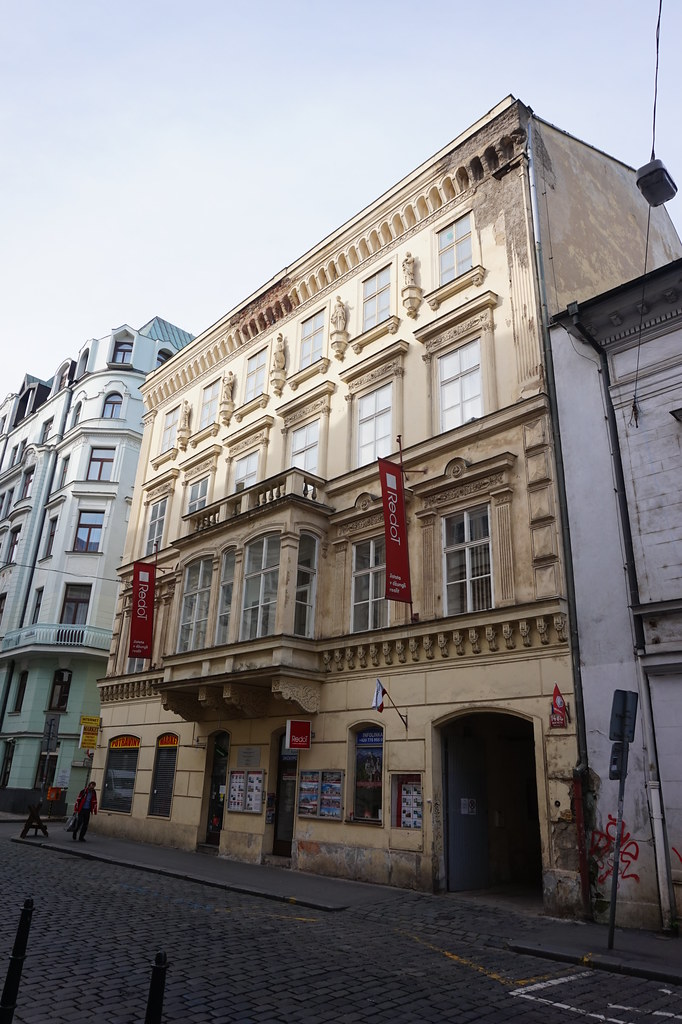
Childhood haunts of Rainer Maria Rilke in Prague

2016.06.16-DSC06735
House on Panská
Rainer Maria Rilke (4 December 1875 – 29 December 1926) was a Bohemian-Austrian poet and novelist, "widely recognized as one of the most lyrically intense German-language poets", writing in both verse and highly lyrical prose. He was born in Prague, capital of Bohemia (then part of Austria-Hungary, now the Czech Republic). His childhood and youth in Prague were not especially happy. His father, Josef Rilke (1838–1906), became a railway official after an unsuccessful military career. His mother, Sophie ("Phia") Entz (1851–1931), came from a well-to-do Prague family, the Entz-Kinzelbergers, who lived in a house on the Herrengasse (Panská) 8, where René also spent many of his early years. (extracted from Wikipedia)


2016.06.16-DSC06732
Jindřišská 888/19

Saturday, August 08, 2015

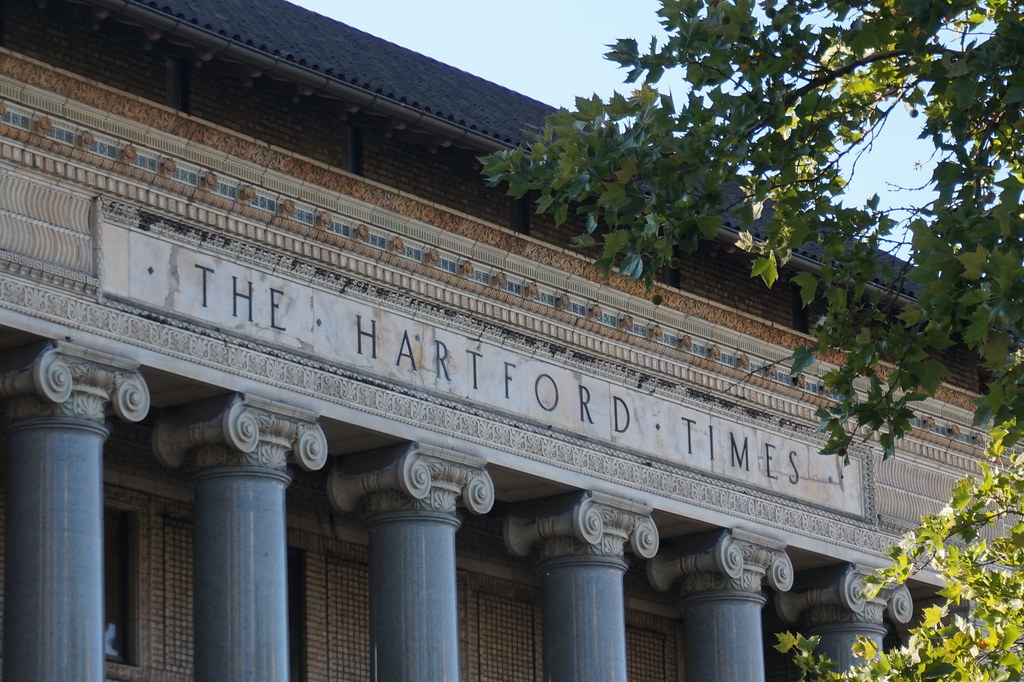
"I have to spend August and September in Hartford which isn’t San Francisco." - Mark Twain #QotD

2015.08.08-DSC02617Letter to: Mrs. Jane Clemens and Mrs. Moffett, in St. Louis:

Feb. 6, 1868. MY DEAR MOTHER AND SISTER,
I have to spend August and September in Hartford which isn’t San Francisco. Mr. Conness offers me any choice out of five influential California offices. Now, some day or other I shall want an office and then, just my luck, I can’t get it, I suppose. They want to send me abroad, as a Consul or a Minister. I said I didn’t want any of the pie. God knows I am mean enough and lazy enough, now, without being a foreign consul.

In The Complete Works of Mark Twain: The Novels, short stories, essays and satires, travel writing, non-fiction, the complete letters, the complete speeches, and the autobiography of Mark Twain (Kindle Locations 122448-122452).

"At the time of the building of one of the finest residences of Hartford ..." Mark Twain #QotD

2015.08.08-DSC02639"Mental Telegraphy"

At the time of the building of one of the finest residences of Hartford, which is still a very new house, a local firm supplied the wallpaper for certain rooms, contracting both to furnish and to put on the paper. It happened that they did not calculate the size of one room exactly right, and the paper of the design selected for it fell short just half a roll. They asked for delay enough to send on to the manufacturers for what was needed, and were told that there was no especial hurry. It happened that the manufacturers had none on hand, and had destroyed the blocks from which it was printed. They wrote that they had a full list of the dealers to whom they had sold that paper, and that they would write to each of these and get from some of them a roll. It might involve a delay of a couple of weeks, but they would surely get it.

From The Complete Works of Mark Twain: The Novels, short stories, essays and satires, travel writing, non-fiction, the complete letters, the complete speeches, and the autobiography of Mark Twain (Kindle Locations 54023-54028).


2015.08.08-DSC02645

Friday, August 07, 2015

"On summer day that shone here, When we were all alone here" the poetry of John Hay #QotD

2015.08.05-DSC02454
While in New Hampshire, I had the chance to visit The Fells, the summer home of three generations of the Hay family, starting with the great statesman, John Hay.

In addition to his political work, he was also a quite popular poet; an example of his work is below ... not quite to our current tastes, perhaps!

On the Bluff

Oh grandly flowing River!
   O silver-gliding River!
Thy springing willows shiver
   In the sunset as of old;
   They shiver in the silence
Of the willow-whitened islands,
While the sun-bars and the sand-bars
   Fill air and wave with gold.

O gay, oblivious River!
O sunset-kindled River!
Do you remember ever
   The eyes and skies so blue

On a summer day that shone here,
When we were all alone here,
And the blue eyes were too wise
   To speak the love they knew?

O stern impassive River !
O still unanswering River !
The shivering willows quiver
   As the night-winds moan and rave.
From the past a voice is calling,
From heaven a star is falling,
And dew swells in the bluebells
   Above her hillside grave.

Pike County ballads and other pieces by John Hay (full text)
Published 1871
Publisher Boston, J.R. Osgood and company

Henry Adams on John Hay ... pictures from the Hay summer home, The Fells (2 of 2)

2015.08.05-DSC02446
The Fells, summer home of John Hay
While in New Hampshire, I had the chance to visit The Fells, the summer home of three generations of the Hay family, starting with the great statesman, John Hay.

"He felt quite well satisfied to look on, and from time to time he thought he might risk a criticism of the players; but though he found his own position regular, he never quite understood that of John Hay. The Republican leaders treated Hay as one of themselves; they asked his services and took his money with a freedom that staggered even a hardened observer; but they never needed him in equivalent office. In Washington Hay was the only competent man in the party for diplomatic work. He corresponded in his powers of usefulness exactly with Lord Granville in London, who had been for forty years the saving grace of every Liberal administration in turn. Had usefulness to the public service been ever a question, Hay should have had a first-class mission under Hayes; should have been placed in the Cabinet by Garfield, and should have been restored to it by Harrison. These gentlemen were always using him; always invited his services, and always took his money." - The Education of Henry Adams by Henry Adams

More on John Hay by Henry Adams and a photo of The Fells (1 of 2)

2015.08.05-DSC02448
The Fells, summer home of John Hay
While in New Hampshire, I had the chance to visit The Fells, the summer home of three generations of the Hay family, starting with the great statesman, John Hay.

John Hay was as strange to the Mississippi River as though he had not been bred on its shores, and the city of St. Louis had turned its back on the noblest work of nature, leaving it bankrupt between its own banks. The new American showed his parentage proudly; he was the child of steam and the brother of the dynamo, and already, within less than thirty years, this mass of mixed humanities, brought together by steam, was squeezed and welded into approach to shape; a product of so much mechanical power, and bearing no distinctive marks but that of its pressure. The new American, like the new European, was the servant of the powerhouse, as the European of the twelfth century was the servant of the Church, and the features would follow the parentage. - The Education of Henry Adams by Henry Adams


Saturday, November 01, 2014

"Thank you for the music" / A visit to the site of the famed Polar Studios in Stockholm

2014.11.01-IMG_2663So I say
Thank you for the music, the songs I'm singing
Thanks for all the joy they're bringing
Who can live without it, I ask in all honesty
What would life be?
Without a song or a dance what are we?
So I say thank you for the music
For giving it to me
- "Thank You for the Music" - ABBA

Polar Studios was the home base for ABBA. Located at Sankt Eriksgatan 58-60 on Kungsholmen in Stockholm, Sweden, Polar Studios was founded by Björn Ulvaeus and Benny Andersson of ABBA in 1977.

2014.11.01-IMG_2661
Many others used the studio, most notably Led Zeppelin (for their last album, In Through the Outdoor), Genesis (Duke), and Roxette (various albums). I had to drop by the location (as part of my musical tours!) and took that albums mentioned above (plus ABBA of course) along on the iPod. The studio moved to a new location in 2004.

Saturday, October 04, 2014

Blenheim House, Fairfax, Virginia

An historic Civil War site.

Historic Blenheim is a ca. 1859 brick farm house designed in the Greek Revival style and located in City of Fairfax, Virginia. During the American Civil WarUnion soldiers were often encamped on the grounds surrounding the house and utilized it as part of a reserve hospital system. As a result, more than 115 of these soldiers inscribed words and pictures on the first and second floor walls, as well as the attic of the house. Blenheim was added to the National Register of Historic Places in 2001. (Wikipedia)

Friday, August 02, 2013

QotD: "... and made a gateway in the form of a Gothic arch by setting up a whale's jaw-bones" N. Hawthorne

2013.07.31-IMG_5252
"I built a cottage for Susan and myself, and made a gateway in the form of a Gothic arch by setting up a whale's jaw-bones. We bought a heifer with her first calf, and had a little garden on the hillside to supply us with potatoes and green sauce for our fish. Our parlor, small and neat, was ornamented with our two profiles in one gilt frame, and with shells and pretty pebbles on the mantelpiece, selected from the sea's treasury of such things on Nahant Beach. On the desk, beneath the looking-glass, lay the Bible, which I had begun to read aloud at the book of Genesis, and the singing-book that Susan used for her evening psalm. Except the almanac, we had no other literature. All that I heard of books was when an Indian history or tale of shipwreck was sold by a pedler or wandering subscription-man to some one in the village, and read through its owner's nose to a slumbrous auditory." From "The Village Uncle", Nathaniel Hawthorne in Twice Told Tales 

Today's quote is inspired by a visit to the Captain Edward Penniman, part of the Cape Cod National Seashore National Park. The Penniman house, built in the 1860s, was the fruits of the Captain's long and successful whaling career. The original whale-jaw gateway of the house was made from the jaw of a Sperm Whale (Physeter macrocephalus formerly Physeter catadon, there are photos of the gateway in the house where one can see the teeth in the jaw). The current gateway is of more recent vintage and is of a baleen whale.

 2013.07.31-IMG_5253 2013.07.31-IMG_5260 2013.07.31-IMG_5256 2013.07.31-IMG_5250 2013.07.31-IMG_5257

Sunday, July 28, 2013

QotD: "A pulpy, tentacled head surmounted a grotesque and scaly body with rudimentary wings" HP Lovecraft, The Call of Cthulhu

2013.07.26-IMG_5000For the second time this month, I've had the fortune to stumble upon a famous writer's home. Earlier in the month it was William S. Burrough's home in St. Louis, and now it was H.P. Lovecraft's last home in his native Providence, Rhode Island.

Providence, I learned, is full of Lovecraft sites, including his birthplace and his grave.

Pictured at right, is Lovecraft's home at the corner of Prospect St. and Meeting Street. The house was originally on a different site a few blocks down, but was moved when Brown University was doing some construction. FYI, many of Lovecraft's papers are in the John Hay Library (Brown).

And so, today's quote of the day is from one of Lovecraft's signature works, "The Call of Cthulhu":
"Above these apparent hieroglyphics was a figure of evidently pictorial intent, though its impressionistic execution forbade a very clear idea of its nature. It seemed to be a sort of monster, or symbol representing a monster, of a form which only a diseased fancy could conceive. If I say that my somewhat extravagant imagination yielded simultaneous pictures of an octopus, a dragon, and a human caricature, I shall not be unfaithful to the spirit of the thing. A pulpy, tentacled head surmounted a grotesque and scaly body with rudimentary wings; but it was the general outline of the whole which made it most shockingly frightful. Behind the figure was a vague suggestion of a Cyclopean architectural background."

2013.07.26-IMG_5004

Friday, July 19, 2013

QotD: "Many years ago my first contact with the Land of the Dead: It is in the backyard of 4664 Pershing Avenue." WS Burroughs

2013.07.18-IMG_4721And here's another view of the William S. Burrough's birthplace as well as another quote of the day:
"Many years ago my first contact with the Land of the Dead: It is in the backyard of 4664 Pershing Avenue. Darkness and patches of oil and smell of oil. In the house now, and I am bending over Mother from in front, eating her back, like a dinosaur. Now Mother comes screaming into the room: “I had a terrible dream that you were eating my back.” I have a long neck that reaches up and over her head. My face in the dream is wooden with horror. It is like a segment of film underexposed. Not enough light. The light is running out. Dinosaurs rise from the tar pits on La Brea Avenue. Oil and coal gas."
From My Education: A Book of Dreams (1986-1994). As collected in Word Virus: The William S. Burroughs Reader (1998)

Tuesday, January 08, 2013

Paseando por el Casco Viejo de Panamá

2013.01.07-IMG_7143
Cathedral
My adventure for the morning was an idea to return to the "old city" I'd been to on my 1999 trip. So, I had the doorman got me a cab to my destination, which I thought was "the old city". We headed off in an odd direction, luckily the driver spoke very good English (used to work for Dell Computers and visited Austin often). Turns out that Viejo Panama ("old Panama") are ruins from the 16th century city and not to be confused with "Casco Viejo" (aka "Casco Antiguo") which is the "old city" from the 17th century.

Finally got there and the ride was $15. A Panamanian colleague told me you never pay more than $5 for any cab ride, but I paid since by that time I was happy to be anywhere except inside the white minivan I was in. Started to wander around and got a little concerned as nothing was open and not a lot of people around. I persevered  however, and enjoyed the architecture. Near the cathedral, was an alley with a lot of vendors and I picked up some things there. Walked down to the seawall and there were more people and street vendors. Bought some bracelets and was debating buying a Panama hat when a guy greeted me and started talking.

2013.01.07-IMG_7216
View of new Panama City
His name, he said, was Conrad G. and he was 76 years old; his grandfather built the Canal, and he was sent to American schools in the Canal Zone. During the American invasion in the 1990's, his wife was killed and he lived in a refugee camp eating MREs for two years. But he loves Americans. So I ask him, "how much should I pay for a hat?" and he says, "Ah, come with me."

We go around to a hat seller, very nice hats; they show me the different types, the different weaves, different quality. I pick one out, $80! Ask for something cheaper, find another and it's talked down to $40. Plus, I get a balsa wood box to keep it humidified and pliable.

2013.01.07-IMG_7180
Telephone Booth
Conrad and I continue down the street and I know realize I either need to get rid of him, or go with the flow and let him take me around. So we start to walk and I get a fabulous tour of the Casco Viejo. We go to all the buildings: Presidential Palace, Noriega's officers club, the three main churches, National Theatre. It's getting near lunch and I only had two coffees and orange juice for breakfast, so I ask for a lunch suggestion.

We go to a couple of places, but their closed. Find another and go in. Very nice. Conrad doesn't want anything, well, maybe a beer. I get a beer and a very good seafood paella. We head out and do some more sights: the Public Market (fascinating place, fruits and such, in the meat hall, they had large steel tables where they were butchering the animals, pigs heads, trotters, etc. all being cut up, blood all over the floor, flies all over the meat) then over the the Fish Market (same as the other, but all fish, huge shrimp, octopus, squid, various fish, etc.). Also, a whole row of "cevicheria" where they had tubs of various types of ceviche. Wasn't feeling too comfortable with the hygiene, so, though it looked great, I passed on it (perhaps ironically since later that night at the meeting reception they served ceviche which probably came directly from the same source).

2013.01.07-IMG_7164
Corner
Strolled outside of the Casco Viejo to the pedestrian mall, "The real Panama" said Conrad, full of cheap shops, dollar stores, Chinese restaurants ("I never eat Chinese food," said Conrad, "too many cats in it"). I'd been down that street before in 1998 (with Angel) and Conrad pointed out the shell of the Titanic Store (a department store) now out of business that I recalled from the previous visit).

Headed back to the Casco Viejo. I wanted to pick up the Seco and Aguardiente I didn't get earlier and also wanted to stop in the Havana Club bar and restaurant that we'd passed earlier. Got the liquor at a "Chinese store" and then stopped in the Havana Club. I had a Cuban rum mojito and Conrad had another beer. We talked about America, Panama, the world, Hell; Conrad told me how Colombians are ruining Panama and about growing up in Gamboa. We also discussed whether, perhaps, I might have a little something for him. Now, as he'd been telling me all day that American's are terrible bargainers, when he said, "Perhaps, $30 would be good." I asked him if I should negotiate him down. He said no, "I know that I'm going to go to Hell, but I'm not going to cheat you and this is good". Since it was the best $30 walking tour I've ever had, even if I could have talked him down to $10, it was worth it.

2013.01.07-IMG_7197
Street vendor
We head out and he was going to get me a cab back to the hotel, from a friend of his, not the "lazy idiot" we'd passed in the Independence Plaza by the Cathedral. We find his friend and I get the special $12 rate. Then my driver, Conrad and the "lazy idiot" get in a shouting match. Conrad heads off and I go with my driver while the "lazy idiot" and my driver are yelling at each other. I get in the tiny cab; the "lazy idiot" wanders off. I try to put on the seat belt, but the driver stops me, "broken". The two cab drivers then stop yelling and start laughing ... and away we go. We travel at breakneck speeds and get to the hotel in about 10 minutes.

Slideshow of selected images from the day:


View Panama in a larger map