Catching up on some posts after returning from travels. Presentation from TDWG 2015 in Nairobi, Kenya, 30 September 2015:

Showing posts with label 2015 Africa. Show all posts
Showing posts with label 2015 Africa. Show all posts
Saturday, October 17, 2015

Wednesday, October 14, 2015
Music of Madagascar, some things I was listening to
Some music of Madagascar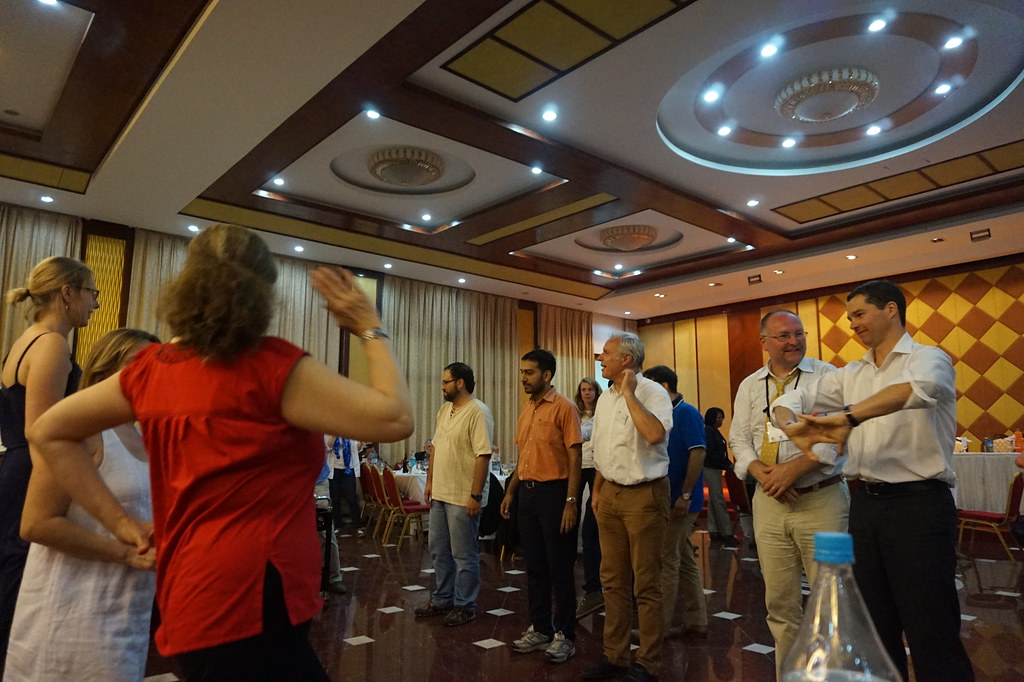
Sources and more information:
- The Truth (1995) by The Justin Vali Trio
- The Music of Madagascar by The Legendary Mama Sana
- Beneath Southern Skies (1996) by Tarika Sammy
- Tulear Never Sleeps (2003)
- A World Out Of Time (1992)
- World Out Of Time, Volume 3 (1996)
Sources and more information:
- Music of Madagascar (Wikipedia)
- Justin Vali (Allmusic)
- Tarika Sammy (Allmusic)
Sunday, October 11, 2015
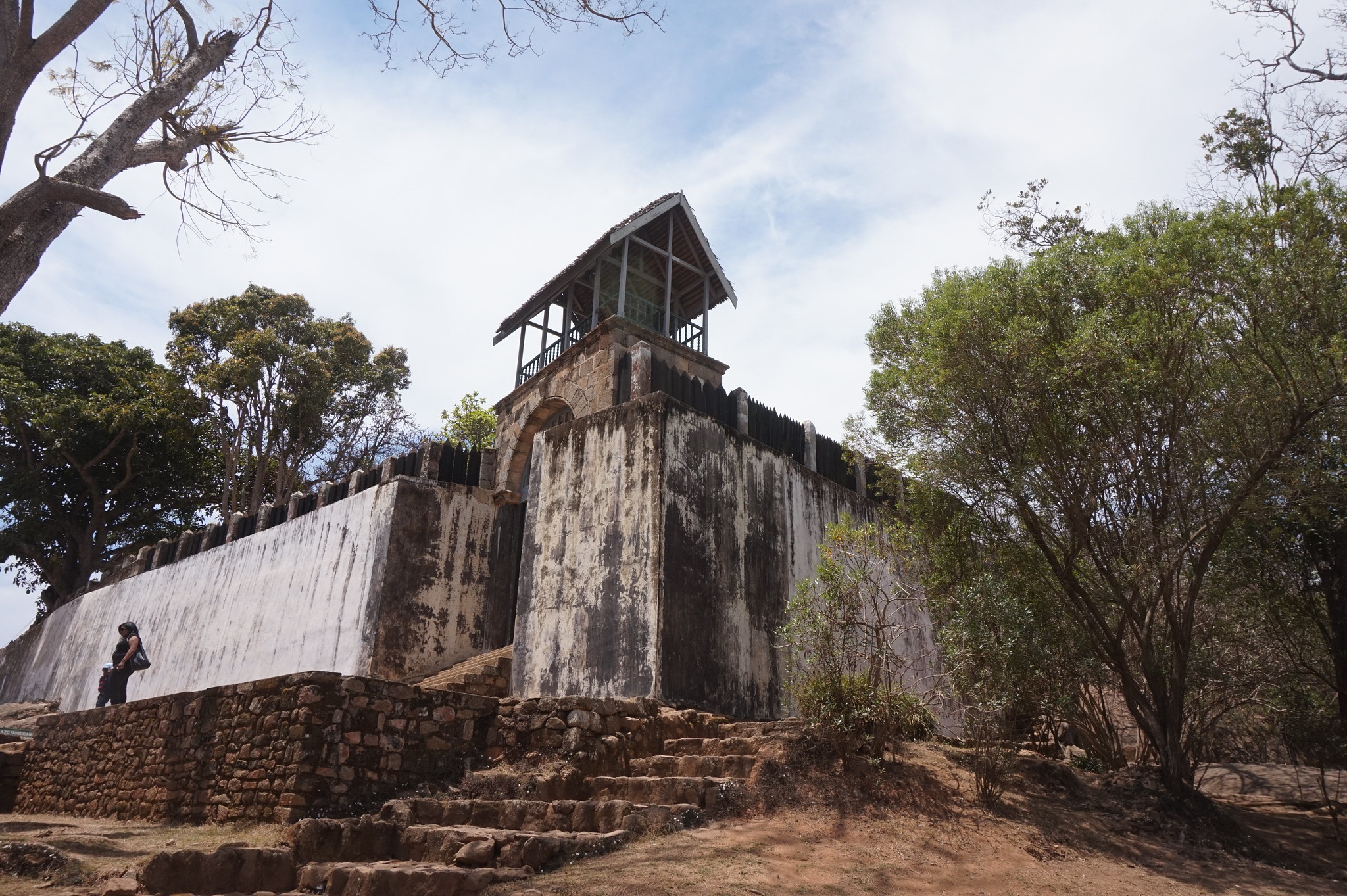
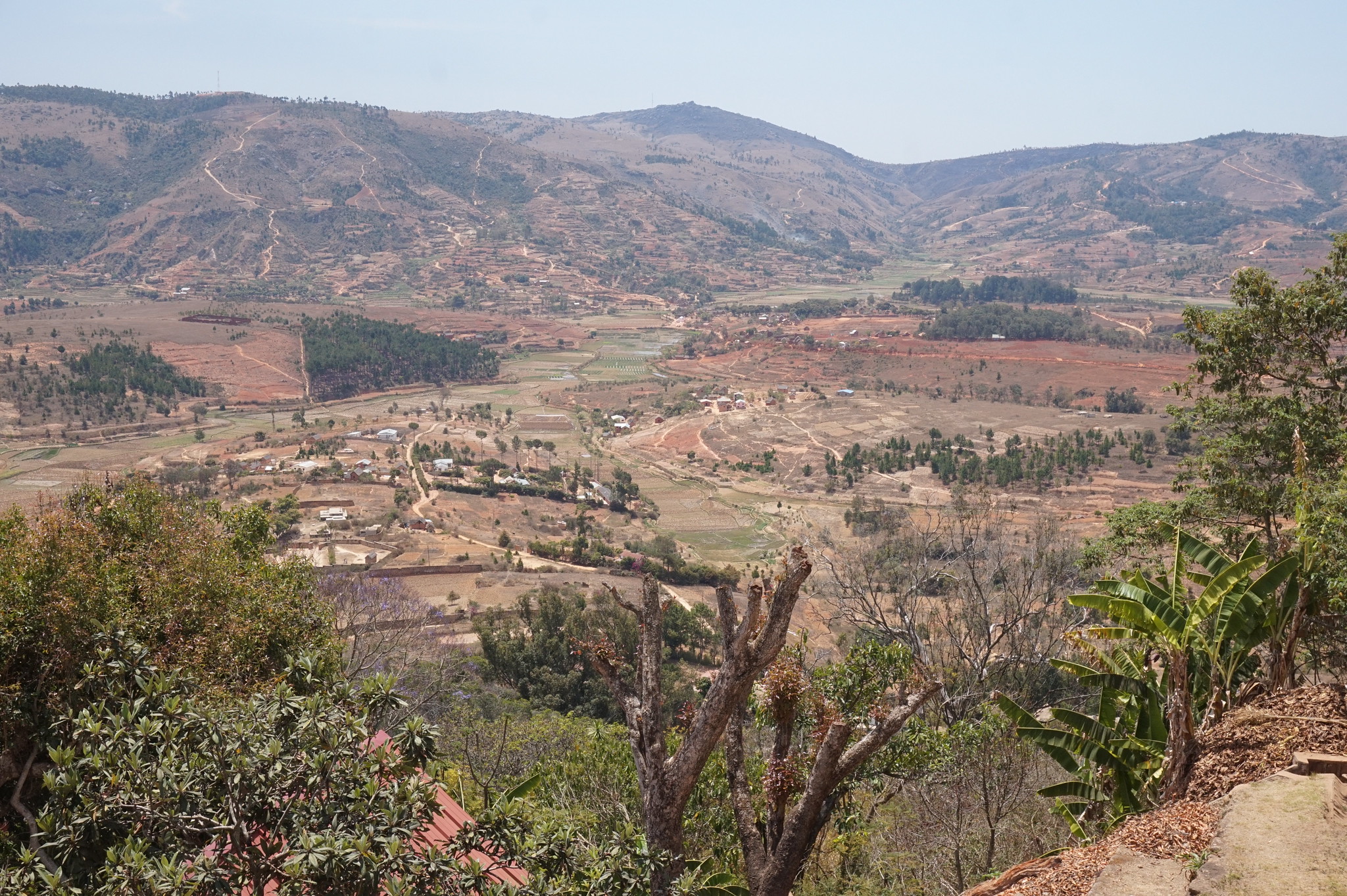
In Madagascar I saw and heard more marvelous things than had come under my notice in any other country - Ida Pfeiffer #QotD
 .... and indeed I did!
In Madagascar I saw and heard more marvelous things than had come under my notice in any other country. (p. 275)From The last travels of Ida Pfeiffer : inclusive of a visit to Madagascar, with a biographical memoir of the author by Ida Pfeiffer (1797-1858), edited by H.W. Dulcken (1861)



Saturday, October 10, 2015
On Antanarivo: There are some moments in our lives which stamp themselves indelibly in the memory, and are different from any we afterwards experience #QotD
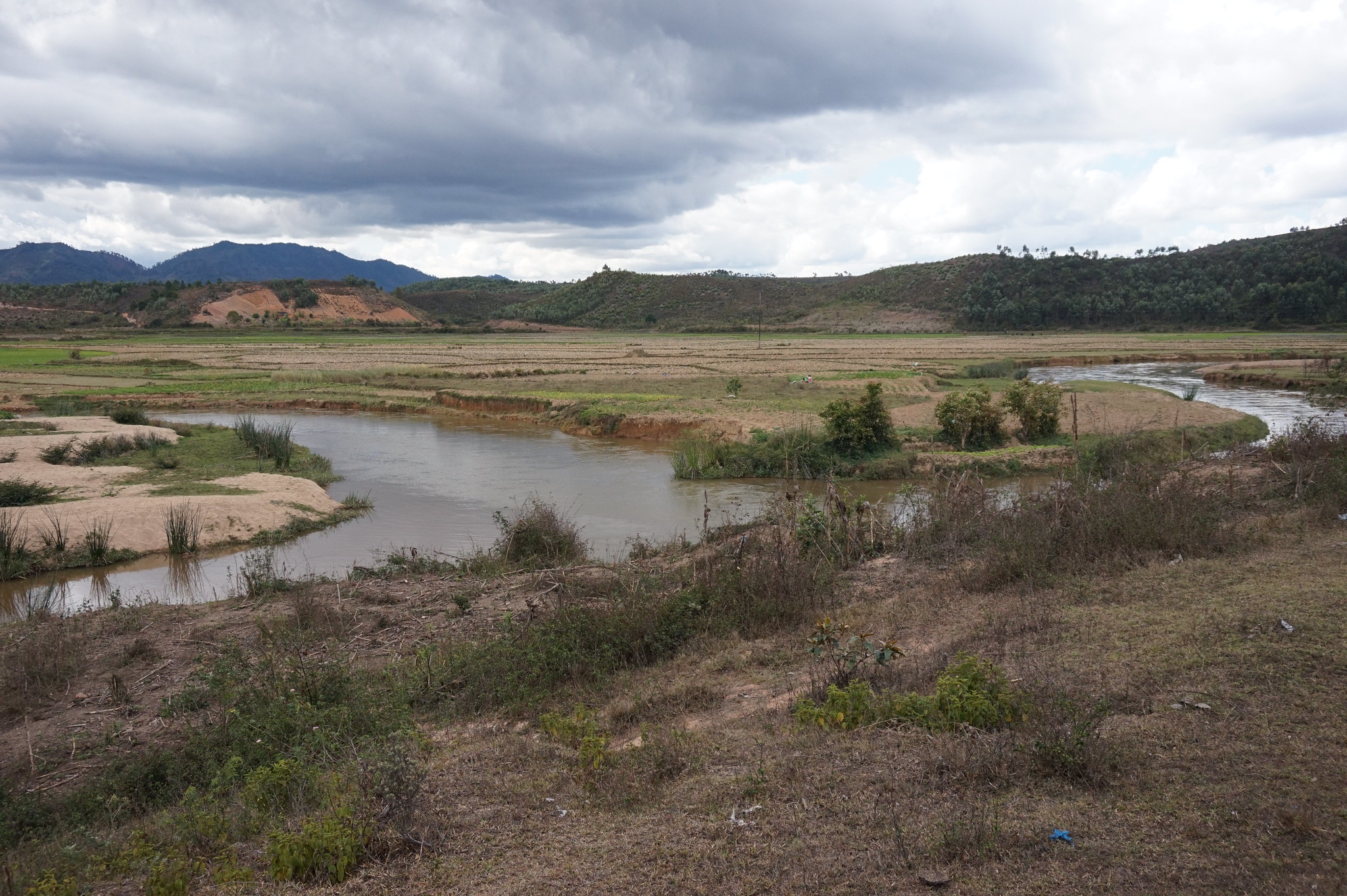 There are some moments in our lives which stamp themselves indelibly in the memory, and are different from any we afterwards experience, and such were those few minutes when I first saw Antananarivo. What a host of dim vague ideas of faith and constancy, and courage and devotion, of which that city had been the scene, arose to my mind! (p. 108)
From Madagascar and its people. Notes of four years' residence by James Sibree (1870)
I had a farm in Africa, at the foot of the Ngong Hills - Issak Dinesen #QotD
 I had a farm in Africa, at the foot of the Ngong Hills. The Equator runs across these highlands, a hundred miles to the North, and the farm lay at an altitude of over six thousand feet. In the day-time you felt that you had got high up, near to the sun, but the early mornings and evenings were limpid and restful, and the nights were cold.
Upon the grass of the great plains the crooked bare old thorn-trees were scattered, and the grass was spiced like thyme and bog-myrtle; in some places the scent was so strong, that it smarted in the nostrils. All the flowers that you found on the plains, or upon the creepers and liana in the native forest, were diminutive like flowers of the downs,—only just in the beginning of the long rains a number of big, massive heavy-scented lilies sprang out on the plains. The views were immensely wide. Everything that you saw made for greatness and freedom, and unequalled nobility.
The chief feature of the landscape, and of your life in it, was the air.
In the highlands you woke up in the morning and thought: Here I am, where I ought to be.
 From the Ngong Hills you have a unique view, you see to the South the vast plains of the great game-country that stretches all the way to Kilimanjaro; to the East and North the park-like country of the foot-hills with the forest behind them, and the undulating land of the Kikuyu-Reserve, which extends to Mount Kenya a hundred miles away,—a mosaic of little square maize-fields, banana-groves and grass-land, with here and there the blue smoke from a native village, a small cluster of peaked mole-casts.
All the country round Nairobi, particularly to the North of the town, is laid out in a similar way, and here lives a people, who are constantly thinking and talking of planting, pruning or picking coffee, and who lie at night and meditate upon improvements to their coffee-factories.
Generally I and Nairobi were in very good understanding, and at one time I drove through the town and thought: There is no world without Nairobi’s streets.
I had seen a herd of Elephant travelling through dense Native forest, where the sunlight is strewn down between the thick creepers in small spots and patches, pacing along as if they had an appointment at the end of the world.
Out in the wilds I had learned to beware of abrupt movements. The creatures with which you are dealing there are shy and watchful, they have a talent for evading you when you least expect it. No domestic animal can be as still as a wild animal. The civilized people have lost the aptitude of stillness, and must take lessons in silence from the wild before they are accepted by it. The art of moving gently, without suddenness, is the first to be studied by the hunter, and more so by the hunter with the camera.
 They were never reliable, but in a grand manner sincere.
An African Native Forest is a mysterious region. You ride into the depths of an old tapestry, in places faded and in others darkened with age, but marvellously rich in green shades. You cannot see the sky at all in there, but the sunlight plays in many strange ways, falling through the foliage. The grey fungus, like long drooping beards, on the trees, and the creepers hanging down everywhere, give a secretive, recondite air to the Native forest.
A white man who wanted to say a pretty thing to you would write: “I can never forget you.” The African says: “We do not think of you, that you can ever forget us.”
Then South, to greet the Southern Cross, doorkeeper of the great world, faithful to travellers and beloved by them, and higher up, under the luminous streak of the Milky Way, Alpha and Beta in the Centaur.
In Africa, when you pick up a book worth reading, out of the deadly consignments which good ships are being made to carry out all the way from Europe, you read it as an author would like his book to be read, praying to God that he may have it in him to go on as beautifully as he has begun. Your mind runs, transported, upon a fresh deep green track.
The early morning air of the African highlands is of such a tangible coldness and freshness that time after time the same fancy there comes back to you: you are not on earth but in dark deep waters, going ahead along the bottom of the sea. It is not even certain that you are moving at all, the flows of chilliness against your face may be the deep-sea currents, and your car, like some sluggish electric fish, may be sitting steadily upon the bottom of the Sea, staring in front of her with the glaring eyes of her lamps, and letting the submarine life pass by her.
In a foreign country and with foreign species of life one should take measures to find out whether things will be keeping their value when dead. To the settlers of East Africa I give the advice: “For the sake of your own eyes and heart, shoot not the Iguana.”
 The neighbourhood of the Game Reserve and the presence, outside our boundary, of the big game, gave a particular character to the farm, as if we had been the neighbours of a great king. Very proud things were about, and made their nearness felt.
Love the pride of God beyond all things, and the pride of your neighbour as your own. The pride of lions: do not shut them up in Zoos. The pride of your dogs: let them not grow fat. Love the pride of your fellow-partisans, and allow them no self-pity.
It takes centuries to produce it, and it is likely that Socrates, the Crusades, and the French Revolution, have been needed in the making. We of the present day, who love our machines, cannot quite imagine how people in the old days could live without them. But we could not make the Athanasian Creed, or the technique of the Mass, or of a five-act tragedy, and perhaps not even of a sonnet. And if we had not found them there ready for our use, we should have had to do without them. Still we must imagine, since they have been made at all, that there was a time when the hearts of humanity cried out for these things, and when a deeply felt want was relieved when they were made.
In other words, since we are all prisoners in life, are we happier, or more miserable, the more talents we possess?”
The air in Africa is more significant in the landscape than in Europe, it is filled with loomings and mirages, and is in a way the real stage of activities. In the heat of the midday the air oscillates and vibrates like the string of a violin, lifts up long layers of grass-land with thorn-trees and hills on it, and creates vast silvery expanses of water in the dry grass.
The bird spoke its words very slowly, and the boy knew enough Greek to recognize it; it was a verse from Sappho: “The moon has sunk and the Pleiads, And midnight is gone, And the hours are passing, passing, And I lie alone.”
It was fit and decorous that the lions should come to Denys’s grave and make him an African monument. “And renowned be thy grave.” Lord Nelson himself, I have reflected, in Trafalgar Square, has his lions made only out of stone.
From there, to the South-West, I saw the Ngong Hills. The noble wave of the mountain rose above the surrounding flat land, all air-blue. But it was so far away that the four peaks looked trifling, hardly distinguishable, and different from the way they looked from the farm. The outline of the mountain was slowly smoothed and levelled out by the hand of distance.
Nowadays great sportsmen hunt with cameras. The practice started while I was still in Africa; Denys as a white hunter took out millionaires from many countries, and they brought back magnificent pictures, the which however to my mind (because I do not see eye to eye with the camera) bore less real likeness to their object than the chalk portraits drawn up on the kitchen door by our Native porters. It is a more refined sport than shooting, and provided you can make the lion join into the spirit of it you may here, at the end of a pleasant, platonic affair, without bloodshed on either side, blow one another a kiss and part like civilized beings. I have no real knowledge of the art; I was a fairly good shot with a rifle, but I cannot photograph.
 We white people, I reflected, were wrong when in our intercourse with the people of the ancient continent we forgot or ignored their past or did indeed decline to acknowledge that they had ever existed before their meeting us.
I have the great good luck in life that when I sleep I dream, and my dreams are always beautiful.
My African existence had sunk below the horizon, the Southern Cross for a short while stood out after it, like a luminous track in the sky, then faded and disappeared. The landscapes, the beasts and the human beings of that existence could not possibly mean more to my surroundings in Denmark than did the landscapes, beasts and human beings of my dreams at night.
From Out of Africa & Shadows on the Grass (1937, 1960) by Issak Dinesen
A reading list for my visit to Madagascar
 Here are a few of the books I was, well not reading cover to cover, but looking through, before my trip to Madagascar. Amazing how many travelers would go to Madagascar and spend most of their account on the trivial day-to-day of business activities (usually missionary work) than the amazing sites around them.
- Twelve months in Madagascar by Joseph Mullens (1820-1879).
- A Voyage to Madagascar and the East Indies by Alexis Rochon, M . Brunel. Published 1792.
- Thirty years in Madagascar by Thomas Trotter Matthews, Published 1904.
- Narrative of Voyages to Explore the Shores of Africa, Arabia, and Madagascar by W. F. W. Owen. Published 1833. Volume 1 & Volume 2
- Memoirs and travels of Mauritius Augustus, count de Benyowsky. Consisting of his military operations in Poland, his exile into Kamchatka, his escape and voyage from that peninsula through the northern Pacific ocean, touching at Japan and Formosa, to Canton in China, with an account of the French settlement he was appointed to form upon the island of Madagascar by Benyowsky, Maurice Auguste, comte de, 1746-1786; Nicholson, William, 1753-1815. Published 1790.
- The Fugitives; or, The Tyrant Queen of Madagascar by R. M. Ballantyne (1825-1894). Published 1887.
- The last travels of Ida Pfeiffer : inclusive of a visit to Madagascar, with a biographical memoir of the author by Ida Pfeiffer (1797-1858), edited by H.W. Dulcken
- Three visits to Madagascar during the years 1853--1854--1856. : Including a journey to the capital; : with notices of the natural history of the country and of the present civilization of the people. by William Ellis (1794-1872)
- Madagascar and its people. Notes of four years' residence. by James Sibree (1836-1929)
When the Europeans first land at Madagascar, they have a strong appetite, and devour both animal and vegetable food indiscriminately #QotD
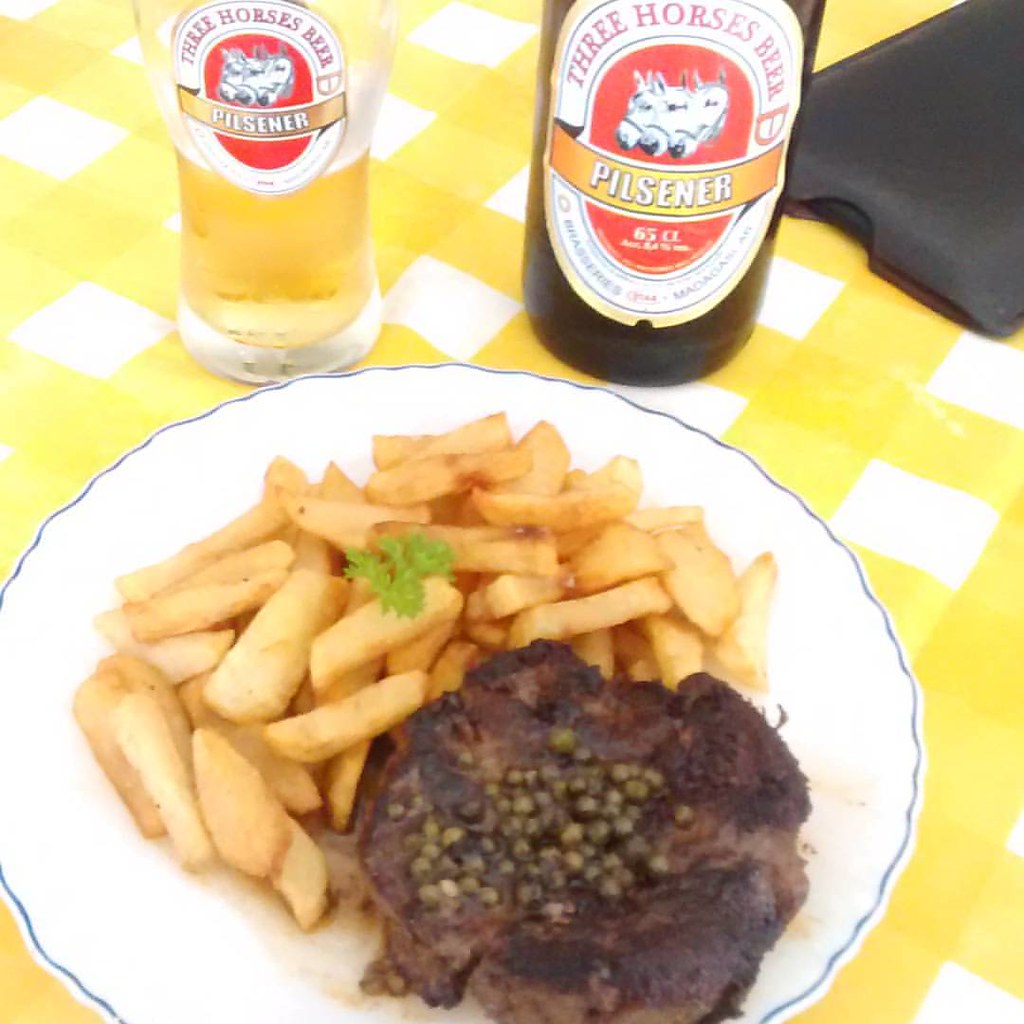 My own private observations are these:
When the Europeans first land at Madagascar, they have a strong appetite, and devour both animal and vegetable food indiscriminately, at the same time that their drink is nothing but lemonade. They are, besides, exposed to great heat, and breathe a moist air, occasioned by the exhalations of the marshes, and the mists or fogs, which arise from the rivers and woods. In this situation they are subject: to continual sweats. which at length weakens the radical moisture, which is so necessary to digestion. (p. 342)
From Memoirs and travels of Mauritius Augustus, count de Benyowsky... with an account of the French settlement he was appointed to form upon the island of Madagascar (1790) by Maurice Auguste Benyowsky
As sure as Kilimanjaro rises like Olympus above the Serengeti #QotD
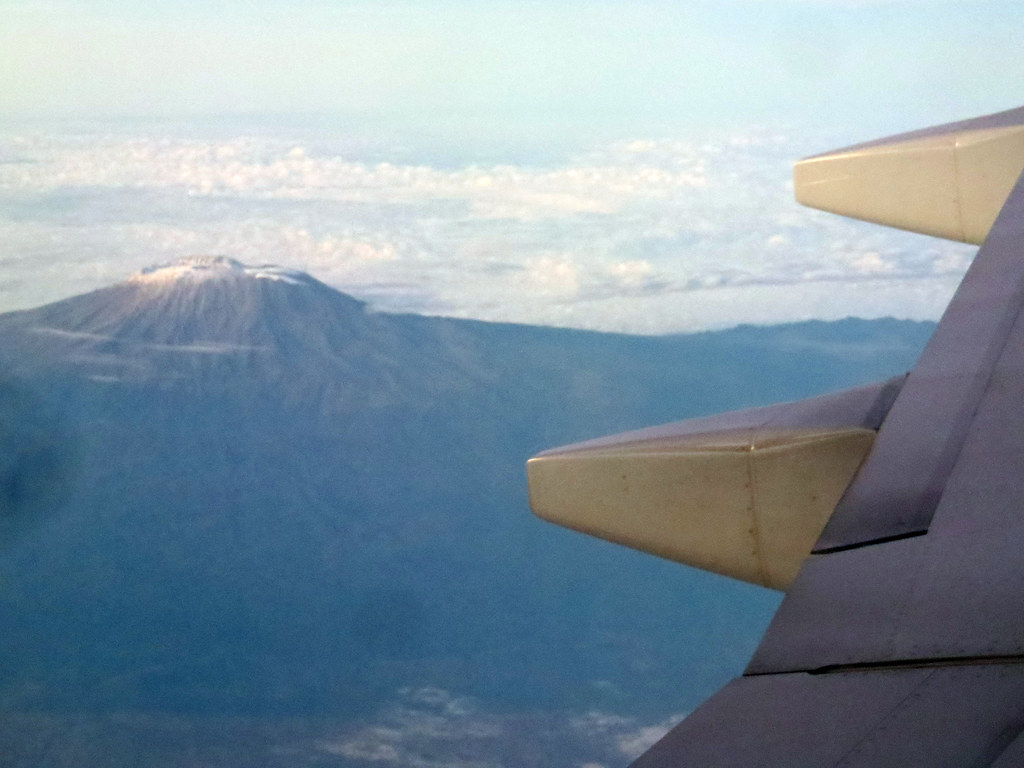 Had a great view of Kilimanjaro on my flight from Madagascar back to Nairobi (KQ 263); couldn't help but start to hum "Africa" by Toto.
I hear the drums echoing tonight
But she hears only whispers of some quiet conversation
She's coming in, 12:30 flight
The moonlit wings reflect the stars that guide me towards salvation
I stopped an old man along the way
Hoping to find some old forgotten words or ancient melodies
He turned to me as if to say, "Hurry boy, it's waiting there for you"
It's gonna take a lot to drag me away from you
There's nothing that a hundred men or more could ever do
I bless the rains down in Africa
Gonna take some time to do the things we never had
The wild dogs cry out in the night
As they grow restless, longing for some solitary company
I know that I must do what's right
As sure as Kilimanjaro rises like Olympus above the Serengeti
I seek to cure what's deep inside, frightened of this thing that I've become
It's gonna take a lot to drag me away from you
There's nothing that a hundred men or more could ever do
I bless the rains down in Africa
Gonna take some time to do the things we never had
Hurry boy, she's waiting there for you
It's gonna take a lot to drag me away from you
There's nothing that a hundred men or more could ever do
I bless the rains down in Africa
I bless the rains down in Africa
(I bless the rain)
I bless the rains down in Africa
(I bless the rain)
I bless the rains down in Africa
I bless the rains down in Africa
(Ah, gonna take the time)
Gonna take some time to do the things we never had
But the most remarkable objects on this day's journey were the vast numbers of that splendid production of Madagascar, the Urania speciosa, or Traveler's-tree #QotD
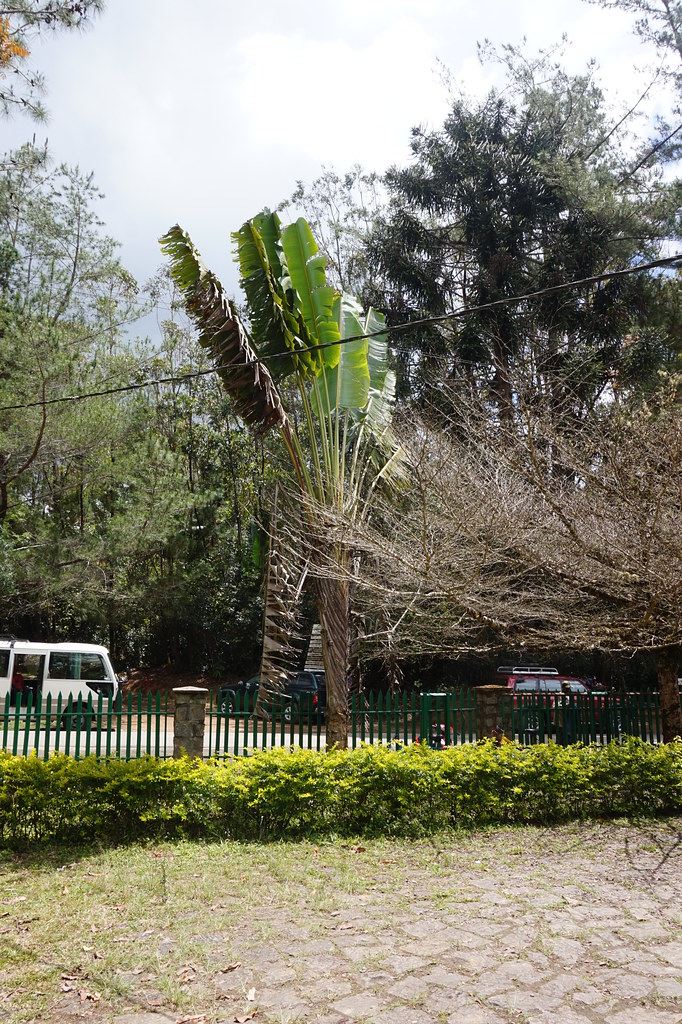 But the most remarkable objects on this day's journey were the vast numbers of that splendid production of Madagascar, the Urania speciosa, or Traveler's-tree. It is not easy to imagine, still less to describe, the appearance of a somewhat distant and oval-shaped mountain crested along its summit, as it appeared to us on one part of the way, by these stately trees, looking like a long line of gigantic Indian sachems, with their helmets of radiated feathers shown in strongly marked outline against the western sky. pp. 202-03
From Three visits to Madagascar during the years 1853--1854--1856: Including a journey to the capital; with notices of the natural history of the country and of the present civilization of the people by William Ellis
Friday, October 09, 2015
I also know that there is a capital some where near the middle of the island, the name of which begins with an 'Ant,' and ends with a 'rivo' #QotD
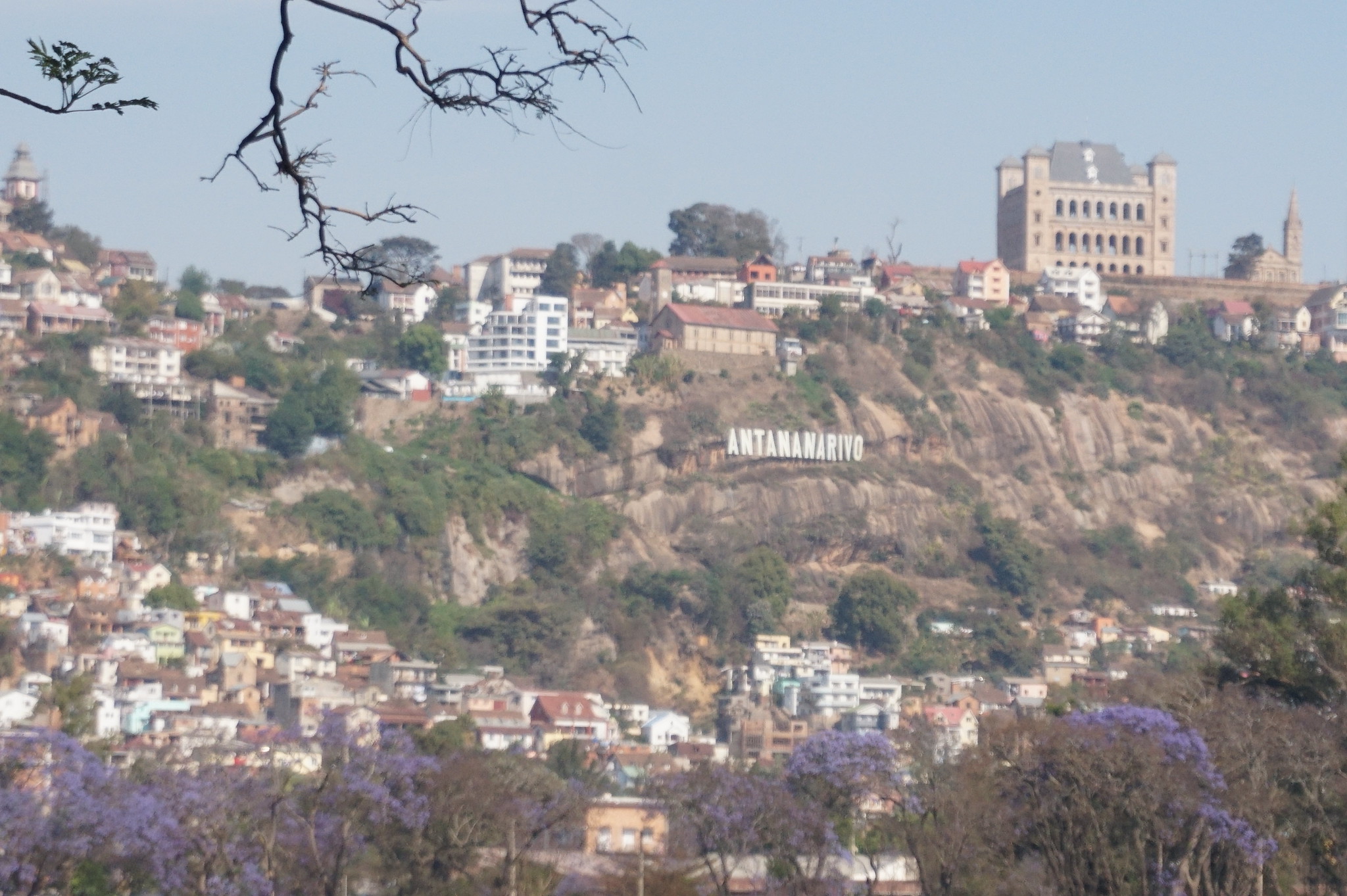 Unfortunately, I know uncommonly little about this island — not that my geographical education has been neglected, but the class-books I have used did not give much information about Madagascar. I know, however, that the Mozambique Channel, which divides us from Africa, is a little too wide to swim. I also know that there is a capital some where near the middle of the island, the name of which begins with an 'Ant,' and ends with a 'rivo'. There are some syllables between, I believe, but how many, is more than I can tell. There's a government in it, however, and a queen, and some Christian missionaries. Now, it strikes me that where there's a government, a queen, and Christian missionaries, there must be more or less of civilisation and safety, so I would advise that we make straight for the capital. (p. 28)
From The Fugitives; or, The Tyrant Queen of Madagascar by R. M. Ballantyne (1887).
The lemurs are very pretty little things, and, being gentle affectionate creatures, are sometimes tamed and kept as pets #QotD
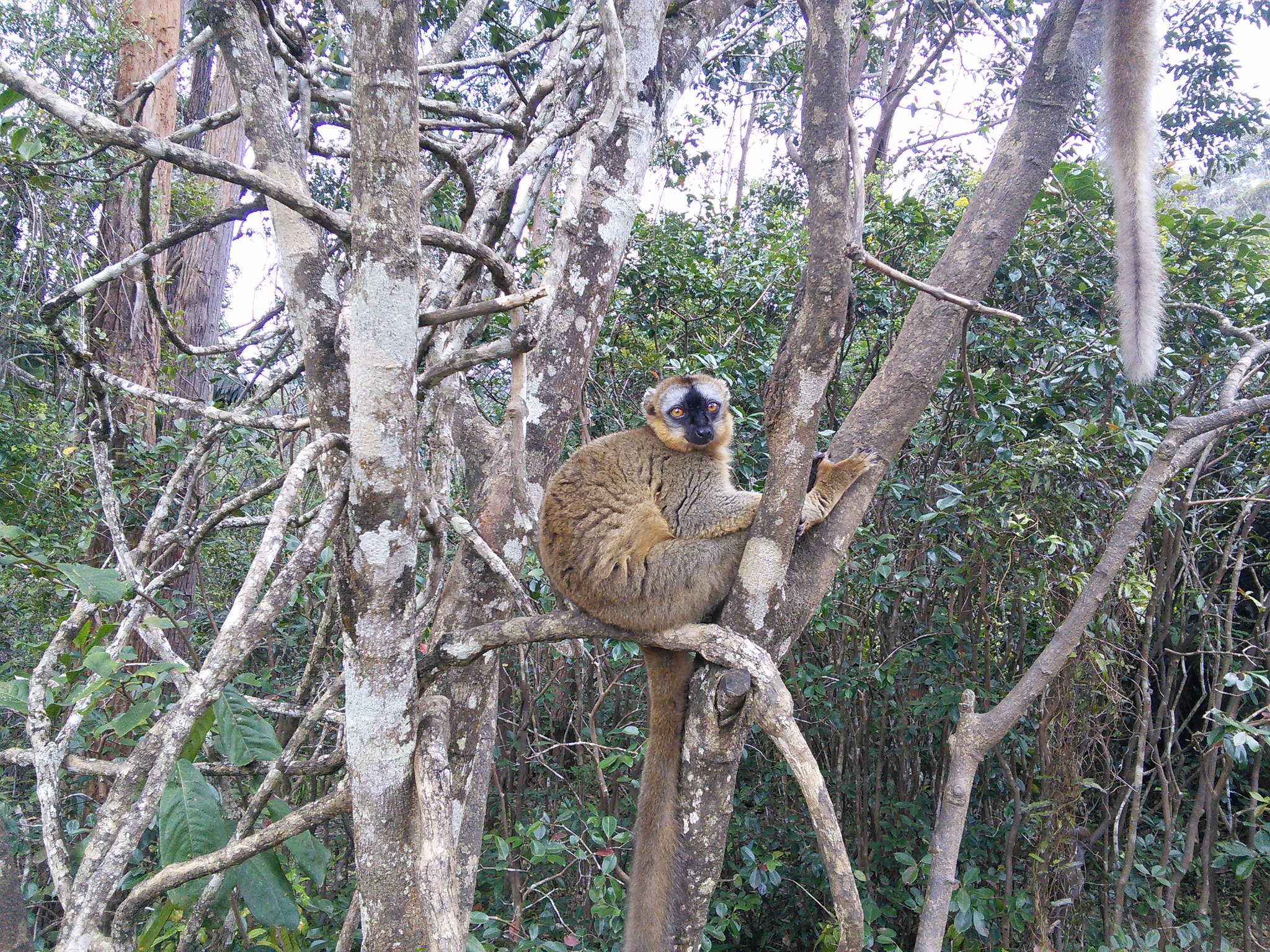 Of larger animals they saw none; and it may be as well to remark here that there are no large carnivora in Madagascar — no lions, tigers, leopards panthers, or creatures of that sort — nothing larger than a wild-cat and a wolf being known. Neither are there elephants, giraffes, rhinoceroses, hippopotami, antelope, nor deer; the only large animals being two species of ox, and the wild-boar, goats and sheep, and crocodiles. There are also huge bats, an animal of the monkey tribe called the lemur, hedgehogs, and rabbits.
The lemurs are very pretty little things, and, being gentle affectionate creatures, are sometimes
tamed and kept as pets.
The scenery, we have said, was beautiful. At one turn of the road in particular a landscape of
such beauty appeared suddenly before them that Mark was arrested as if spell-bound; it was such a
gorgeous combination of luxuriant foliage — ferns and palms and bamboos, interlaced with creepers, and enlivened by streams which brawled and tumbled in picturesque cascades, over which
hundreds of butterflies sported in the sunshine. From the height of land on which they stood a
wide, well-watered plain was seen to extend far below them. (pp. 122-23)
From The Fugitives; or, The Tyrant Queen of Madagascar by R. M. Ballantyne (1887).
Some musical selections from Kenya, what I was listening too
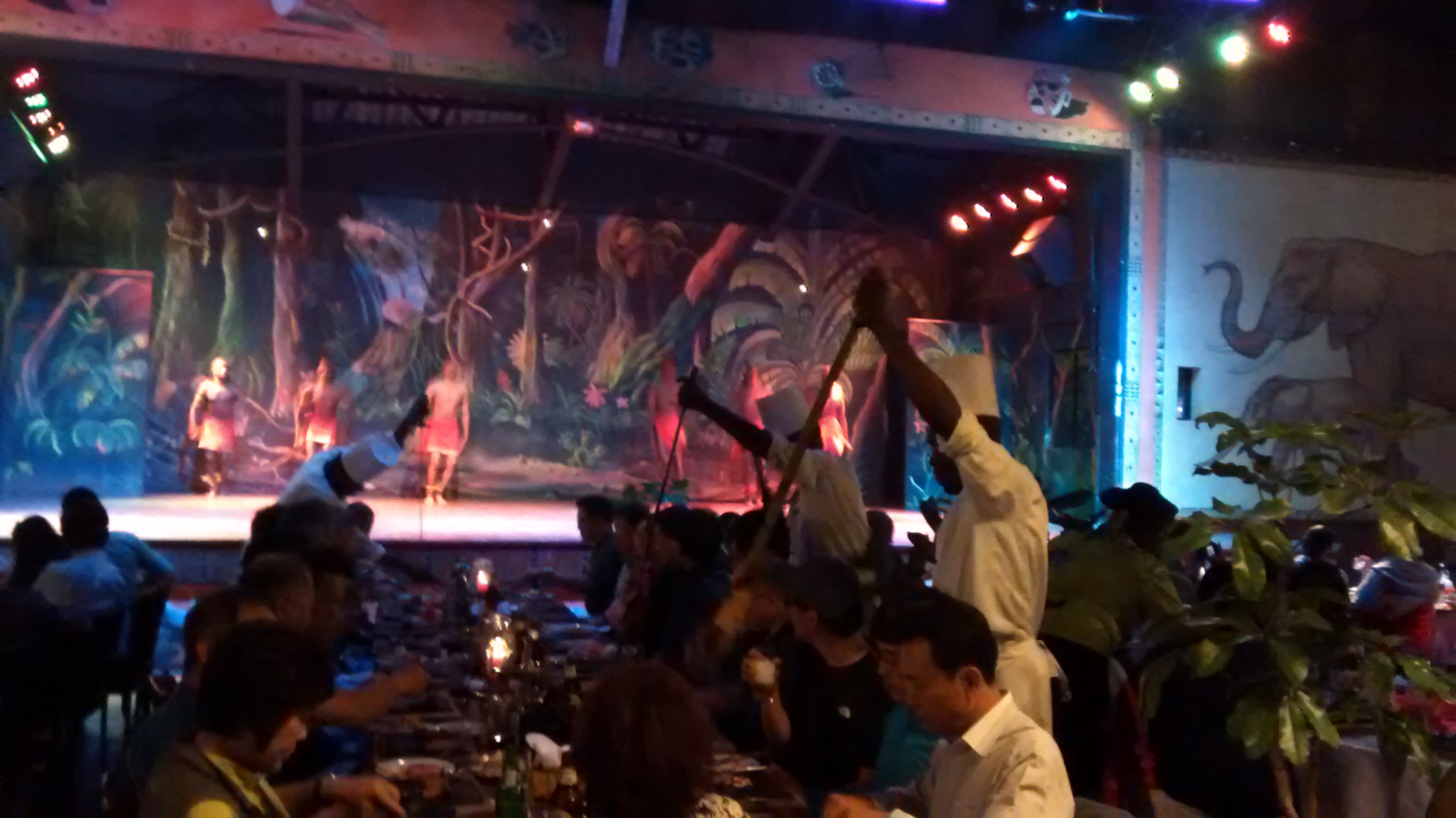 Got to see some live music (as part of the TDWG 2015 conference, here's what was on the heavy rotation on the trip over and there.
What I was listening to:
- D.O. Misiani and Shirati Jazz. The King Of History - Classic 1970s Benga Beats From Kenya (2010)
- D.O. Misiani. Club Oasis (2006)
- Kilimambogo Brothers. Mwitu Mbethi (2015)
- Migori Super Stars. Remo Gi Remo (2012)
- Various Artists/The Bomas Of Kenya. Tribal Dance From East Africa (2006)
- Various Artists. Kenya Special (Selected East African Recordings From The 1970s & 80s) (2013)
- Various Artists. Music From Kenya Volume 1 (2008)
- Kilimanbogo Brothers info and discography
- Kilimanbogo Brothers (Amazon)
- D.O. Misiani and Shirati Jazz info and discography
- D.O. Misiani and Shirati Jazz (Wikipedia)
- D.O. Misiani (Allmusic)
- Shirati Jazz (Allmusic)
- Benga Music (Wikipedia)
- Music of Kenya (Wikipedia)
- Migori Super Stars (Amazon)
I have heard of men telling of sleeping in huts in Madagascar, with scorpions crawling over them ... #QotD
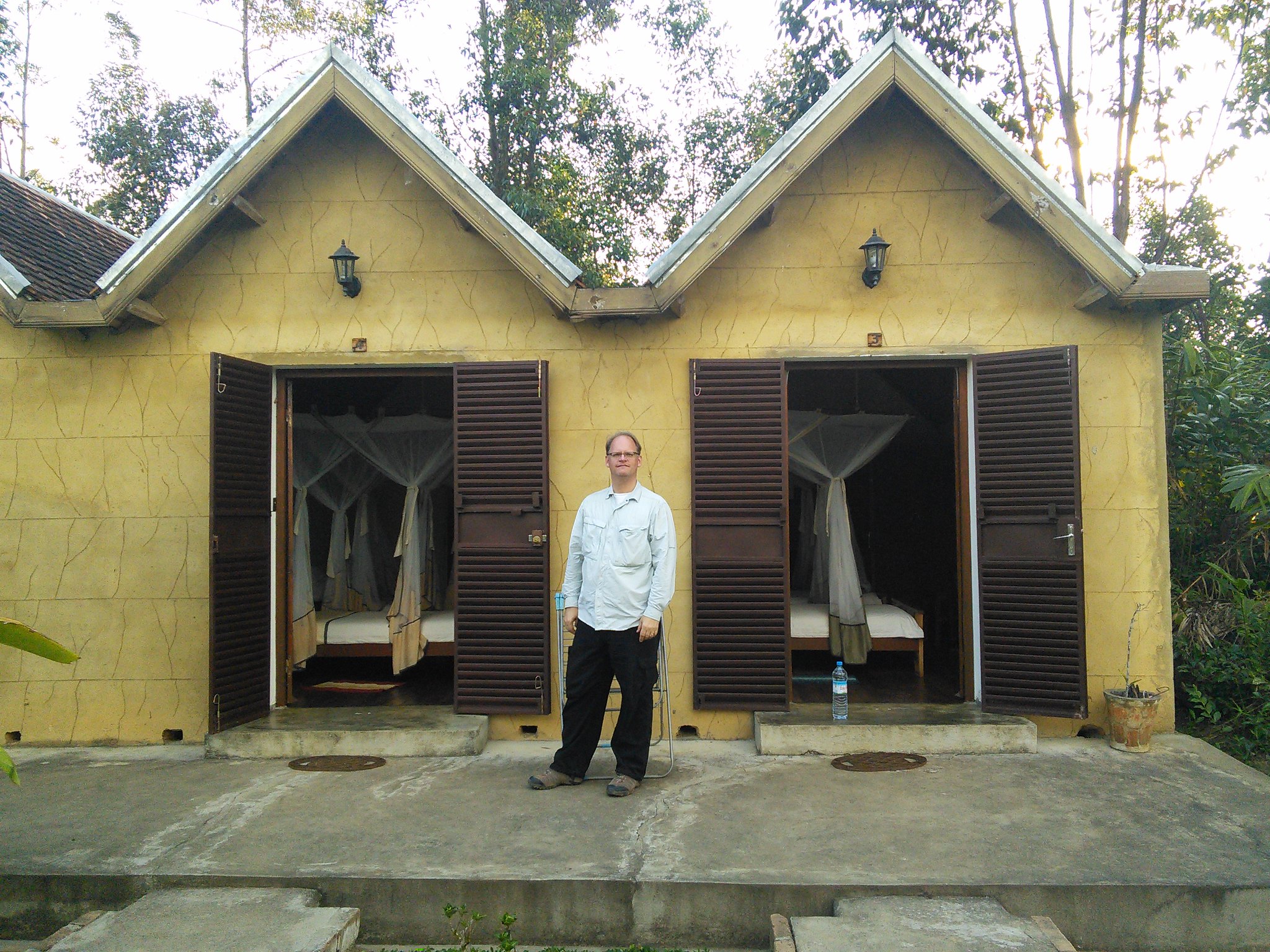 I have heard of men telling of sleeping in huts in Madagascar, with scorpions crawling over them, snakes hanging from the roof hissing in their faces, and of being taken out in the morning, set up to be speared, and only waiting to hear the 'Klick' (which does not exist in Madagascar) as the signal for being speared! All such are but 'travellers' tales,' the product of disordered livers or diseased imaginations. The scorpions were only cockroaches or rats; the snakes, long festoons of soot, such as hang from the roof of most Malagasy huts, which have no chimneys; the being taken out and set up to be speared, only a dream, probably the effect of too hearty a supper after a long exhausting day's journey! (p. 173)
From Thirty years in Madagascar by Thomas Trotter Matthews (1904)
Orchids were abundant, and often, occupied positions in which the growers of these plants in England would little expect to find them #QotD
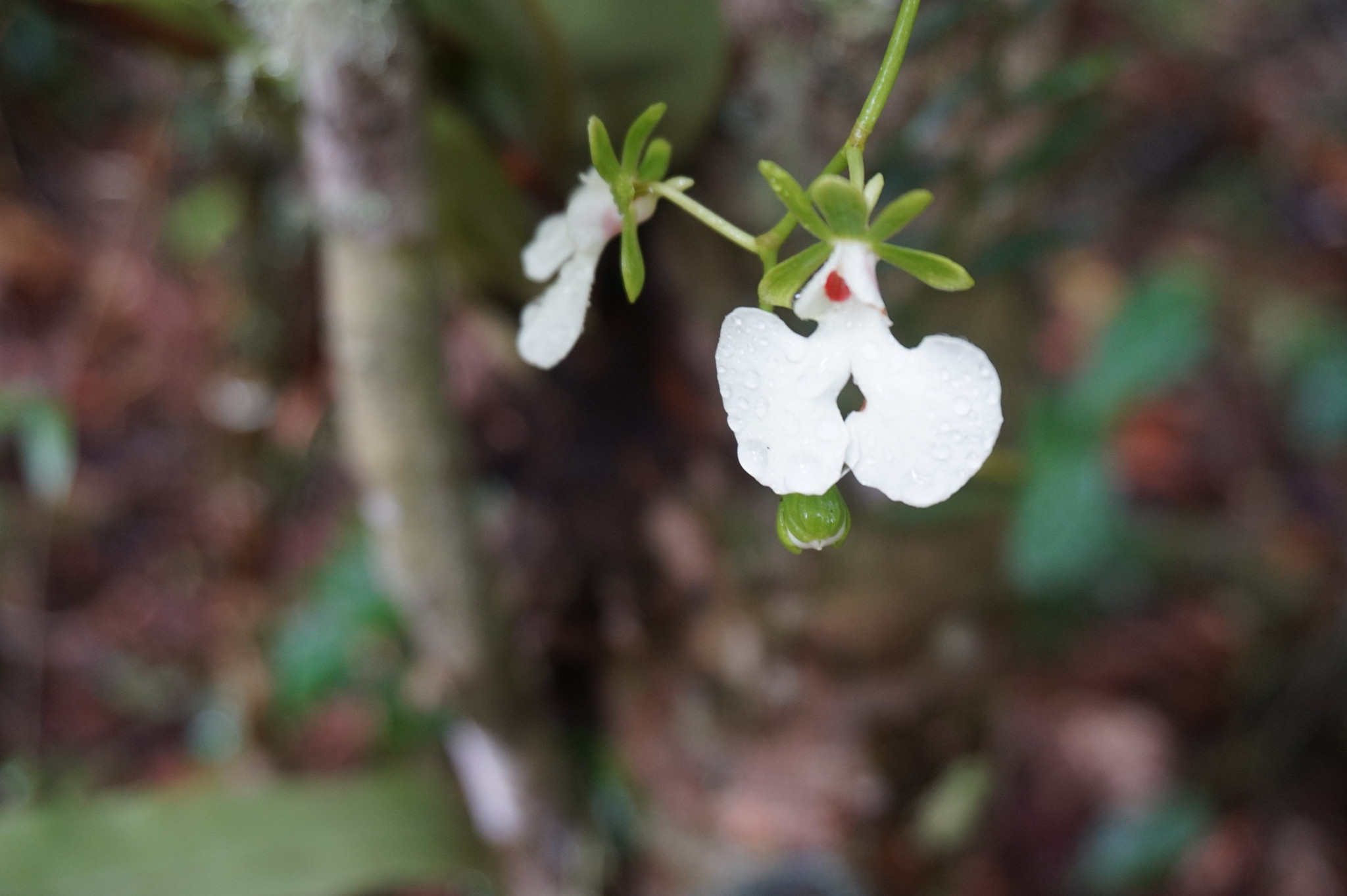 Orchids were abundant, and often, occupied positions in which the growers of these plants in England would little expect to find them, but in which they gave an indescribable singularity and charm to the landscape. The limodorums were numerous in parts of the road, and formed quite a ball of interlaced roots at the base of the bulbs. A small species, resembling in habit and growth the Camarotus purpurea, but quite unknown to me, and bearing a vast profusion of white and sulphur-tinted flowers, often enlivened the sides of the road along which we passed. But the an graecums, both A. superbum and A. sesquipedale, were the most abundant and beautiful. I noticed that they grew most plentifully on trees of thinnest foliage, and that the A. sesquipedale was seldom, if ever, seen on the, ground, but grew high up among the branches, often throwing out long straggling stems terminating in a few small and often apparently shriveled leaves. The roots also partook of the same habit. They were seldom branched or spreading, but long, tough, and single, sometimes running down the branch or trunk of a tree, between the fissures in the rough bark, to the length of twelve or fifteen feet; and so tough and tenacious that it required considerable force to detach or break them. Many of them were in flower; and, notwithstanding the small, shriveled appearance of the leaves, the flowers were large and the yellow color strongly marked. On more than one occasion I saw a splendid Angraecum sesquipedale growing on the trunk of a decaying or fallen tree, as shown in the accompanying engraving, and sending its tough roots down the trunk to the moist parts of the vegetation on the ground. p. 206
From Three visits to Madagascar during the years 1853--1854--1856: Including a journey to the capital; with notices of the natural history of the country and of the present civilization of the people by William Ellis
The island of Madagascar, from its interesting and singular history, has claims upon the attention of every European visitor #QotD
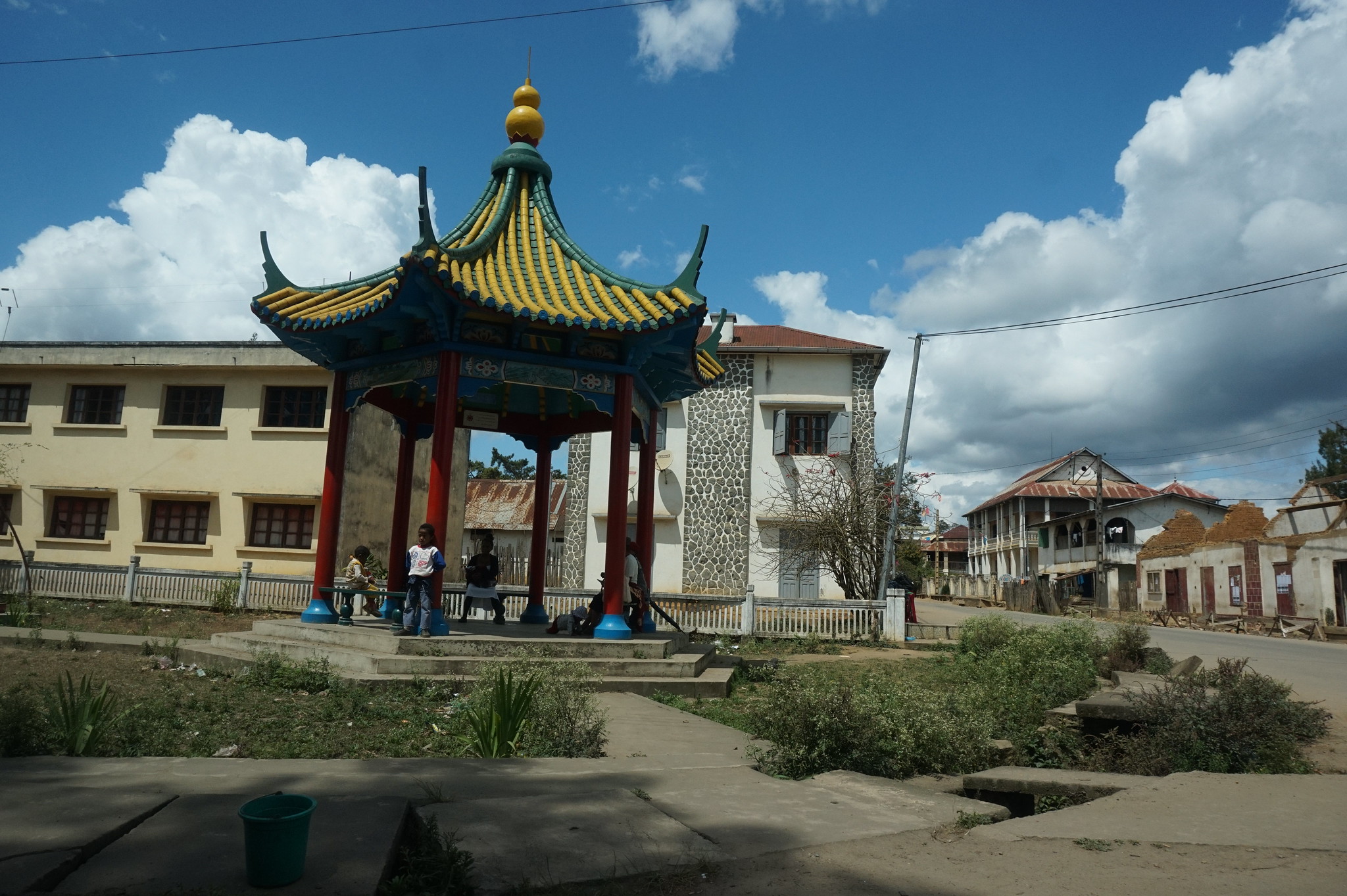 The island of Madagascar, from its interesting and singular history, has claims upon the attention of every
European visitor. But from a Briton it demands more; for — independently of the pleasing novelty of a nation
overcoming the deeply-rooted prejudices and customs of ignorance and superstition, and suddenly grasping at
the highest pitch of civilization and improvement — he finds himself surrounded by a people emulous to
imitate his habits, solicitous of his acquaintance, and gratefully attached to his country. The more he
communicates with them the more he must admire their character; courageous yet docile, with a thirst for
glory and information that leads them to stray from their homes, although their hearts still fondly linger
there; and in possession of talents and perseverance that enable them to overcome every obstacle likely
either to obstruct or advance their progress in knowledge. Their firm and enthusiastic patriotism cannot be
better illustrated than by the following striking example, which much resembles that stern but inhuman sense
of duty which made the filicide Brutus the best of citizens but the
worst of parents.(pp. 66-67)
The island of Madagascar, from its interesting and singular history, has claims upon the attention of every
European visitor. But from a Briton it demands more; for — independently of the pleasing novelty of a nation
overcoming the deeply-rooted prejudices and customs of ignorance and superstition, and suddenly grasping at
the highest pitch of civilization and improvement — he finds himself surrounded by a people emulous to
imitate his habits, solicitous of his acquaintance, and gratefully attached to his country. The more he
communicates with them the more he must admire their character; courageous yet docile, with a thirst for
glory and information that leads them to stray from their homes, although their hearts still fondly linger
there; and in possession of talents and perseverance that enable them to overcome every obstacle likely
either to obstruct or advance their progress in knowledge. Their firm and enthusiastic patriotism cannot be
better illustrated than by the following striking example, which much resembles that stern but inhuman sense
of duty which made the filicide Brutus the best of citizens but the
worst of parents.(pp. 66-67)From W.F.W. Owen, Narrative of Voyages to Explore the Shores of Africa, Arabia, and Madagascar, Volume 1 (1833).
The people of Madagascar have no reason to fear wild beasts, or venomous creatures #QotD
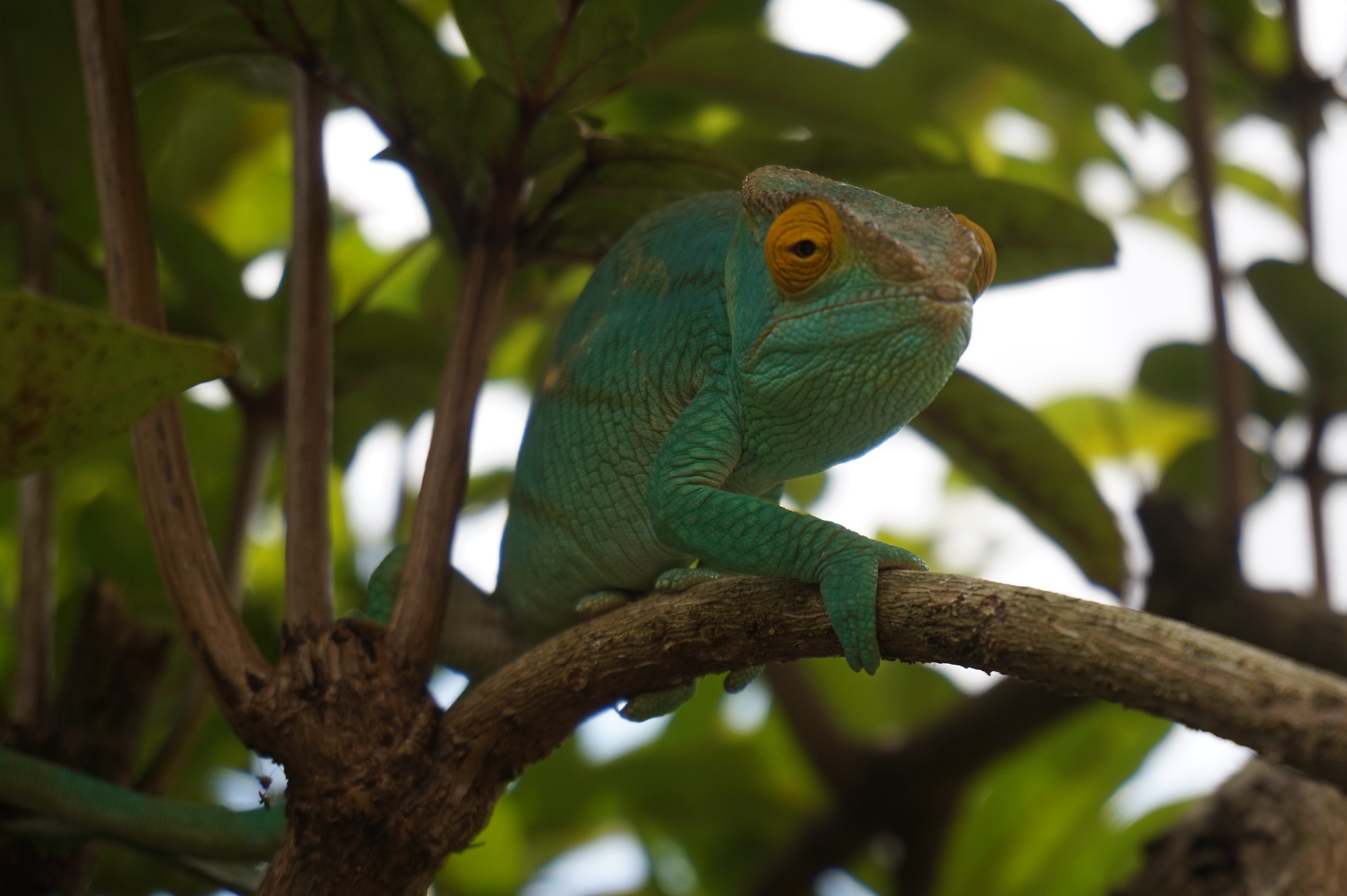 The people of Madagascar have no reason to fear wild beasts, or venomous creatures, as there are none upon the island. Cold weather, frost, and snow, are unknown to them; and the hot weather is less troublesome here, than upon the islands which lie in the torrid zone, because the nights are cool and the heat of the day lasts only from nine to three, during which time the sea breeze prevails, and cools the air to fuch a degree, that it is seldom inconvenient. (pp. 357-58)
From Memoirs and travels of Mauritius Augustus, count de Benyowsky... with an account of the French settlement he was appointed to form upon the island of Madagascar (1790) by Maurice Auguste Benyowsky
Although the vegetation was most luxuriant, I was surprised by the almost perfect silence of the woods #QotD
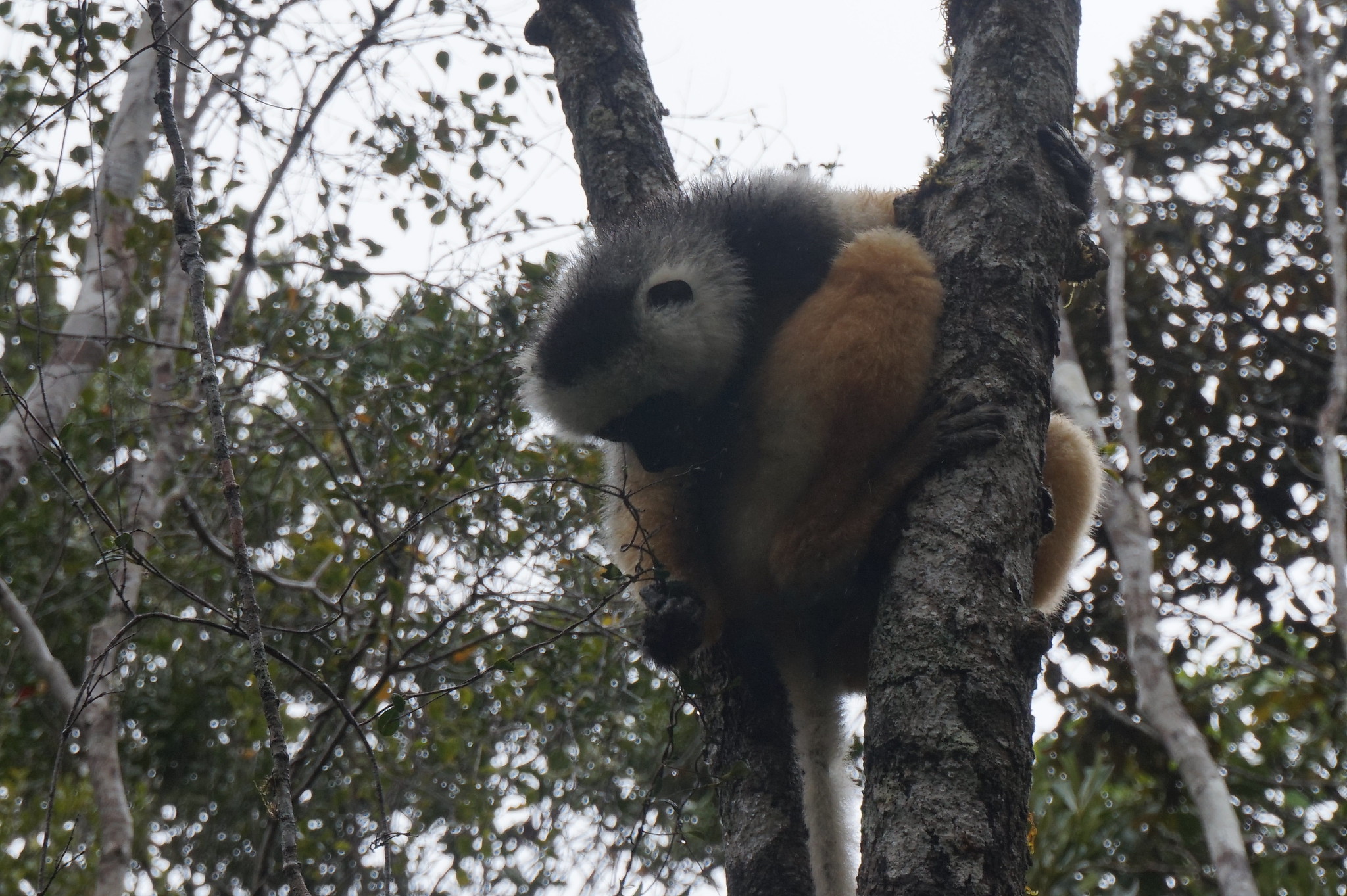 Although the vegetation was most luxuriant, I was surprised by the almost perfect silence of the woods, and the extreme rarity of animal life. Except an occasional note from a bird, and sometimes the wild melancholy cries of the lemurs, there was a deathlike silence, unbroken even by the hum of insects. (p.93)
From Madagascar and its people. Notes of four years' residence by James Sibree (1870)
My attention was soon attracted by a peculiar shouting or hallooing in the forest #QotD
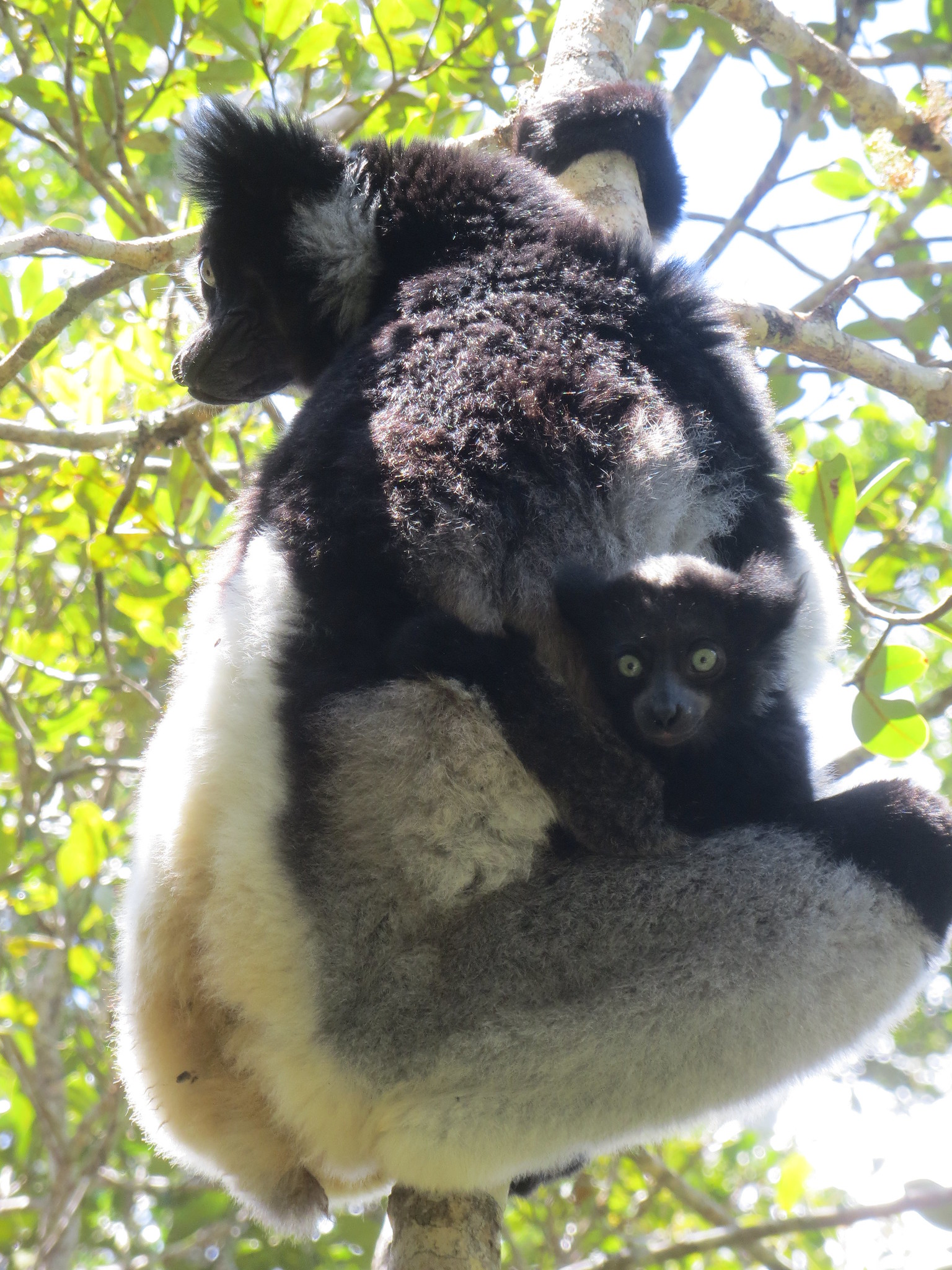 (Pictured at right is actually Indri indri indri)
My attention was soon attracted by a peculiar shouting or hallooing in the forest, apparently at no great distance from the road. It was not like any sound I had heard before, but resembled that of men or boys calling to each other, more than any thing else. At first I thought it was a number of people driving cattle out of the forest into the road. Still I heard no crashing among the underwood, and saw no signs of bullocks. Then I imagined it must be a number of birdrcatchers or squirrel-catchers. But on inquiring of my companions, they said the noise proceeded from the black and white lemurs, Lemur macaco, of which there were great numbers in the forests. p. 479
From Three visits to Madagascar during the years 1853--1854--1856: Including a journey to the capital; with notices of the natural history of the country and of the present civilization of the people by William Ellis


Subscribe to:
Posts (Atom)