Showing posts with label Suggested Reading. Show all posts

Saturday, October 10, 2015

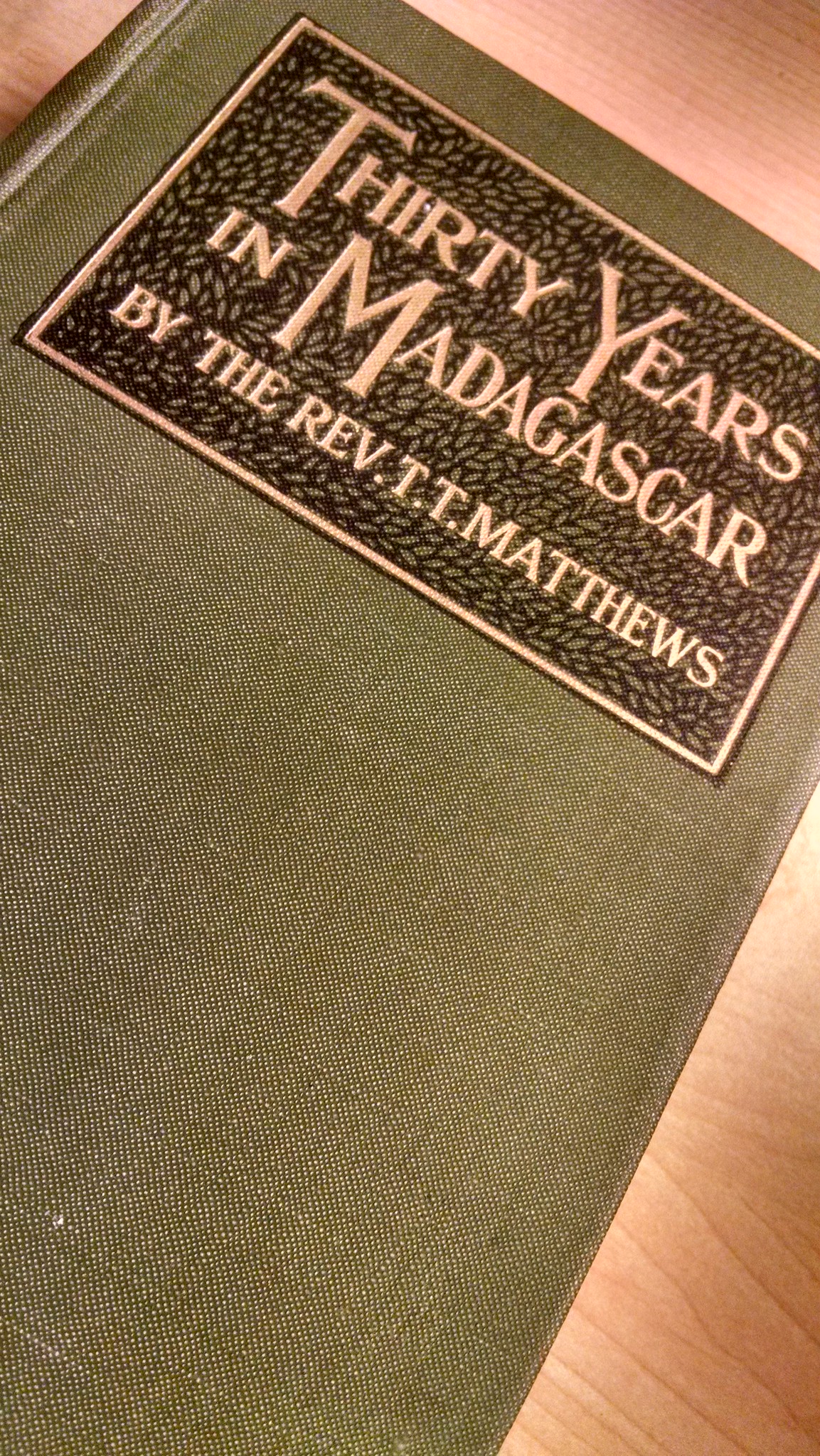
A reading list for my visit to Madagascar

IMG_20150811_170826585_HDRHere are a few of the books I was, well not reading cover to cover, but looking through, before my trip to Madagascar. Amazing how many travelers would go to Madagascar and spend most of their account on the trivial day-to-day of business activities (usually missionary work) than the amazing sites around them.


Friday, October 02, 2015

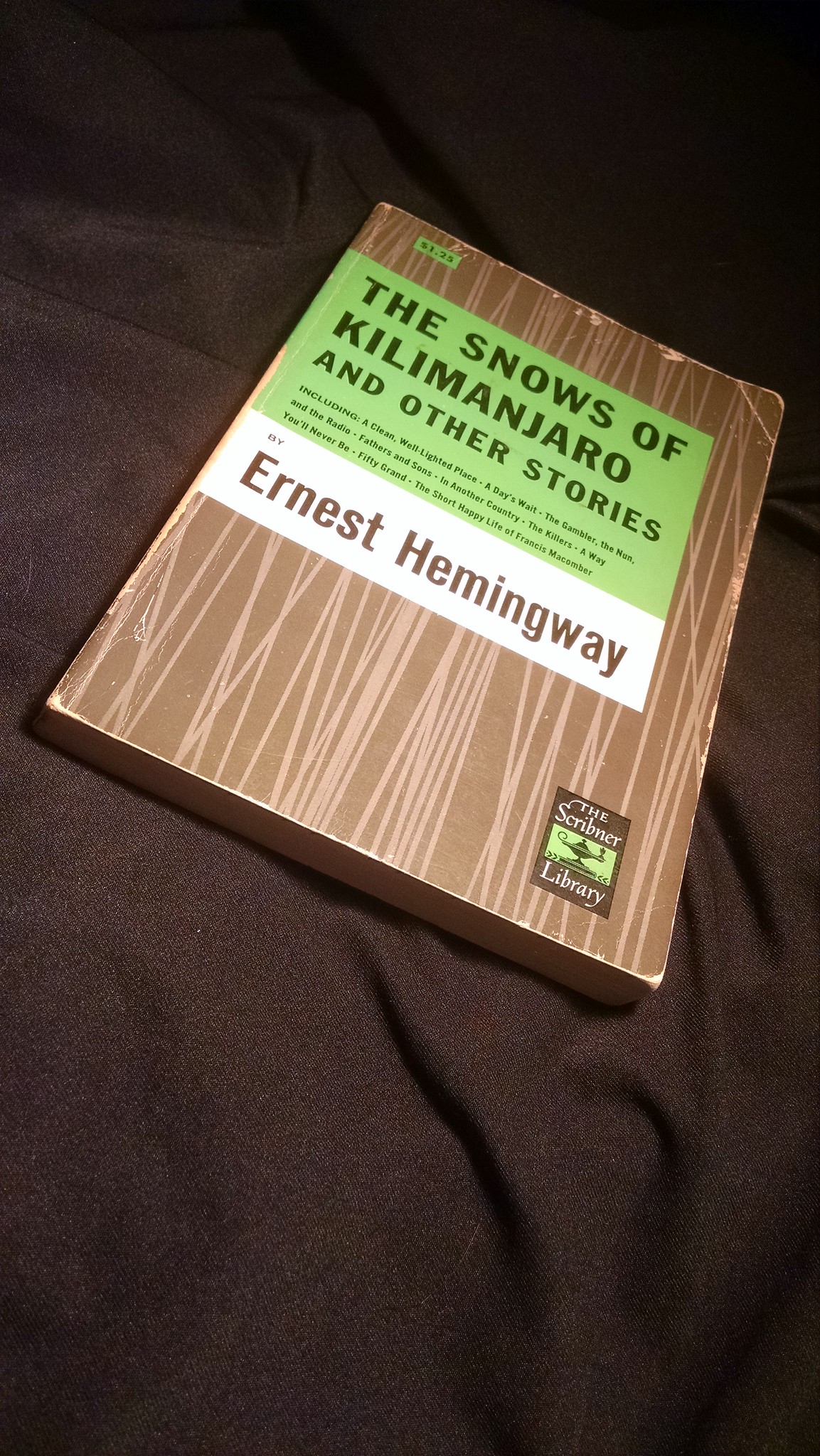
My reading list for Kenya, some more obvious than others

IMG_20150912_121903657Below are a list of books, stories, etc. that I read before (and partly during) my trip to Kenya. Some are more obvious than others (Out of Africa and the African works of Hemingway being the most obvious Western works of course!). Nicolas Best's Happy Valley was an interesting account of the British in East Africa through independence, but had a certain condescending tone that was a bit off.

The historical travel accounts (from Thompson's 1885 work through Waugh in the early 1960s) were the all too typical "white man" accounts that left the local people silent witnesses to the travelers. Winston Churchill and Theodore Roosevelt (who visited at nearly the same time - 1909/10) provide interesting contrasts of the former President and the future Prime Minister. Churchill provides insights into the Colonial government and Roosevelt discusses natural history (as he was on a collecting expedition for the Smithsonian).

I was only able to read a few works (one fiction, one non-fiction) by a Kenyan (Ngũgĩ wa Thiong’o, perhaps the most noted of 20/21st century writers) and a very good coming of age memoir by Binyavanga Wainaina (as well as Wainaina's biting essay, "How to Write About Africa").

Nonfiction
Memoirs
Travel Accounts
IMG_20150923_164956102
"Reading" at the Botanic Garden
at the Nairobi National Museum

Thursday, September 24, 2015

Going to try how to NOT write about "Africa" with some guidance from @BinyavangaW

2015.09.23-IMG_5088
Nairobi National Museum, Kenya
So, it is hard to write about "Africa", hard not to fall into the cliches that Binyavanga Wainaina  has laid out for us in his witty (and biting) essay, "How to Write About Africa" (Granta 92, 19 Jan 2006: The View from Africa).
Always use the word ‘Africa’ or ‘Darkness’ or ‘Safari’ in your title. Subtitles may include the words ‘Zanzibar’, ‘Masai’, ‘Zulu’, ‘Zambezi’, ‘Congo’, ‘Nile’, ‘Big’, ‘Sky’, ‘Shadow’, ‘Drum’, ‘Sun’ or ‘Bygone’. Also useful are words such as ‘Guerrillas’, ‘Timeless’, ‘Primordial’ and ‘Tribal’. Note that ‘People’ means Africans who are not black, while ‘The People’ means black Africans.
This is a hard one, but just for "sky". Some places just have great skies. New Mexico and the rest of the American West has it, so did South Africa and Ghana. So did Kenya!

And likewise: 
Readers will be put off if you don’t mention the light in Africa. And sunsets, the African sunset is a must. It is always big and red. There is always a big sky. Wide empty spaces and game are critical—Africa is the Land of Wide Empty Spaces.
And last, "Always end your book with Nelson Mandela saying something about rainbows or renaissances. Because you care."

Not sure how I did overall during my trip to Ghana and South Africa, but I'll try not to do that with these posts during my time in Kenya, specifically the environs of Nairobi and Kajiado County in the Great Rift Valley (Amboseli National Park to be exact).

Monday, December 31, 2012

2012 in Review: what I was reading this year ...

2008-07-06-dscn4792So, lots of screen reading what with Flipboard on the iPad and HuffPost on the Android phone; and then throw in news feeds from TechCrunch, Mashable, Silicone Alley Insider, The Long Now Foundation, Memex 1.1, and lots of words were consumed.

Oh, and yes, I tried to keep up with some magazines, Smithsonian Magazine, National Geographic, Wired, and The Atlantic (mostly in print, but also on the iPad).

But from the world of books (aka "the stuff between two pieces of cardboard" - though this year I actually read all my books on a Kindle), here was my 2012:
  • Gunter Grass, The Tin Drum
  • Kurt Vonnegut Jr., Slaughterhouse-Five or the Children's Crusade
  • Jerzy Kosinski, The Painted Bird
I started off the year by reviewing the horrors of WW II. These re-reads of three novels, from much different perspectives and styles, provide a good overview of the evils of warfare in any time or place. Inspiration came from the recent release of The Tin Drum in a new translation that was as full and rich as Ralph Mannheim's.

David Weinberger, Too Big to Know
Weinberger hits a home run with his newest book; clearly he holds the top spot of  "philosopher of the networked age.

Charles Dickens, Hard Times
It's Dickens/ bi-centenary and I wanted to fit in a few of his novels; this was the first one I'd every read (back in 1981?), and still one of my favorites.

William Spaniel, Game Theory 101
Still digesting and browsing through this one.

Kurt Vonnegut Jr., Palm Sunday
It was also a bit of a Vonnegut year; A good autobiographical collection of essays.

Anthony Burgess, 1985
Burgess can please or annoy, this was pleasing.

Kurt Vonnegut Jr., Galapagos
First time read of this novel for my Vonnegut year.

Charles Dickens, A Tale of Two Cities
More re-reads of Dickens.

Ray Bradbury, "The Playground"
An old story, just released in eBook form.

Robin Sloan, Mr. Penumbra's 24 Hour Bookstore
Saw this book somewhere in social media and it sounded intriguing. A mystery involving book scanning, Aldus Manutius, a strange cult of booksellers all mix into a fun little romp.

Nick Cole, The Old Man and the Wasteland
A discovery in the Kindle Singles shop; very good post-apocalyptic story meets Hemingway.

Neil Gaiman, American Gods
An amazing work. Perhaps one of the best books of the past 20 years. Gaiman transcends any type of genre you may want to pigeonhole him into to create a truly great novel of America.

Kurt Vonnegut Jr., Cat's Cradle
More re-reads of  Vonnegut.

Charles Dickens, A Christmas Carol
More re-reads of Dickens for the Christmas season.

Robin Sloan, Annabel Scheme
Needed to read this first work, more of a novella, by Sloan after enjoying Mr. Penumbra's 24 Hour Bookstore.

Hugh Howey, Wool Omnibus Edition (volumes 1-5)
Saw my colleague @Bathlander mention this on Twitter and picked it up for the Kindle. Self-published, it is a brilliant work of science fiction/futurism set in a world where the population lives in a giant silo that is sunk Over 150 stories into the earth. An earth where no one goes outside except those who break the rule of thinking about the outside and are sent with "wool" to clean the sensors that give the silo-dwellers a view of the bleak landscape ... and then die.

Charles Dickens, The Chimes
More re-reads of Dickens for the Christmas season.


Three shelves of books

Sunday, September 12, 2010

Ars longa, shelf space brevis


2010-09-11-IMG_9520
Originally uploaded by martin_kalfatovic
I've run into the problem of Newtonian physics in that space cannot expand infinitely, specifically, shelf space for books. I've been in denial about this, boxing books and tucking them into closets and storage areas, but the time came to face it, there was no more room for books in the house.

There are still a lot left, hundreds and hundreds, but also looking down the line where the future is shorter than the past (for mortal me that is) and also realizing that there were many books that I would probably, well, face it, never read again, why keep them around (especially when there are new items coming in?)

So, what do do? Wait, a solution! I got a Kindle, so, that means that I can still keep some of those odd books in my immediate life (like, the lesser works of Thomas Hardy) and those brilliant Dickensian door stops (Bleak House). As well as those curious baubles like the works of Verne, Wells, etc.

I was a bit like a kid in a candy store: every single novel, poem, etc. by Thomas Hardy for $4.97; all of Austen; Nicomachean Ethics!

Lots and lots more. Of course, there are lots of titles you still can't get in ePub (Faulkner, Nabokov, Camus), but it's just a matter of time.

And for those not on Amazon for free or low cost, there are uncorrected ePub version of many titles at the Internet Archive and elsewhere. Speaking of the Internet Archive, I'm looking forward to the "Books in Browsers" meeting later in October.

Will I miss those slowly burning (acidifying) copies of Hardy? Yes. Will I miss the glorious Penguin editions with their cover art? Yup.

So, off these (and a bunch more) either to friends, the library book sale, Goodwill, and yes, sadly, the trash (for those whose perfect bindings are no longer so and whose pages ex-foliate with each tender turn).

So, as some of these are disentombed from boxes where they've lived for the past number of years, I say ave atque vale. And see you on the Kindle.

Friday, April 20, 2007

Web 2.0 for the enterprise: Ell Seven?

Be 2.0 or be Ell Seven ...


Web 2.0 for the enterprise: Wisdom of the employess by ZDNet's Dan Farber -- At the Web 2.0 Expo in San Francisco, I moderated a panel on Web 2.0 in the enterprise (also known as Enterprise 2.0) with Ross Mayfield, CEO of SocialText; Matthew Glotzbach, product management director of Google Enterprise; and Satish Dharmaraj, CEO of Zimbra. We discussed the impact of wikis, Web apps, blogs, search and other [...]