Showing posts with label Bayard Taylor. Show all posts

Saturday, April 04, 2015

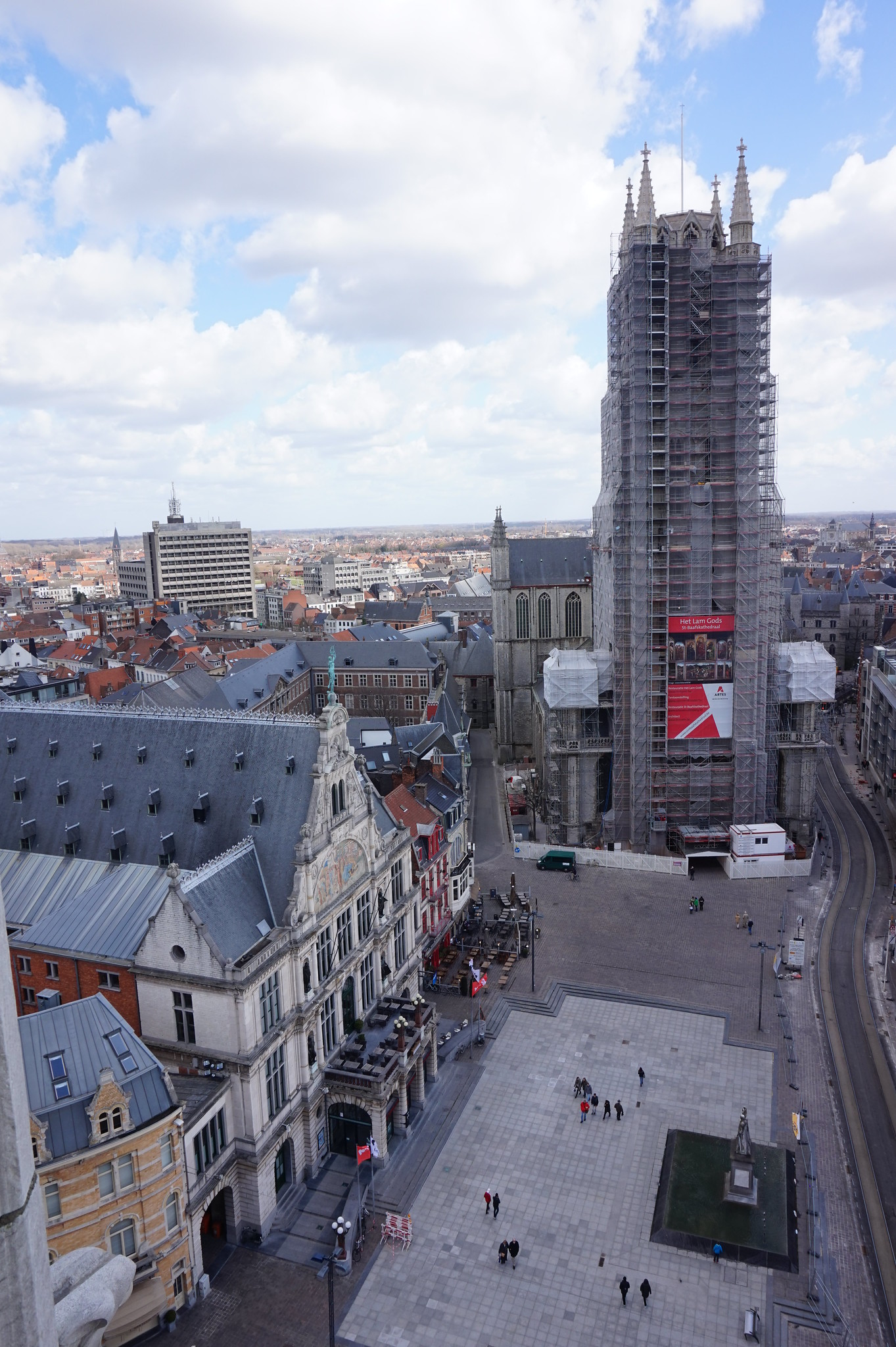
"I went to see the Cathedral of St. Bavon" Bayard Taylor #QotD

2015.04.01-DSC00710I awoke once in the night and saw the dark branches of trees passing before the window, but there was no perceptible sound nor motion; the boat glided along like a dream, and we were awakened next morning by its striking against the pier at Ghent. After paying three francs for the whole night journey, the captain gave us a guide to the railroad station, and as we had nearly an hour before the train left, I went to see the Cathedral of St. Bavon.

After leaving Ghent, the road passes through a beautiful country, cultivated like a garden. The Dutch passion for flowers is displayed in the gardens around the cottages; even every vacant foot of ground along the railway is planted with roses and dahlias. At Ghent, the morning being fair, we took seats in the open cars. About noon it commenced raining and our situation was soon anything but comfortable. My cousin had fortunately a water-proof Indian blanket with him, which he had purchased in the "Far West," and by wrapping this around all three of us, we kept partly dry. I was much amused at the plight of a party of young Englishmen, who were in the same car; one of them held a little parasol which just covered his hat, and sent the water in streams down on his back and shoulders. p. 48-49

Bayard Taylor (1825-1878) was an American poet, literary critic, translator, and travel author. He published a couple of books on Egypt which is where I'd first heard of him when writing my book on Egyptian travel accounts, Nile Notes of a Howadji (1992).

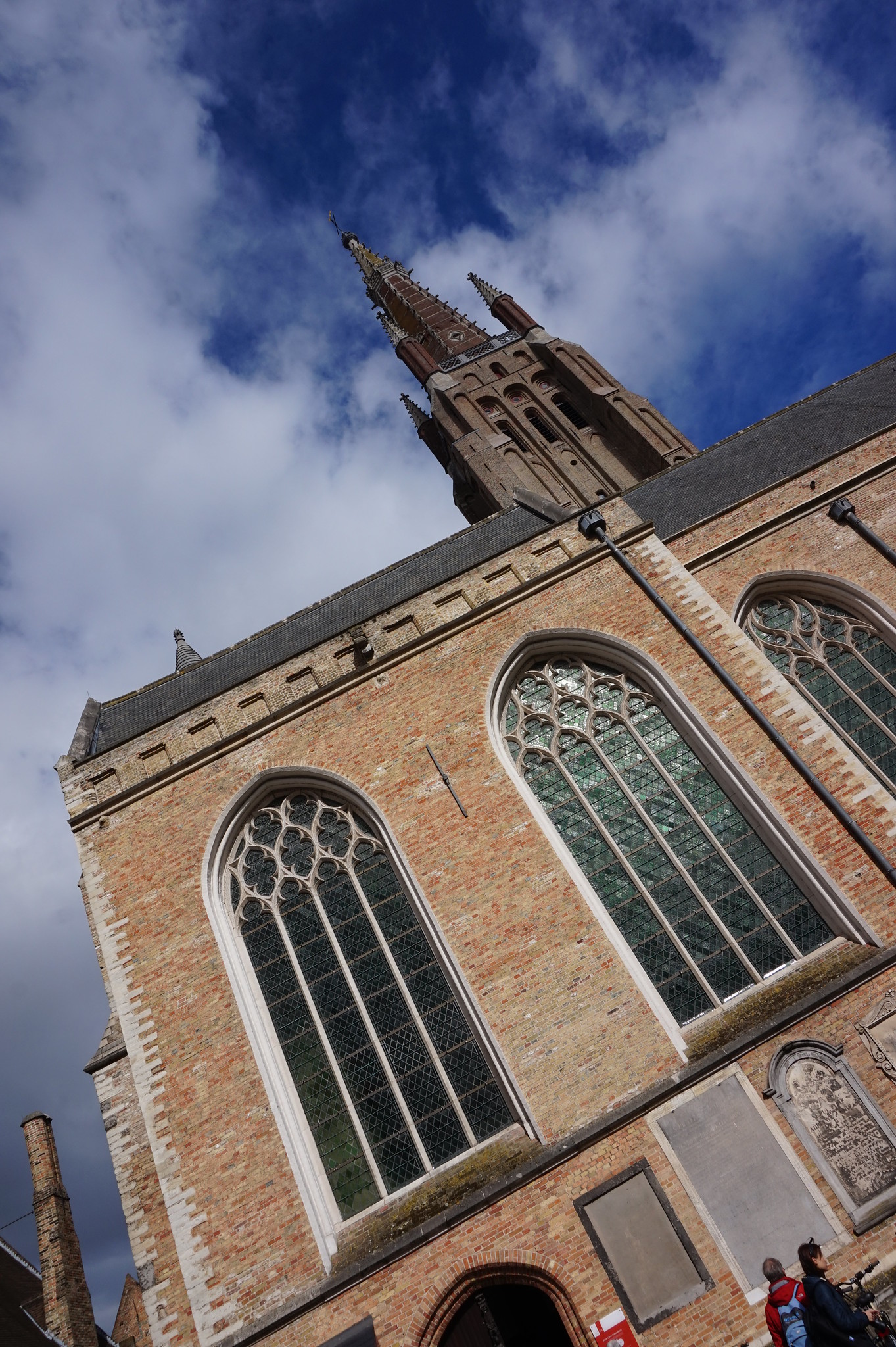
"The streets of this antique city are narrow and crooked, and the pointed, ornamented gables of the houses, produce a novel impression on one who has been accustomed to the green American forests." B Taylor #QotD

2015.03.31-DSC00570The streets of this antique city are narrow and crooked, and the pointed, ornamented gables of the houses, produce a novel impression on one who has been accustomed to the green American forests. Then there was the endless sound of wooden shoes clattering over the rough pavements, and people talking in that most unmusical of all languages, low Dutch. Walking at random through the streets, we came by chance upon the Cathedral of Notre Dame. I shall long remember my first impression of the scene within. The lofty gothic ceiling arched far above my head and through the stained windows the light came but dimly — it was all still, solemn and religious. A few worshippers were kneeling in silence before some of the shrines and the echo of my tread seemed like a profaning sound. On every side were pictures, saints and gilded shrines. A few steps removed one from the bustle and din of the crowd to the stillness and solemnity of the holy retreat.

We learned from the guide, whom we had engaged because he spoke a few words of English, that there was still a treckshuyt line on the canals, and that one boat leaves to-night at ten o'clock for Ghent. Wishing to try this old Dutch method of travelling, he took us about half a mile along the Ghent road to the canal, where a moderate sized boat was lying. Our baggage deposited in the plainly furnished cabin, I ran back to Bruges, although it was beginning to grow dark, to get a sight of the belfry; for Longfellow's lines had been running through my head all day:

"In the market place of Bruges, stands the belfry old and brown, Thrice consumed and thrice rebuilded, still it watches o'er the town."

2015.03.31-DSC00622 And having found the square, brown tower in one corner of the open market square, we waited to hear the chimes, which are said to be the finest in Europe. They rang out at last with a clear silvery tone, most beautifully musical indeed. We then returned to the boat in the twilight. We were to leave in about an hour, according to the arrangement, but as yet there was no sound to be heard, and we were the only tenants. However, trusting to Dutch regularity, we went to sleep in the full confidence of awakening in Ghent.  pp. 48-49

Bayard Taylor (1825-1878) was an American poet, literary critic, translator, and travel author. He published a couple of books on Egypt which is where I'd first heard of him when writing my book on Egyptian travel accounts, Nile Notes of a Howadji (1992).
Friday, April 03, 2015

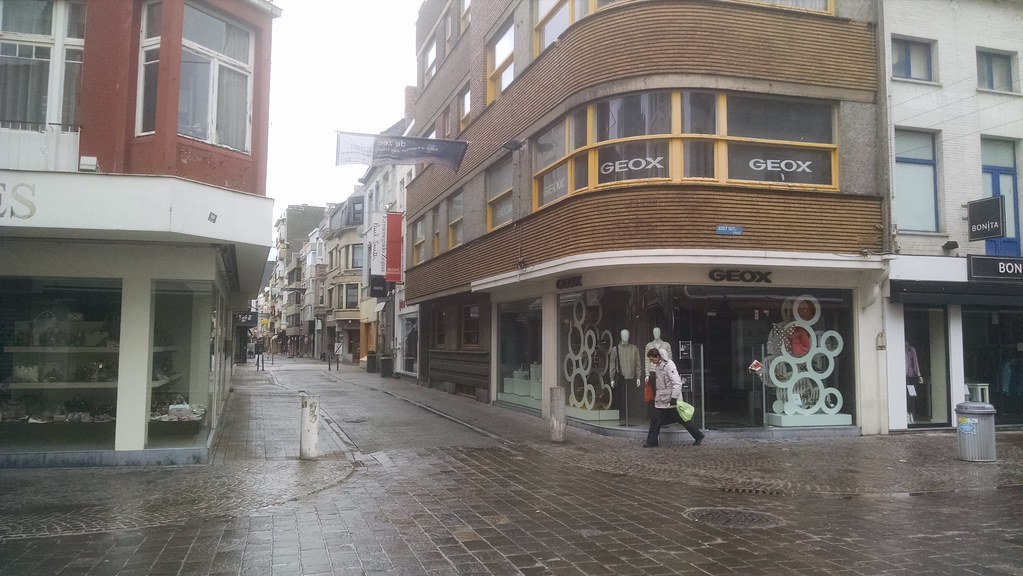
"There is little to be seen in Ostend. We wandered through long rows of plain yellow houses, trying to read the French and low Dutch signs" B Taylor #QotD

IMG_20150402_081534208
"On the low Belgian coast we could see trees and steeples, resembling a mirage over the level surface of the sea; at length, about ten o'clock, the square tower of Ostend came in sight. The boat passed into a long muddy basin, in which many unwieldy, red-sailed Dutch craft were lying, and stopped beside a high pier. Here amid the confusion of three languages, an officer came on board and took charge of our passports and luggage. As we could not get the former for two or three hours, we did not hurry the passing of the latter, and went on shore quite unincumbered, for a stroll about the city, disregarding the cries of the hackney-coachmen on the pier, "Hotel d'Angleterre," "Hotel des Bains!" and another who called out in English, "I recommend you to the Royal Hotel, sir!"
There is little to be seen in Ostend. We wandered through long rows of plain yellow houses, trying to read the French and low Dutch signs, and at last came out on the wall near the sea. A soldier motioned us back as we attempted to ascend it, and muttering some unintelligible words, pointed to a narrow street near. Following this out of curiosity, we crossed the moat and found ourselves on the great bathing beach. To get out of the hands of the servants who immediately surrounded us, we jumped into one of the little wagons and were driven out into the surf."   p. 47

Views a-foot: or, Europe seen with knapsack and staff (1846) by Bayard Taylor

IMG_20150330_165034361
Bayard Taylor (1825-1878) was an American poet, literary critic, translator, and travel author. He published a couple of books on Egypt which is where I'd first heard of him when writing my book on Egyptian travel accounts, Nile Notes of a Howadji (1992).