Showing posts with label Kenya. Show all posts

Wednesday, May 31, 2017

Promoting Scholarly Communications and the BHL at the Mpala Research Centre

Under the auspices of Scott Miller, Deputy Under Secretary for Collections and Interdisciplinary Support (DUSCIS) and Vice-Chair of the Mpala Research Centre, I spent three days at the Mpala Research Centre in Laikipia County, Kenya with Carolyn A. Sheffield (BHL Program Manager) to learn more about the activities and research at Mpala and to explore partnerships around the Biodiversity Heritage Library and scholarly communications.

Library this way!
Dr. Dino Martins, Executive Director of the Mpala Research Centre, met Kalfatovic and Sheffield outside of Nanyuki just north of the equator and in the shadow of Mt. Kenya, about 240 kilometers north of Nairobi. We made a short stop at the equator marker before picking up a few supplies for the trip back to Mpala. On the ninety minute drive from Nanyuki to Mpala, Dr. Martins gave a fascinating and useful overview of the history of Mpala, the complex interactions of wildlife and human agricultural activities around livestock and farming. Increasing pressure on the environment from the subdivision of land for residential development and challenges presented by climate change on the area are a daily concern for Martins as he manages the important living laboratory that is the Mpala Research Centre.

Mt Kenya
As noted on the Mpala website:
Mpala stretches over 48,000 acres of semi-arid savanna, acacia bushland, wooded grassland, rocky escarpments and riverine habitats along the Ewaso Nyiro and Ewaso Narok rivers. The Mpala Research Centre (MRC) receives hundreds of students, educators, and scientists from around the globe each year, conducting research on everything from parasites to elephants. The unique set up of Mpala allows for researchers to use the land as a ‘living laboratory’ in which to conduct experiments and answer pressing questions on conservation and wildlife.
With Dr. Martins
In touring the grounds of the Centre, Dr. Martins also spoke of the opportunities presented by the ongoing collaborative work done by the Conservancies, such as Mpala, Kenyan local and national governmental agencies, and private landowners to balance wildlife and nature conservation, sustainable economic development, and farming/ranching activities.

"Most research organizations in Kenya (including Mpala), as well as agencies who regulate research, are struggling with the challenges of tracking and making available the results of research. The tools that Smithsonian Research Online have used could be readily adapted for use by some of these organizations" said the Smithsonian's Scott Miller.

At the equator with Dr. Martins
To help better understand the work done at Mpala and the research needs, Dr. Martins personally took us on two evening game drives throughout the Mpala grounds. The visits were nothing short of spectacular. Sightings of various wildlife were numerous (see fuller list below), including many listed as vulnerable or endangered on the IUCN Red List of Threatened Species. It was wonderful to see large groups of the endangered Grévy's zebra (Equus grevyi) with young foals. Three species of vulnerable animals, Hippopotamus (Hippopotamus amphibius), Reticulated giraffe (Giraffa camelopardalis reticulata), and Elephant (Loxodonta africana) were present in large numbers. Among the other Artiodactyla sighted, the groups of Greater Kudu (Tragelaphus strepsiceros) were spectacular. Mpala also maintains herds of domestic cattle. At the end of the game drive, we stopped by one of the cattle enclosures as Dr. Martins consulted with the Mpala herdsmen on the status of the cattle.

Greater Kudu  (Tragelaphus strepsiceros)

Elephant (Loxodonta africana)

Hippopotamus (Hippopotamus amphibius)

Grévy's zebra (Equus grevyi)
The next morning, during a visit to the research facilities, we spent time in the N.S.F. and McCormack Research Labs at Mpala, where we were shown the ongoing work of visiting and longer term researchers, including experiments being down with caterpillars. On our first full morning at the Centre, we were taken on a bird watching walk of the grounds with ornithologist Sylvester Karimi.

Research labs
On the final day of the visit, presentations on scholarly communications management and the Biodiversity Heritage Library were given to an audience of about twenty people. Included in the audience were representatives from ten institutions, in addition to Mpala Research Centre staff. Institutions represented included were: Space for Giants,  Laikipia Wildlife Forum, Kenya Forestry Research Institute (KEFRI), Olpejeta Conservancy, Lewa Conservancy, University of Bayreuth, Daraja Academy,  Lekiji Primary School, Oljogi Primary School, and the Mpala Academy.

I spoke on "Managing Scholarly Research Output: The Smithsonian Institution Experience: An Introduction to Smithsonian Research Online" and BHL Program Manager Carolyn A. Sheffield presented on "Inspiring Discovery Through Free Access to Biodiversity Knowledge: The Biodiversity Heritage Library (BHL)."

Mpala library volunteer Naomi Wanjiru Chege
At the conclusion of the presentations, we met with Mpala library volunteer Naomi Wanjiru Chege and Anchal Padukone (Princeton in Africa Fellow) to discuss the library facility at Mpala and possible areas of collaboration between the Centre and Smithsonian Libraries as well as the Biodiversity Heritage Library. We also had an opportunity to visit the studio facilities of Mpala Live!:
Mpala Live! gives you a round-the-clock look at the lives of elephants, lions, zebras, giraffes, hippos, birds, and other animals in a fascinating swath of African landscape. Our webcams let you visually enter this realm. The Hippo Pool cameras, for instance, take you to a watering hole that attracts hippos, monkeys, zebras, giraffe, scores of bird species, and the occasional crocodile. 
Mpala Live!, with viewership in the millions, provides both educational and research activities with its active citizen science engagement.

With Naomi Wanjiru Chege
Our work at the Centre ended, we shared yet another wonderful meal with the guests, researchers, and Mpala staff. The lunch provided additional opportunities to learn about the work done in the Kenyan wildlife conservancies and at Mpala. The luncheon concluded, we met our transportation for the five hour ride back to Nairobi and our departing flight at the Jomo Kenyatta International Airport.


On this visit to Kenya, we were treated to some wonderful sightings of the local flora and fauna. In Mpala and the nearby areas, the following were some of the highlights of the local fauna. For lists of the flora and fauna of Mpala, please see the following Mpala website page.

PRIMATES
  • Vervet Monkey (Cercopithecus aethiops)
  • Black-and-white colobus monkey (Colobus) [sighted outside the Mpala Research Centre]
  • Olive Baboon (Papio anubis) [sighted outside the Mpala Research Centre]
CARNIVORA
  • Bat-eared Fox (Otocyon megalotis)
  • Slender Mongoose (Galerella sanguinea)
Reticulated giraffe (Giraffa camelopardalis reticulata)
ARTIODACTYLA
  • Hippopotamus (Hippopotamus amphibius)
  • Common Warthog (Phacochoerus africanus)
  • Reticulated giraffe (Giraffa camelopardalis reticulata)
  • Impala (Aepyeros melampus)
  • Guenther's Dikdik (Madoqua guentheri)
  • Steenbok (Raphicerus campestris)
  • Greater Kudu (Tragelaphus strepsiceros)
  • Bushbuck (Tragelaphus scriptus)
PROBOSCOIDEA
  • Elephant (Loxodonta africana)
Spider plant (Cleome gynandra)
PERISSODACTYLA
  • Grévy's zebra (Equus grevyi)
LAGOMORPHA
  • Scrub hare (Lepus saxatilis)
HYRACOIDEA
  • Bush Hyrax (Heterohyrax brucei)
Cow (Bos taurus/indicus)
DOMESTIC
  • Cow (Bos taurus/indicus)
  • Sheep (Ovis aries) [sighted outside the Mpala Research Centre]
  • Goat (Capra hircus) [sighted outside the Mpala Research Centre]
  • Donkey (Equus africanus) [sighted outside the Mpala Research Centre]
  • Camel (Camelus dromedaryus)
  • Domestic Dog (Canis familiaris)
  • Domestic Cat (Felis sylvestris)
AVES (Selected)
  • Vulturine Guineafowl (Acryllium vulturinum)
  • Egyptian Goose (Alopochen aegyptiacus)
  • Gabar Goshawk (Micronisus gabar)
  • Martial Eagle (Polemaetus bellicosus)
  • Red-chested Cuckoo (Cuculus solitarius)
  • Red-billed Hornbill (Tockus erythrorhynchus)
  • Rock Martin (Hirundo fuligula)
  • Common Bulbul (Pycnonotus barbatus)
  • Superb Starling (Lamprotornis superbus)
A lone Grévy's zebra (Equus grevyi)

Tuesday, May 30, 2017

Promoting Scholarly Publication Data and the Biodiversity Heritage Library in Kenya with a Special Presentation at the U.S. Embassy, Nairobi


In May 2017, while attending the XXI Congress of the Association for the Taxonomic Study of the Flora of Tropical Africa (AETFAT), Smithsonian Libraries' (SIL) staff Martin R. Kalfatovic and Carolyn A. Sheffield received a speaking invitation from the Embassy of the United States of America, Nairobi, Kenya from Tatum Albertine (Environment, Science, Technology & Health Officer).

The Embassy is located in Gigiri, north of the Nairobi central business district, about a two hour drive in Nairobi traffic from the Karen neighborhood where the AETFAT Congress was being held. The program was held in the American Reference Center (ARC) on the Embassy campus. The ARC serves students, teachers, researchers, journalists, business professionals and individuals simply interested in broadening their horizons on any topic.

The purpose of the talk was to provide a wider Kenyan community with information about the Biodiversity Heritage Library and services provided by Smithsonian Libraries to Smithsonian researchers that could serve as a model or inspiration for similar services to the broader research community in Kenya. There were invited guests from National Museums of Kenya, the Kenya Wildlife Service, Nature Kenya: The East African Natural History Society, and the National Commission for Science, Technology and Innovation (NACOSTI). In addition, Albertine worked with ARC Deputy Director Nashon Akello to publicize the program widely with the university community and faculty and students from both Kenyatta University and the Technical University of Kenya.

Smithsonian Libraries Associate Director Martin R. Kalfatovic presentation, "Managing Scholarly Research Output: The Smithsonian Institution Experience: An Introduction to Smithsonian Research Online (SRO)" covered key components of the Smithsonian Libraries' SRO program of bibliographic data collection, data analysis for metrics and reporting, and communications to administrators, researchers, and the public. The presentation, based on previous presentations of SIL staff Alvin Hutchinson and Richard Naples and with input from Suzanne C. Pilsk. A representative of NACOSTI in attendance commented:
Information management and data analysis towards scholarly publications is very important indicator of a nation's development and reflects the potential of a nation to harness its human resource in solving problems of mankind. It also broadens the horizons of policy thinking and in addressing many critical issues the government faces. As a policy making institutions, scholarly publications will be very important in advising the government accurately. Therefore, your invitation of our institution was timely because this is one of the areas needed to be harnessed in advising the government by policy directions using real data.
As Scott Miller, Deputy Under Secretary for Collections and Interdisciplinary Support, who facilitated the planning for the program, noted:
Most research organizations in Kenya, as well as agencies who regulate research, are struggling with the challenges of tracking and making available the results of research.  The tools that Smithsonian Research Online have used could be readily adapted for use by some of these organizations.
Given the overlap of interests of many organizations in biodiversity research in Kenya, I also hope these presentations catalyze discussion of the possibility of a multi-organization collaboration to create a centralized data archive that has multiple portals to serve different users.
Carolyn A. Sheffield, BHL Program Manager, presented on "Inspiring Discovery Through Free Access to Biodiversity Knowledge: The Biodiversity Heritage Library (BHL)." Sheffield covered a general introduction of the BHL as well as recent accomplishments and metrics related to Kenya and Africa. BHL Africa colleagues, Asha Owono and Ben Nakitare were in attendance and provided additional support in relation to Kenyan participation in the BHL during the question and answer period. A participant from the Kenya Wildlife Service noted: "The lecture and demonstration were very encouraging and I have the feeling that this if pursued  more vigorously can enhance information sharing within the conservation field in this country and the world at large."

Kalfatovic, Albertine, Sheffield
Again, as Dr. Miller commented during the planning for this presentation, "This program is important for several reasons beyond helping users understand how to use the Biodiversity Heritage Library (which is important in itself). Kenya is poised to make significant additions to the BHL.  As was discussed at the Laikipia landscape workshop in February, there is a rich history of 'grey literature' in East Africa on agriculture, wildlife, public health, etc., that is not available to most people today."

The ARC was filled to capacity with sixty attendees. The Embassy social media team led by Amos Rono also presented the program as a Facebook Live broadcast as well as live streaming it to other U.S. Embassies in East Africa (see link below). Smithsonian Libraries and Biodiversity Heritage Library social media team also promoted the event.

Thanks to ARC Director George Kamau and ARC Deputy Director Nashon Akello for hosting the program in their space and Dan Travis (Public Affairs Officer), Megan Larson-Kone (Cultural Affairs Officer), Alka Bhatnagar (Information Resource Specialist), and Pushpinder Dhillon (Economic Section Chief) on the U.S. Embassy staff who worked to make this program a success.

View the Facebook Live presentation: 

Friday, October 09, 2015

Some musical selections from Kenya, what I was listening too

IMG_20151001_201104102Got to see some live music (as part of the TDWG 2015 conference, here's what was on the heavy rotation on the trip over and there.

What I was listening to:
Sources and more information:


Thursday, October 08, 2015

Recap of visit to Kenya, meetings, workshops, and safari

IMG_20150923_160621175_HDR
BHL Africa Workshop (24-26 September)
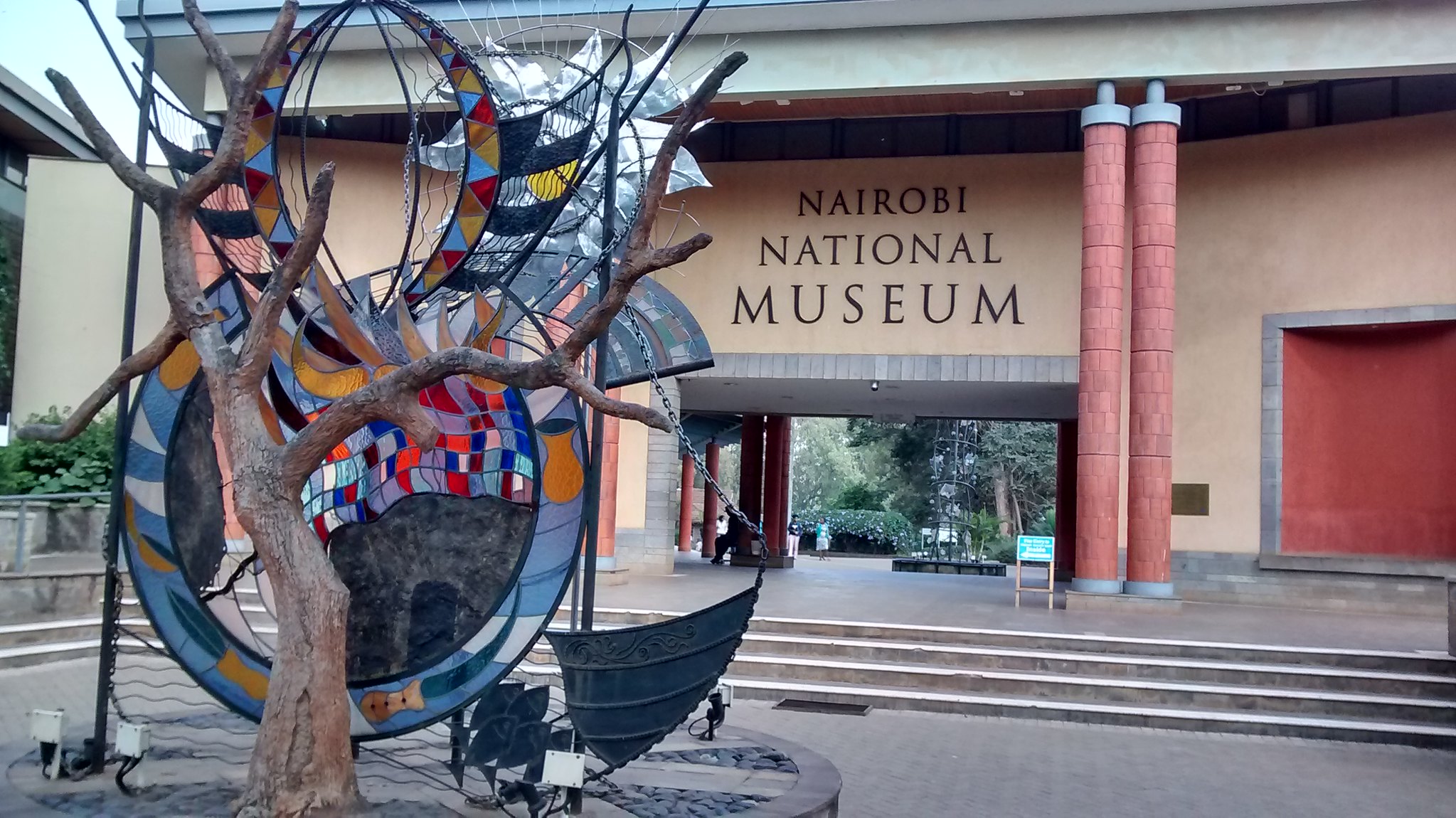
SIL staff were hosted and funded by BHL Africa (via the JRS Foundation) to conduct a full BHL training workshop for staff from participating BHL Africa institutions. A total of 15 people attended the three day session and represented South Africa, Uganda, and Kenya. SIL staff were assisted by Anne-Lise Fourie (BHL Africa/South Africa) and Lawrence Monda (Nationa Museums of Kenya, NMK). The workshop included an earlier set up day; we were able to tour the grounds of the Nairobi National Museum (location of the workshop and HQ for the National Museums of Kenya) where we ran into Scott Miller. Dr. Mzalendo Kibunjia (Director General of the NMK) and Geoffrey Mwachala  (Director Research and Collections, NMK) opened the sessions and welcome the group to the NMK. 

Security throughout Nairobi was oppressive. There were car checks before entering facilities such as hotels, shopping malls and the museum. You also had to pass through a metal detector before entering the hotel and run bags through an x-ray machine. Likewise, in all shops, you went through a metal detector and physical pat down before entering. Traffic was horrendous with a 1-2 km trip often taking 30-45 minutes.  

Attending from the Smithsonian Libraries were: Martin Kalfatovic, Carolyn Sheffield, Grace Costantino, and Jackie Chapman. 

* * * * * 

2015.09.27-DSC03214Amboseli National Park (27-28 September)
After the BHL Africa Workshop, Smithsonian staff and Anne-Lise Fourie (BHL Africa) took two days leave to visit the Amboseli National Park in far Western Kenya. Amboseli is on the Tanzanian border at the foot of Mt. Kilimanjaro and known for its elephant herds. There is a lake/swamp at Amboseli and we were able to see the elephants bathing and playing in the water. In addition to elephants, we saw lions (including a post-kill zebra feast), wildebeast, water buffalo, hyenas, zebras, giraffes, antelope, impalla, warthogs, ostriches, secretary birds, and various other horned herbivores. 
* * * * * 

IMG_20150930_091157TDWG 2015 Report (28 September - 1 October)
We had a very successful TDWG this year. Overall, the program was very well run. The conference was held at the Windsor Hotel and Golf Resort, about a 30 minute drive from the Central Business District. The complex was very secure with armed guards and car checks anywhere inside the walls. The SIL group had a multi-room cottage on the grounds overlooking the golf course and were visited by a troop of monkeys in the morning and evening. The BHL symposium was held on the last day of the conference as the very last session. Normally this isn't a great spot, but since it was a very captive audience, we had nearly 100% attendance with about 137 people in the audience. Participating in the BHL symposium (in addition to the SIL staff) were William Ulate (BHL Technical Director) and Anne-Lise Fourie (BHL Africa) TDWG Chair, Cyndy Parr (now at NAL formerly of EOL) told me afterwards that one of the board members of the hotel did a day registration just to attend the BHL session. The hotel is very eco-friendly and has an actively managed environmental program. 

Jackie Chapman presented the poster that she and Robin Everly had done for the recent fern conference at the Smithsonian and it was well received.

At the request of Scott Miller, Carolyn Sheffield and I took a side trip to meet with IBM Research Kenya. The research facility was located about an hour drive from the Windsor on the other side of Nairobi. We spent about an hour with the engineering and project staff (25 people) from IBM Research discussing possible collaborations and research projects that the IBM team might work on. 

Attending from the Smithsonian Libraries were: Martin Kalfatovic, Carolyn Sheffield, and Jackie Chapman. 

Saturday, October 03, 2015

Looking back, we were stricken motionless by the sight of Kilimanjaro, its twin peaks suspended against a clean blue sky, fresh snow mantling its shoulders. - SE White #QotD

2015.09.27-DSC03225There, above the sky of the horizon, apparently suspended in mid-air halfway to the zenith, hung like delicate bubbles the double snow-cloud peaks of Kilimanjaro. Between them and the earth we could apparently see clear sky. It was in reality, of course, the blue-heat haze that rarely leaves these torrid plains. I have seen many mountains in all parts of the world, but none as fantastically insubstantial ; as wonderfully lofty; as gracefully able to yield, before clouds and storms and sunrise glows, all the space in infinity they could possibly use, and yet to tower above them serene in an upper space of its own. Nearly every morning of our journey to come we enjoyed this wonderful vision for an hour or so. Then the mists closed in. The rest of the day showed us a grayish sky along the western horizon, with apparently nothing behind it. (p. 226)

* * * * *

Looking back, we were stricken motionless by the sight of Kilimanjaro, its twin peaks suspended against a clean blue sky, fresh snow mantling its shoulders. (pp. 251-52)

From African Camp Fires (1914) by Stewart E. White

Zebra, rhinoceros, buffalo, and other picturesque and fascinating nuisances ... will be ... confined to the ample reserves of uninhabited land - W. Churchill

2015.09.27-DSC03057Sadly, Churchill was correct about this.
Zebra, rhinoceros, buffalo, and other picturesque and fascinating nuisances will be driven from or exterminated within the settled areas, and confined to the ample reserves of uninhabited land. (p. 60)
From My African Journey (1909) by Winston Churchill

In his war dress ... the Masai warrior, is a striking, if not impressive, figure. W. Churchill #QotD

2015.09.27-DSC02979In his war dress the Kikuyu, and, still more, the Masai warrior, is a striking, if not impressive, figure. His hair and body are smeared with the red earth of his native land, compounded into a pigment by mixture with the slimy juice of the castoroil plant, which abounds. Fantastic headdresses, some of ostrich feathers, others of metal or leather; armlets and leglets of twisted wire; stripes of white clay rubbed across the red pigment ; here and there an old pot-hat or some European garment, incongruously contrasted with leopard-skins and bulls' horns; broad, painted cow-hide shields, and spears with soft iron blades nearly four feet long, complete a grotesque and indecorous picture. Still, there is a sleek grace about these active forms — bronze statues but for their frippery — which defeats all their own efforts to make themselves hideous. (p. 30)

From My African Journey (1909) by Winston Churchill

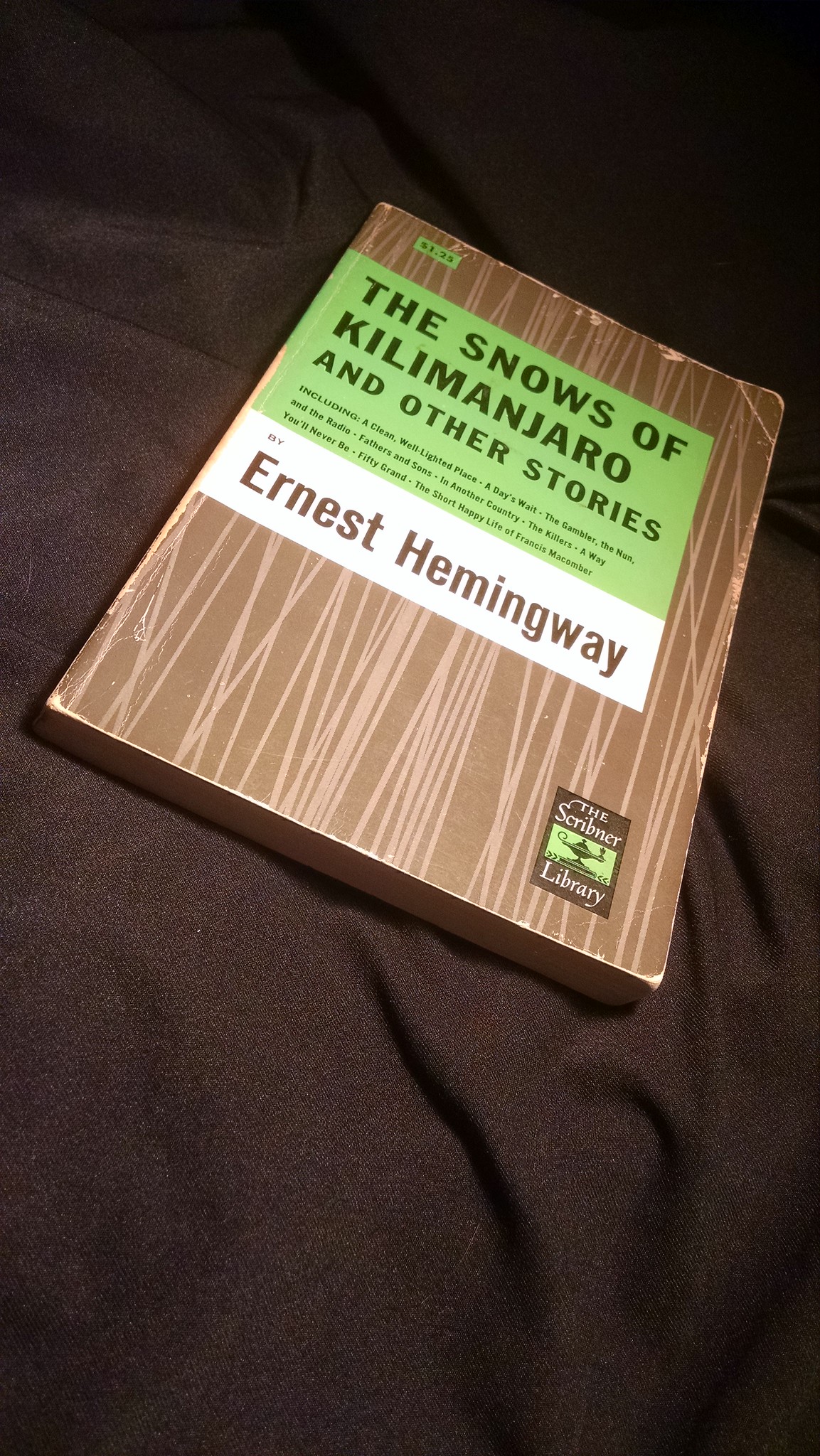
"The Short Happy Life of Francis Macomber" by Ernest Hemingway #QotD

2015.09.28-DSC03385"The Short Happy Life of Francis Macomber" by Ernest Hemingway

“Don’t worry about me talking,” he said. “I have a living to make. You know in Africa no woman ever misses her lion and no white man ever bolts.”

*****

But that night after dinner and a whisky and soda by the fire before going to bed, as Francis Macomber lay on his cot with the mosquito bar over him and listened to the night noises it was not all over.

*****

Macomber saw the lion now. He was standing almost broadside, his great head up and turned toward them. The early morning breeze that blew toward them was just stirring his dark mane, and the lion looked huge, silhouetted on the rise of bank in the gray morning light, his shoulders heavy, his barrel of a body bulking smoothly.

*****

2015.09.27-DSC03183_Cropped
Macomber saw three huge, black animals looking almost cylindrical in their long heaviness, like big black tank cars, moving at a gallop across the far edge of the open prairie. They moved at a stiff-necked, stiff bodied gallop and he could see the upswept wide black horns on their heads as they galloped heads out; the heads not moving.

"The Snows of Kilimanjaro" by Ernest Hemingway #QotD

2015.09.28-DSC03463"The Snows of Kilimanjaro" by Ernest Hemingway

There were a few Tommies that showed minute and white against the yellow and, far off, he saw a herd of zebra, white against the green of the bush. This was a pleasant camp under big trees against a hill, with good water, and close by, a nearly dry water hole where sand grouse flighted in the mornings.

* * * * *

“I don’t like to leave anything,” the man said. “I don’t like to leave things behind.”

* * * * *

But, in yourself, you said that you would write about these people; about the very rich; that you were really not of them but a spy in their country; that you would leave it and write of it and for once it would be written by some one who knew what he was writing of.

* * * * *

But he would never do it, because each day of not writing, of comfort, of being that which he despised, dulled his ability and softened his will to work so that, finally, he did no work at all.

* * * * *

Africa was where he had been happiest in the good time of his life, so he had come out here to start again. They had made this safari with the minimum of comfort. There was no hardship; but there was no luxury and he had thought that he could get back into training that way.

* * * * *

She shot very well this good, this rich bitch, this kindly caretaker and destroyer of his talent.

* * * * *

Nonsense. He had destroyed his talent himself. Why should he blame this woman because she kept him well? He had destroyed his talent by not using it, by betrayals of himself and what he believed in, by drinking so much that he blunted the edge of his perceptions, by laziness, by sloth, and by snobbery, by pride and by prejudice, by hook and by crook. What was this? A catalogue of old books? What was his talent anyway? It was a talent all right but instead of using it, he had traded on it. It was never what he had done, but always what he could do.

* * * * *

We must all be cut out for what we do, he thought. However you make your living is where your talent lies. He had sold vitality, in one form or another, all his life and when your affections are not too involved you give much better value for the money.

* * * * *

The rich were dull and they drank too much, or they played too much backgammon. They were dull and they were repetitious.

* * * * *

He remembered poor Julian and his romantic awe of them and how he had started a story once that began, “The very rich are different from you and me.” And how some one had said to Julian, Yes, they have more money. But that was not humorous to Julian. He thought they were a special glamorous race and when he found they weren’t it wrecked him just as much as any other thing that wrecked him.

* * * * *

2015.09.27-DSC03214 Compie turned his head and grinned and pointed and there, ahead, all he could see, as wide as all the world, great, high, and unbelievably white in the sun, was the square top of Kilimanjaro. And then he knew that there was where he was going.

Friday, October 02, 2015

My reading list for Kenya, some more obvious than others

IMG_20150912_121903657Below are a list of books, stories, etc. that I read before (and partly during) my trip to Kenya. Some are more obvious than others (Out of Africa and the African works of Hemingway being the most obvious Western works of course!). Nicolas Best's Happy Valley was an interesting account of the British in East Africa through independence, but had a certain condescending tone that was a bit off.

The historical travel accounts (from Thompson's 1885 work through Waugh in the early 1960s) were the all too typical "white man" accounts that left the local people silent witnesses to the travelers. Winston Churchill and Theodore Roosevelt (who visited at nearly the same time - 1909/10) provide interesting contrasts of the former President and the future Prime Minister. Churchill provides insights into the Colonial government and Roosevelt discusses natural history (as he was on a collecting expedition for the Smithsonian).

I was only able to read a few works (one fiction, one non-fiction) by a Kenyan (Ngũgĩ wa Thiong’o, perhaps the most noted of 20/21st century writers) and a very good coming of age memoir by Binyavanga Wainaina (as well as Wainaina's biting essay, "How to Write About Africa").

Nonfiction
Memoirs
Travel Accounts
IMG_20150923_164956102
"Reading" at the Botanic Garden
at the Nairobi National Museum

A look back at #TDWG15 as seen mostly in Twitter and Flickr

Kenya Airways 256: NBO to TNR

Gates 17

So long Windsor monkey #nairobi

Wednesday, September 30, 2015

"Kilimanjaro hung suspended like a rose-coloured bubble above the abyss beyond the world." - White #QotD

2015.09.27-DSC03214Here are a few more quotes on Kilimanjaro from authors who visited at about the same time, Winston Churchill and Stewart White.
Our oryx led us a mile or more over rocky slopes, always promising and never giving a good chance for a shot, until at last he drew us round the shoulder of a hill — and there, abruptly, was the rhinoceros. The impression was extraordinary. A wide plain of white, withered grass stretched away to low hills broken with rocks. The rhinoceros stood in the middle of this plain, about five hundred yards away, in jet-black silhouette; not a twentieth-century animal at all, but an odd, grim straggler from the Stone Age. He was grazing placidly, and above him the vast snow dome of Kilimanjaro towered up in the clear air of morning to a scene unaltered since the dawn of the world.
My African Journey (1909) by Winston Churchill, pp. 14-15
* * * * * 
2015.09.27-DSC03228a
We dined just at sunset under a small tree at the very top of the peak. Long bars of light
shot through the western clouds; the plain turned from solid earth to a mysterious sea of shifting twilights ; the buttes stood up, wrapped in veils of soft desert colours ; Kilimanjaro hung
suspended like a rose-coloured bubble above the abyss beyond the world.
African Camp Fires (1914) by Stewart E. White,  p. 183

Some quotes Kilimanjaro, or "Ngaje Ngai," or house of God, by James Thomson #QotD

2015.09.28-DSC03328"Joseph Thomson (14 February 1858 – 2 August 1895) was a Scottish geologist and explorer who played an important part in the Scramble for Africa. Thomson's Gazelle is named for him. Excelling as an explorer rather than an exact scientist, he avoided confrontations among his porters or with indigenous peoples, neither killing any native nor losing any of his men to violence. His motto is often quoted to be "He who goes gently, goes safely; he who goes safely, goes far." The Thomson's gazelle (Eudorcas thomsonii) was named after him." (Wikipedia: Joseph Thompson)
  • Through Masai land: a journey of exploration among the snowclad volcanic mountains and strange tribes of eastern equatorial Africa. Being the narrative of the Royal Geographical Society's Expedition to mount Kenia and lake Victoria Nyanza, 1883-1884 (1885) by Joseph Thompson
On Kilimanjaro:

2015.09.27-DSC03228As we emerge from the shady grove we stand entranced by a lovely sight which unexpectedly breaks on our view. For many days we have been at the base of Kilimanjaro, and yet not a glimpse has rewarded our frequent attempts to view its cloud-piercing heights. We have begun almost to ask ourselves if we are, after-all, to be doomed to the mere "mental recognition" ascribed to Rebmann. Happily such is not to be our fate. The "Mount Olympus" of these parts stands forth revealed in all its glory fitly framed by the neighbouring trees. There is the grand dome or crater of Kibo, with its snow cap glancing and scintillating like burnished silver in the rays of the afternoon sun, and there, on its eastern flank, as a striking contrast, rise the jagged outlines of the craggy peak of Kimawenzi. What words can adequately describe this glimpse of majestic grandeur and godlike repose? We can only stand speechless with feelings of awe. But our opportunity is brief. The veil has merely been temporarily lifted, and now huge, fleecy-white cumulus clouds roll and tumble along the sides of the great mountain till only the black pinnacle and the glittering dome are seen projected against the pure azure, and hanging apparently in mid-heaven more impressive than ever. At last a veil of stratus mysteriously spreads itself out. In a few seconds the whole scene has vanished, "like the baseless fabric of a vision," and we find ourselves blankly staring at a monotonous expanse of grey.  (pp. 64-65)

Let us now turn our attention to the " Mount Olympus of those parts." But at the very outset let me confess that I shrink from the task of attempting to convey any idea of this colossal mountain. I feel that the subject is beyond the power of my puny pen, and that here, sifter all, I am very much on a level with the untutored Masai savage, who simply stands awe-struck before the sublime spectacle, and tells you it is the "Ngaje Ngai," or house of God. '''

* * * * * 

2015.09.28-DSC03318 The term Kilima-Njaro has generally been understood to mean the Mountain (Kilima) of Greatness (Njaro). This probably is as good a derivation as any other, though not improbably it may really mean the "White" mountain, as I believe the term "Njaro" has in former times been used to denote whiteness, and though this application of the word is now obsolete on the coast, it is still heard among some of the interior tribes. Either translation is equally applicable, and we need raise no dispute on such a trivial question. By the "Wa-chaga the mountain is not known under one name, the two masses which form it being respectively named Kibo and Kimawenzi. By the Masai, whose proper names are almost always descriptive of some essential feature, it is known as Donyo (mountain) Ebor (white), from the eternal snow which forms such a striking phenomenon on the dome or crater of Kibo. (p. 115-116)

* * * * * 
2015.09.27-DSC03225Beside these, there extend considerable tracts covered with a pure white crust of natron and saltpetre, formed by the efflorescence of the salts left by the dried-up marshes of the wet season. These areas appear to the eye as sheets of pure white snow or lakes of charmingly clear water. At other times, struck by the rays of the sun, they shine Avith the dazzling splendour of burnished silver. A weird haze envelopes the land with an influence shadowy and ghostly, while the mirage adds to the strange effects, till indeed everything seems unreal and deceptive. The exceptional nature of the sight is emphasized by the stupendous mass of Kilimanjaro, the pyramidal form of Meru, the double peak of Ndapduk, and the dark height of Donyo Erok, which are all faintly traceable through the dull grey sheen. In spite of the desolate and barren aspect of the country, game is to be seen in marvellous abundance. The giraffe, fit denizen of such a region, appears against the horizon like some unearthly monster, or browses among the trees and bushes. The wildebeest, imp-like and fierce in appearance, frisks with uncouth movements, or speeds with stiff, ungainly gallops across the natron plain. Zebras in long lines pace leisurely along from some distant pasture-ground. Hyenas slink home from their meal of carrion. Lions satisfied with the night's venture express their sense of repletion with reverberating roars. The inquiry that naturally rises to one's mind is. How can such enormous numbers of large game live in this extraordinary desert? (p. 158)