Showing posts with label Travel 2016. Show all posts

Sunday, December 18, 2016

Catching up on some quotes from Empire of the Sun (1984) and pic from Shanghai visit

Empire of the Sun by J. G. Ballard (1984)

His father was physically a strong man, but Jim knew that it was the kind of strength that came from playing tennis.

Jim had little idea of his own future—life in Shanghai was lived wholly within an intense present—but he imagined himself growing up to be like Mr. Maxted. Forever accompanied by the same glass of whiskey and soda, or so Jim believed, Mr. Maxted was the perfect type of the Englishman who had adapted himself to Shanghai, something that Jim’s father, with his seriousness of mind, had never really done.

He always looked forward to the evening drives through the center of Shanghai, this electric and lurid city more exciting than any other in the world.

Plant classification was an entire universe of words; every weed in the camp had a name. Names surrounded everything; invisible encyclopedias lay in every hedge and ditch.

None of the Japanese at Lunghua Airfield had given the aircraft the briefest glance. Fires were still burning in the hangars by the pagoda, and a cloud of steam rose from the bombed engineering sheds.

His mother and father were agnostics, and Jim respected devout Christians in the same way that he respected people who were members of the Graf Zeppelin Club or shopped at the Chinese department stores, for their mastery of an exotic foreign ritual.

We’re the Lunghua Sophomores, We’re the girls every boy adores, C.A.C. don’t mean a thing to me, For every Tuesday evening we go on a spree . . . . As he crossed the parade ground toward E Block, Jim paused to watch the Lunghua Players rehearsing their next concert party on the steps of Hut 6. The leader of the troupe was Mr. Wentworth, the manager of the Cathay Bank, whose exaggerated and theatrical manner fascinated Jim. He enjoyed the amateur dramatics, when everyone involved was at the center of public attention.

We’ve debates and lectures too, And concerts just for you . . . .


Rumor and confusion had exhausted everyone in Lunghua. During July the American air attacks had become almost continuous. Waves of Mustangs and Lightnings flew in from the air bases on Okinawa, strafing the airfields around Shanghai, attacking the Japanese forces concentrated at the mouth of the Yangtze. From the balcony of the ruined assembly hall Jim witnessed the destruction of the Japanese military machine as if he were watching an epic war film from the circle of the Cathay Theater. The apartment houses of the French Concession were hidden by hundreds of smoke columns that rose from burning trucks and ammunition wagons. Fearful of the Mustangs, the Japanese convoys moved only after dusk, and the sound of their engines kept everyone awake night after night. Sergeant Nagata and his guards had given up any attempt to patrol the camp’s perimeter for fear of being shot by the military police supervising the convoys.

“Basie . . .” A familiar thought occurred to Jim. “Has the next war effectively begun?” “That’s a way of putting it, Jim. I’m glad I helped you with your words.”

“Shanghai? That’s one dangerous city, Jim. You need more than luck in Shanghai.

He had learned nothing from the war because he expected nothing, like the Chinese peasants whom he now looted and shot. As Dr. Ransome had said, people who expected nothing were dangerous. Somehow, five hundred million Chinese had to be taught to expect everything.

Jim remembered the light that lay over the land, the shadow of another sun. Here, at the mouths of the great rivers of Asia, would be fought the last war to decide the planet’s future.

He had failed to grasp the truth that millions of Chinese had known from birth, that they were all as good as dead anyway, and that it was self-deluding to believe otherwise.

Jim suspected that while he sat through another double feature at the Cathay Theater the car was being rented out as a film prop.


Friday, December 16, 2016

TDWG 2016 meeting, La Fortuna & Alajuela Province, San Carlos, Costa Rica #TDWG16

Official Photo by Denisse Vargas
The 2016 TDWG Biodiversity Information Standards meeting was held at the Centro de Transferencia Tecnológica y Educación Continua (CTEC) in San Carlos, Costa Rica. Hotels and other activities were in La Fortuna, about a 45 minute bus ride from CTEC.

BHL was represented at the TDWG 2016 conference with a symposium, "BHL: 10 Years of Innovation and Growth". The panel consisted of:
Constance Rinaldo
  • BHL - 10 Years and More! (Martin R. Kalfatovic)
  • BHL: Grants and Growth (Constance Rinaldo)
  • BHL-SciELO Network (Henrique Rodrigues)
  • Towards extracting occurrence data from biodiversity literature (Dmitry Schigel)
  • Questions: BHL - 10 years of innovation & growth (Discussion led by Constance Rinaldo)
The session was attended by about 70 people. The conclusion of the session was a discussion with the audience about desires for the future direction of BHL and features or services that could be implemented as BHL explores refactoring the BHL platform. Among the topics mentioned by the audience were: integration of visual resources in BHL; expanding in-copyright material,

Dimitris Koureas, Cynthia Parr, Erick Mata
The TDWG organizers, lead by the program committee, Dr. Erick Mata Montero (Professor, School of Computing, Costa Rica Institute of Technology), Gail Kampmeier (Prairie Research Institute, Illinois Natural History Survey, University of Illinois, USA); Francisco ("Paco") Pando (Real Jardín Botánico-CSIC, Spain); Maria Mora Instituto (Nacional de Biodiversidad, Costa Rica); Joel Sachs (Agriculture and Agri-Food, Canada); Manuel Vargas (Instituto Nacional de Biodiversidad, Costa Rica); Stan Blum (ex-officio TDWG Coordinator); and William Ulate (ex-officio TDWG Treasurer, Missouri Botanical Garden), delivered an excellent program.

The keynote, by Dr. Rodrigo Gámez Lobo (founder and former Director General and President of the National Biodiversity Institute) spoke the future of Costa Rican biodiversity as exemplified in his work On Biodiversity, People and Utopias (1999). His talk addressed the them of this work, in which he states, "Our real goal is to make the society come to the understanding that, because of being something that directly affects quality of life, materially, intellectually and spiritually, we must preserve at all costs the rich biodiversity of the country".

Former BHL Technical Director William Ulate led a symposium on Semantics for Biodiversity Science: Challenges & Solutions. Ulate and co-author Riza Batista-Navarro spoke on "Real use cases for Semantic Information from the Mining Biodiversity project."

Other important symposium was Semantics for Biodiversity Science: Text Mining & Semantic Role Tagging. Key papers included:
  • Enhancing semantic search through the automatic construction of a Biodiversity Terminological Inventory (Nhung T.H. Nguyen, Georgios Kontonatsios, Axel J. Soto, Riza Batista-Navarro, Sophia Ananiadou)
  • Geographic entities extraction from biological textual sources (Moisés Alberto Acuña-Chaves)
Another symposium of note was Semantics for Biodiversity Science: Taxon Names & Traits. Key papers included:
  • What's in a name? Sense and reference in digital biodiversity information (Joakim Philipson)
  • Creating computable definitions for clades using the Web Ontology Language (OWL) (Gaurav Vaidya, Hilmar Lapp, Nico Cellinese)
Globally Unique Identifiers for Names (organized by Chuck Miller and Richard Pyle) included papers of interest to BHL:
  • Reviewing data integration and mobilisation using name reconciliation and identifier services (Nicky Nicolson, Robert Turner, Abigail Barker)
  •  Implementing Name Identifiers for the World Flora Online (Chuck Miller)
  • Identifiers for Biodiversity Informatics: The Global Names Approach (Dmitry Y. Mozzherin, Richard Pyle)
  • The Catalogue of Life Editor's View on Globally Unique Identifiers for Names (Yuri Roskov)
  • Names and identifiers in the CyVerse cyberinfrastucture (Ramona L. Walls)
  • Utilizing Unique Identifiers for Taxonomic Concepts (Jeff Gerbracht)
Two standout papers in the contributed papers session were:
  • TDWG Then and Now (Arturo H. Ariño, Anabel Pérez de Zabalza)
  • Nanopublications for biodiversity: concept, formats and implementation (Lyubomir Penev, Éamonn Ó Tuama, Viktor Senderov, Pavel Stoev, Teodor Georgiev)

Volcán Arenal
A highlight of the meeting as the TDWG 2016 Bioblitz at the nearby Texas A&M Soltis Center. The bioblitz helped to create a biodiversity snapshot of TDWG 2016. Participants were encouraged to take the opportunity to observe, to post their pictures of local biodiversity. The event took place in a torrential rainstorm, but the event still provided some observations and camaraderie.

There were other opportunities to see some of Costa Rica's amazing biodiversity, among those sighted were:

Two-toed Sloth
(Choloepus hoffmanni)
Mammals
  • Three-toed Sloth (Bradypus variegatus)
  • Two-toed Sloth (Choloepus hoffmanni)
  • White-nosed Coati (Nasua narica)
  • Mantled Howler Monkey (Alouatta palliata)
  • Spider Monkey (Ateles geoffroyi)
  • White-throated Capuchin (Cebus capucinus)
  • Long-nosed bat (Rhynchonycteris naso)


Yellow-throated Toucan
(Ramphastos ambiguus)
Birds
  • Wood Stork (Mycteria americana)
  • Little Blue Heron (Egretta caerulea)
  • Cattle Egret (Bubulcus ibis)
  • Snoy Egret (Egretta thula)
  • Northern Jacana (Jacana spinosa)
  • Turkey Vulture (Cathartes aura)
  • Groove-billed Ani (Crotophaga sulcirostris)
  • Yellow-throated Toucan (Ramphastos ambiguus)
  • Green Kingfisher (Chloroceryle americana)
  • Anhinga (Anhinga anhinga)
  • White Ibis (Eudocimus albus)
American Crocodile
(Crocodylus acutus)
Reptiles
  • Spectacled Caiman (Caiman crocodilus)
  • American Crocodile (Crocodylus acutus)
  • Emerald Basilisk (Basiliscus plumifrons)
  • Black River Turtle (Rhinoclemmys funerea)
  • Common Snapping Turtle (Chelydra serpentina)
  • Green Iguana (Iguana iguana)


Saturday, November 05, 2016

Attending the Global Biodiversity Information Facility, 23rd Governing Board Meeting, Brasilia, Brazil

Celso Pansera (left) and Peter Schalk (right)
The Biodiversity Heritage Library participated in the Global Biodiversity Information Facility's 23rd Governing Board meeting, 25-26 October 2016 in Brasilia, Brazil. I attended the meetings as the Head of Delegation for the BHL, substituting for Constance Rinaldo (Museum of Comparative Zoology/Harvard University). The two days of meetings brought together both the voting members (at the national level) and associate members (including the BHL).

The meeting proved a fertile ground to meet with BHL users to discover new ways that the BHL can partner in the global biodiversity community. The BHL is fortunate to work with GBIF Chair Peter Schalk and Executive Secretary Donald Hobern on collaborative projects.

Governing Board Chair Peter Schalk (Netherlands) officially opened the meeting and gave the official report for the year. Schalk specifically noted:
GBIF continues to grow both in numbers (data, users, publication) as in importance (relevance, connections). The field of biodiversity informatics has come of age. The many different national, regional and globally funded initiatives are slowly becoming part of a powerful ‘research machine’, getting organizing into coherent network of collaborative efforts on a global scale.
Bruno Umbelino
Schalk also reported on the various interim meetings held by the Secretariat (in person and virtually). He also noted that GBIF continues to grow through partnerships with other international biodiversity organizations and noted work done by the Secretariat to becoming:
aligned with the Catalogue of Life (COL), Encyclopedia of Life (EOL), Biodiversity Heritage Library (BHL), and the Barcode of Life (BOL), resulting in a better and more complete service to the users. I applaud the proactive role of the Executive Secretary in this.
Schalk completed his report by noting:
It is my strong believe that GBIF is on the right way in terms of developing its own role and place in science and society, as well as in taking a lead to strengthen the field of biodiversity informatics by forging collaborations and bringing synergy in the agendas of the numerous initiatives that have come into existence in the past decade.
Report from the Science Committee (Rod Page)
Page reported on the past year's activities from the Science Committee. Main activities
  • Ebbe Nielsen Challenge, theme this year was "Mind the Gaps"; winners will be announced at the Science Symposium on 26 October
  • Young Researcher Awards (Juan Manuel Escamilla Molgora, Mexico, based in the UK; and Bruno Umbelino, Brazil) 
  • Working with the Programme Officers and Informatics team

Looking forward, the Committee would like to continue the Nielsen Challenge, perhaps with some refactoring. Very important to continue to engage with young researchers. How best to engage with these researchers needs to be looked at in new ways. The Committee is also looking at new communications tools and methods.

Page also outlined the overall recommendations of the Committee:
  • Review the effectiveness of the Ebbe Nielsen Challenge.
  • Review the effectiveness of Young Researchers Awards in engaging young researchers.
  • Develop plans to increase the taxonomic coverage of names in GBIF. 
  • Develop plans to de-bureaucratize the publication process and enable individual researchers to more easily adding data to GBIF
  • Develop plans to add missing data, with emphasis on data or data-types that fills gaps or is timely (e.g., related to a disease outbreak or other events).  

Executive Secretary Report
Donald Hobern, GBIF Executive Secretary, provided a report on the main activities. There was also a review of the Work Programme 2014-2016 which included three streams and 16 areas; the streams were:
  • Stream 1: Advance the Informatics – Persistence and validation 
  • Stream 2: Advance the Engagement – Communication and implementation 
  • Stream 3: Advance the Content – Relevance and fitness-for-use 
Hobern also provided an overview of the development of GBIF plans for 2017-2021. These include the GBIF Strategic Plan 2017-2021, GBIF Implementation Plan 2017-2021, and the GBIF Annual Work Programme 2017.  Also discussed was the Biodiversity Information for Development (BID) project. BID is a five year, €3.9M programme, funded by the European Union. Hobern noted:

In its first year of operation, 23 projects from 20 African countries, selected from 143 concept notes originally submitted, began implementation under the initial BID project call. Involvement of GBIF Participants both within Africa and beyond, especially through contribution of trainers and mentors to support the selected projects has been invaluable in enabling effective data mobilization and capacity outcomes from the BID investment.

In preparation for a discussion of the future of GBIF, Hobern outlined the various key assumptions that went into the planning for the 2017 budget. Using the financial background, Hobern touched on the key priorities of the Implementation Plan 2017-2021. These include:
  • Priority 1: Empower the Global Network
  • Priority 2: Enhance Biodiversity Informatics Infrastructure
  • Priority 3: Fill Data Gaps
  • Priority 4: Improve Data Quality
  • Priority 5: Deliver relevant data

Excursion
An all day excursion was offered on 28 October 2016 to Chapada Imperial in the Cerrado biome area. During the 4 km/3.5 hour hike, it was possible to see seven vegetation zones of the cerrado (phytophysiognomy): vereda, gallery forest, campo úmido, campo sujo, campo limpo, cerrado senso stricto, and campo rupestre. The trail included 30 waterfalls and 11 arborism trails and a vertical elevation change of 150 meters.

* * * * *  

GBIF Public Symposium 

A public symposium held in conjunction with the GBIF23 Governing Board Meeting
Brasilia, Brazil | 26 October 2016

The first half of the symposium reported on progress GBIF has made on a variety of topics, including licensing, supplementary funding programmes, and engagement with other intergovernmental bodies. The second half introduced future directions either underway or under discussion. These include the new strategic plan and 2017 implementation plan (including participant pledges), the next version of GBIF.org, the "socialification" of GBIF.org, data rescue and data liberation.

Report from the Nodes Committee Chair (Anne-Sophie Archambeau on behalf of Hanna Koivula)
Archambeau reported on the different programs and plans from the Committee. She also thanked Hanna Koivula for her work and noted there will be an election of a new chair.

* * * * *
Glaucius Oliva (left); Peter Schalk (right)

Engaging GBIF in BrasilSiBBr - Sistema de Informação sobre a Biodiversidade Brasileira Symposium
27 October 2016 | Conselho Nacional de Desenvolvimento Científico e Tecnológico

GBIF participants were invited to attend the SiBBR Symposium at CNPq (Conselho Nacional de Desenvolvimento Científico e Tecnológico | National Council for Scientific and Technological Development). The president of CNPq (Glaucius Oliva) welcomed the group as did a representative of the Ministry of Science, Technology and Innovation. Peter Schalk (GBIF Chair) gave a brief introduction and thanks to SiBBR and the Ministry for their support of the GBIF 23 meeting.

Donald Hobern gave the keynote talk (“GBIF - Empowering a Global Network”) with an overview of GBIF activities and services. This was followed by a session by Andrea Portela (Director General of SiBBR) and Rafael Fonseca (SiBBR Participation Coordinator) speaking on “SiBBR: Engaging Stakeholders Communities” and a third panel that discussed the activities of the “SiBBR: Brazil Node of GBIF.”

Amazonas, Brazil

Sunday, October 30, 2016

A selection of the books I read for my recent trip to Brazil

NOTE: I didn't read in this room
at the Casa Teatro Hotel
In preparation for my trip to Brasil, I read the following book. One of them, The Double Death of Quincas Water-Bray by Jorge Amado, I'd read last year for my trip that was cancelled due to visa issues.

List of Books
  1. A voyage up the River Amazon: including a residence at Para by William H. Edwards (1822-1909) (1847)
  2. A narrative of travels on the Amazon and Rio Negro by Alfred Russel Wallace (1853)
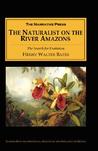
  3. The naturalist on the River Amazons by Henry Walter Bates (1825-1892) (1863) . Volume 1 and Volume 2
  4. A journey in Brazil by Elizabeth Cabot Agassiz and Louis Agassiz (1868)
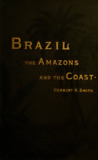
  5. Brazil, the Amazons and the coast by Herbert Huntington Smith (1851-1919) (1879)
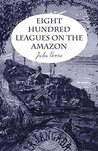
  6. The Giant Raft: Eight Hundred Leagues on the Amazon by Jules Verne (1881)
  7. Notes of a botanist on the Amazon & Andes; being records of travel on the Amazon and its tributaries, the Trombetas, Rio Negro, Uaupâes, Casiquiari, Pacimoni, Huallaga and Pastasa; as also to the cataracts of the Orinoco, along the eastern side of the Andes of Peru and Ecuador, and the shores of the Pacific, during the years 1849-1864 by Richard Spruce (1908). Volume 1 and Volume 2 and BHL
  8. Through the Brazilian wilderness by Theodore Roosevelt (1914)
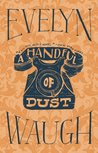
  9. Handful of Dust by Evelyn Waugh (1934)
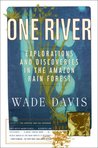
  10. One River by Wade Davis (1996)
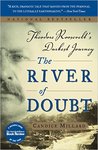
  11. The River of Doubt: Theodore Roosevelt's Darkest Journey by Candice Millard (2005)
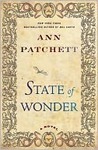
  12. State of Wonder by Ann Patchet (2011)
  13. A Machado de Assis Anthology by Machado de Assis
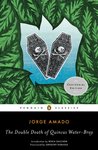
  14. The Double Death of Quincas Water-Bray (2012) by Jorge Amado

State of Wonder
The Double Death of Quincas Water-Bray (Penguin Classics)
A Machado de Assis Anthology
A Handful of Dust
Through the Brazilian Wilderness
The River of Doubt: Theodore Roosevelt's Darkest Journey
A Journey in Brazil
Notes of a Botanist on the Amazon and Andes: Being Records of Travel on the Amazon and Its Tributaries, the Trombetas, Rio Negro, Uaupes, Casiquiari,
A voyage up the River Amazon: including a residence at Pará
A Narrative of Travels on the Amazon and Rio Negro, with an Account of the Native Tribes, and Observations on the Climate, Geology, and Natural History of the Amazon Valley
One River
The Naturalist on the River Amazons
Eight Hundred Leagues On The Amazon (Annotated)
Brazil; The Amazons and the Coast. Illustrated from Sketches by J. Wells Champneys and Others.

Saturday, October 29, 2016

South America has the most extensive and most varied avifauna of all the continents. On the other hand, its mammalian fauna, although very interesting, is rather poor in number of species and individuals - T Roosevelt

I didn't get to see much mammalian life while in Amazonas, but did see some freshwater dolphins and a sloth.

* * * * * 

South America has the most extensive and most varied avifauna of all the continents. On the other hand, its mammalian fauna, although very interesting, is rather poor in number of species and individuals and in the size of the beasts. It possesses more mammals that are unique and distinctive in type than does any other continent save Australia; and they are of higher and much more varied types than in Australia. But there is nothing approaching the majesty, beauty, and swarming mass of the great mammalian life of Africa and, in a less degree, of tropical Asia; indeed, it does not even approach the similar mammalian life of North America and northern Eurasia, poor though this is compared with the seething vitality of tropical life in the Old World. pp.68-69

From: Through the Brazilian wilderness  (1914) by Theodore Roosevelt


"There are several species of these greedy piranhas" HH Smith #QotD

While touring outside of Manaus, we were taking piranha fishing (catch and release)

* * * * * 

There are several species of these greedy piranhas; this kind is seldom more than ten inches long; but the piranha assu is twice as large, and it makes nothing of biting an ounce or so of flesh from a bather's leg. People are some times killed by the piranhas; hence the Brazilians avoid swimming except where they know that the water is free from them. The fishermen say that piranhas gather in bands against the larger fish; crowding to the attack, they frequently bite each other by mistake ; and the wounded ones are mercilessly set upon and devoured by their companions. Another dangerous fish of these lakes is the stingray, which Hes flat on the bottom, the dark upper surface hardly visible over the mud and roily water. If left undisturbed, the creature is harmless enough, but a careless wader may step on the flat body, and then the great, barbed sting inflicts a wound that benumbs the whole body, and makes the sufferer speechless with pain. I have known a man to be bed-ridden for three months after such a wound; I have known others who were lamed for life. pp. 284-85

From: Brazil, the Amazons and the coast  (1879) by Herbert Huntington Smith (1851-1919)

* * * * * 

We saw men frequently bathing unmolested; but there are places where this is never safe, and in any place if a school of the fish appear swimmers are in danger; and a wounded man or beast is in deadly peril if piranhas are in the neighborhood. Ordinarily it appears that an unwounded man is attacked only by accident. Such accidents are rare; but they happen with sufficient frequency to justify much caution in entering water where piranhas abound. p.86

From: Through the Brazilian wilderness  (1914) by Theodore Roosevelt

Thursday, October 27, 2016

The ordinary traveller, who never goes off the beaten route and who on this beaten route ... does not need to show much more initiative and intelligence than an express package - T Roosevelt

Manaus
We must not fall into the foolish error of thinking that the first explorers need not suffer terrible hardships, merely because the ordinary travellers, and even the settlers who come after them, do not have to endure such danger, privation, and wearing fatigue — although the first among the genuine settlers also have to undergo exceedingly trying experiences. The early explorers and adventurers make fairly well-beaten trails at heavy cost to themselves. Ordinary travellers, with little discomfort and no danger, can then traverse these trails; but it is incumbent on them neither to boast of their own experiences nor to misjudge the efforts of the pioneers be cause, thanks to these very efforts, their own lines fall in pleasant places. The ordinary traveller, who never goes off the beaten route and who on this beaten route is carried by others, without himself doing anything or risking anything, does not need to show much more initiative and intelligence than an express package. He does nothing; others do all the work, show all the forethought, take all the risk—and are entitled to all the credit. He and his valise are carried in practically the same fashion; and for each the achievement stands about on the same plane. If this kind of traveller is a writer, he can of course do admirable work, work of the highest value; but the value comes because he is a writer and observer, not because of any particular credit that attaches to him as a traveller. pp. 171-72

From Through the Brazilian wilderness (1914) by Theodore Roosevelt

Nevertheless, tempting as was the prospect of a visit to Brazil, as a mere vacation it had little charm for me - EC & L Ag

Meeting of the Waters
Nevertheless, tempting as was the prospect of a visit to Brazil, as a mere vacation it had little charm for me. Single-handed, I could make slight use of the opportunities I should have; and though the excursion might be a pleasant one for myself, it would have no important result for science. p.v-vii.

* * * * *

The voyage on the Amazons proper has now become accessible to all who are willing to endure heat and mosquitoes for the sake of seeing the greatest river in the world, and the magnificent tropical vegetation along its shores. The best season for the journey is from the close of June to the middle of November, July, August, September, and October being the four driest months of the year, and the most salubrious throughout that region. p. 444

From A Journey in Brazil  (1868) by Elizabeth Cabot Agassiz and Louis Agassiz

"Some far land where endless summer reigns" - Alfred Russel Wallace #QotD

Manaus Airport
An earnest desire to visit a tropical country, to behold the luxuriance of animal and vegetable life said to exist there, and to see with my own eyes all those wonders which I had so much delighted to read of in the narratives of travellers, were the motives that induced me to break through the trammels of business and the ties of home, and start for "Some far land where endless summer reigns." p. xi

* * * * *

I informed him, however, that I was a "Naturalista," and wanted birds, insects, and other animals; and then he began to comprehend, and at last promised to send me some men the day after the next, to carry over my luggage. I accordingly turned back without going to the village, which was still nearly a mile off.  pp. 167-68

From A narrative of travels on the Amazon and Rio Negro by Alfred Russel Wallace (1853) (1889 ed)

Parana do Mamori


Wednesday, October 26, 2016

Winners of the Ebbe Nielsen Challenge / presented by @RDMPage #GB23

GBIF 23 Public Symposium

Winners of the Ebbe Nielsen Challenge (presented by Rod Page)

Following the success of the first Ebbe Nielsen Challenge (won by the entry “GBIF dataset metrics” created by Peter Desmet, Bart Aelterman & Nicolas Noé from Belgium) we have launched a second Challenge. This time the challenge is focused on addressing the issue of “gaps and biases in primary biodiversity data”, a topic flagged as being important in the Science Committee report presented at GB 22. See the challenge website.

Honorable Mentions

  • Crowdgap
  • BioGeoBias
  • Towards global-scale species distribution models

Second Prize

  • GBIF Coverage Assessment Tools
  • Sampbias

First Prize

  • Exploring ignorance in space and time


@GBIF 's Priorities and Direction for 2017-2021: Panel 2 #GB23

GBIF 23 Public Symposium

GBIF's Priorities and Direction for 201-2021: Panel 2

Donald Hobern (GBIF Executive Secretary) gave a number of highight from the 2017 Implementation plan. GBIF's role is:

  • Remove obstacles to collaboration in sharing and use of biodiversity data
  • Organize evidence of recorded occurrence of any species in time and space
  • Support development of a global virtual natural history collection

He also outlined the five priorities for 2017-2021 and focused on key elements:
  • Strengthening skills of GBIF participants and the biodiversity community, this includes providing skill sets to new GBIF heads of delegation and node managers
  • Fill data gaps; GBIF needs to identify data sets that appear outside of normal GBIF ingests; what are the technical requirements to make this happen?
  • Support biodiversity assessment; identify the key data variables needed to model biodiversity
Greg Riccardi (iDigBio | U.S.) spoke on mobilizing collections and collections digitization infrastructure in the U.S.; Rui Figueira (Portugal) discussed delivering relevent data, specifically using agrobiodiversity as an example; Néstor Acosta (Ecuador) gave an engaging talk from the perspective of a new GBIF participant. 

Scaling up capacity enhancement, #GB23 panel

Raymond, Escobar, Radji, Heughebart, Wang

GBIF 23 Public Symposium

Scaling up capacity enhancement: BID, BIFA and supplementary funding: Panel 1

Mélianie Raymond (GBIF Secretariat) led a panel about capacity enhancement being done by GBIF. Challenges include expanding network of countries, institutions, and people; rapidly evolving tools and processes; and a small Secretariat team. Raymond then outlined the two key funding tools (BID and BIFA), as well as supplementary funding.

Other panelists were Pierre Radji (Togo), Yu-Huang Wang (TaiBIF), and Dairo Escobar (Colombia). Panelists spoke specifically on how capacity buildg worked in their region or country. André Heughebart (Belgium) provided a view from a mentor.

Tuesday, September 13, 2016

Report on the ICSTI 2016 General Assembly & Workshops

IMG_20160910_094921

The International Council for Scientific and Technical Information (ICSTI) 2016 General Assembly & Workshops

Denver | 10 September 2016 | Twitter Stream


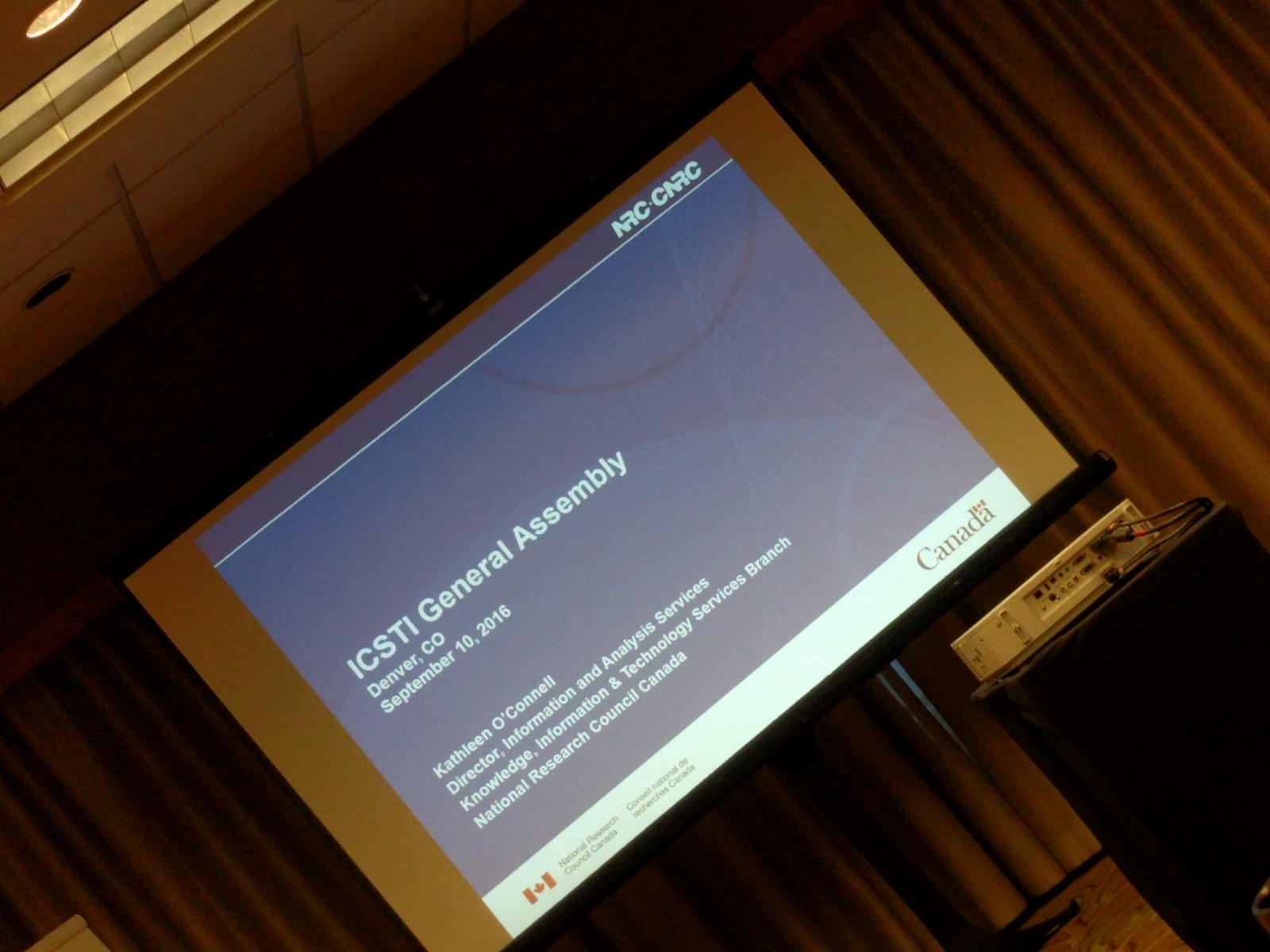
On 10 September 2016 I attended the ICSTI 2016 General Assembly & Workshops in Denver with Suzanne Pilsk on behalf of Smithsonian Libraries.  ICSTI 2016 General Assembly was held in Denver to take advantage of the International Data Week meetings being held the following week.

The Member Initiative Presentations followed a brief business meeting.

Smithsonian Libraries were invited to present during the Member Initiatives session on the topic of Smithsonian Research Online and activities around that including the Public Access Mandate and the implementation of Smithsonian Profiles. Suzanne Pilsk wrote and delivered the presentation on behalf of SIL,

The other Member Initiative talks were by:
  • Kathleen O'Connell (National Research Council Canada)
  • Mustapha Mokrane (Inferential Council for Science on World Data Systems)
  • Tae-Sui Seo (Korea Institute of Science and Technology Information)
IMG_20160910_102427 IMG_20160910_101130 IMG_20160910_104347
(from left: Pilsk, Mokrane, Seo)

These talks were followed by two workshops:
  • Information Trends and Opportunities Committee (ITOC) Workshop 
  • Technical Activities Coordinating Committee (TACC) Workshop 


Information Trends and Opportunities Committee (ITOC) Workshop 
Enabling Innovations for Researcher Workflows and Scholarly Communication
"The Information Trends and Opportunities Committee (ITOC) is the catalyst for strategic thinking of ICSTI. It conducts foresight/horizon scanning to identify trends and opportunities of interest and relevance to ICSTI members. The Chair of ITOC is Margret Plank, Head of Competence Center for non-textual Materials at the German National Library of Science and Technology (TIB)."

Jeroen Bosman and Bianca Kramer (Utrecht University Library/101 Innovations in Scholarly Communication). Innovations in scholarly communication: openness, efficiency and reproducibility drivers.
  • For those of you who may not yet have looked at the 101 Innovations in Scholarly Communication project, it is worth your time. The project provides a valuable empirical underpinning from a survey of over 20,000 researchers on just how the core nature of scientific communication is changing.
Cameron Neylon (Force 11). From Principles to Action - The FORCE11 approach to innovation in scholarly communications. 
  • "FORCE11 started as a movement for change amongst a particular group of technically minded people in scholarly communication including publishers, technologists, researchers, advocates and funders. Over time it has evolved in a number of directions, now positioning itself as a forum where different stakeholder communities can come together to seek a consensus on how to move forward. In particular a pattern has emerged in which successful groups seek first to articulate and refine a set of principles that can help to guide implementation but do not specify it. If a wide consensus can be developed on principles then the next phase moves towards community implementation. The success and challenges of this approach will be discussed with examples."
Lambert Heller (German National Library of Science and Technology (TIB)). Wikidata and Wikimedia Commons as a platform for collaborative annotation and reuse for scientific data. 
  • Excellent talk about the use/re-use of Open Access literature within WikiSource.
Courtney Soderberg (COS, Center for Open Science). An Open Science Framework for managing and sharing research workflows. 
  • Soderberg's talk was an excellent and engaging discussion of the mission of the Center for Open Science (COS). COS's remit is to increase openness, reproducibility, and integrity of scholarly research.
Alex Viggio (University of Colorado Boulder). Lessons Learned from the OpenVIVO Experiment.
  • Very interesting overview of the OpenVIVO experiment. OpenVIVO is hosted version of the VIVO software (which runs Smithsonian Profiles) to which any researcher around the world can enter their own profile.

IMG_20160910_124210 IMG_20160910_122342 IMG_20160910_120904
(from left: Viggio, Soderberg, Heller)


Technical Activities Coordinating Committee (TACC) Workshop 
Trends in Scientific Software Development, Sharing, and Use
ICSTI’s Technical Activities Coordinating Committee (TACC) typically focuses on exploring and communicating technical aspects of innovative trends in information science-based tools that help make STI more useable and accessible. The Chair of TACC is Brian Hitson, Director US DOE/Office of Scientific and Technical Information (DOE/OSTI).

Jay Billings (Oak Ridge National Laboratory & DOE Office of Scientific and Technical Information). The New Department of Energy Software Center
  • Billings discussed the DOE's Software Center, why such a center is needed, and ongoing development efforts.
Andrea Ross (Eclipse Foundation). Eclipse Foundation: A symphony of R&D collaboration
  • Ross gave a fascinating talk about the Eclipse Foundation and its efforts to nurture a community of software developers collaborating on a massive scale to develop high quality software.
James Willenbring (Sandia National Laboratories). The IDEAS Scientific Software Productivity Project
  • The Interoperable Design of Extreme-scale Application Software (IDEAS Project is a collaborative project of the seven national labs, a university, and three major computing facilities. "A key deliverable of the IDEAS Project is the Extreme-scale Scientific Software Development Kit (xSDK), which strives to provide the foundation for an extensible scientific software ecosystem, with components developed by diverse, independent teams throughout the high-performance computing community."
Fernando Pérez (Lawrence Berkeley National Laboratory). Project Jupyter: from interactive data science to reproducible computing in HPC environments
  • "Project Jupyter is a language-agnostic platform for scientific computing and data science that is widely used in research, education and industry. It evolved from the original IPython project, an interactive shell for the Python programming language, as the ideas in IPython were generalized to represent interactive computational processes in any language."
Eleonora Presani (Elsevier). SoftwareX – A new Open Access software journal
  • Presani's talk, on the multidisciplinary SoftwareX journal was a fascinating discussion of ways to document and create a scholarly communication dialog around a deliverable product (sofware). Post talk discussion include some compare/contrast to Journal of Open Source Software
IMG_20160910_141001 IMG_20160910_142858 IMG_20160910_150132
(from left: Billings, Ross, Willenbring)