Showing posts with label New Hampshire. Show all posts

Thursday, July 28, 2016

So long New Hampshire (and Vermont and Maine) ...

So long New Hampshire (and Vermont and Maine), it's been a fun week or so. Here's a little farewell from Robert Frost:


IMG_20160727_130441 IMG_20160726_150601 IMG_20160724_170206

She's one of the two best states in the Union.
Vermont's the other. And the two have been
Yokefellows in the sap yoke from of old
In many Marches. And they lie like wedges,
Thick end to thin end and thin end to thick end,
And are a figure of the way the strong
Of mind and strong of arm should fit together,
One thick where one is thin and vice versa.
- From "New Hampshire" by Robert Frost (from the classic 1923 collection, New Hampshire)

Saturday, July 23, 2016

To feel the wind, sea-scented, on my cheek, / To catch the sound of dusky flapping sail - Celia Thaxter

To feel the wind, sea-scented, on my cheek,
To catch the sound of dusky flapping sail
And dip of oars, and voices on the gale
Afar off, calling low, -- my name they speak!

O Earth! Thy summer song of joy may soar
Ringing to heaven in triumph. I but crave
The sad, caressing murmur of the wave
That breaks in tender music on the shore.
-- From "Land-Locked"

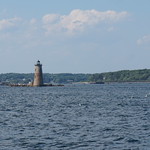
Celia Laighton Thaxter (June 29, 1835 – August 25, 1894) was an American writer of poetry and stories born in Portsmouth, New Hampshire. Thaxter grew up in the Isles of Shoals, first on White Island, where her father, Thomas Laighton, was a lighthouse keeper, and then on Smuttynose and Appledore Islands. (Wikipedia)

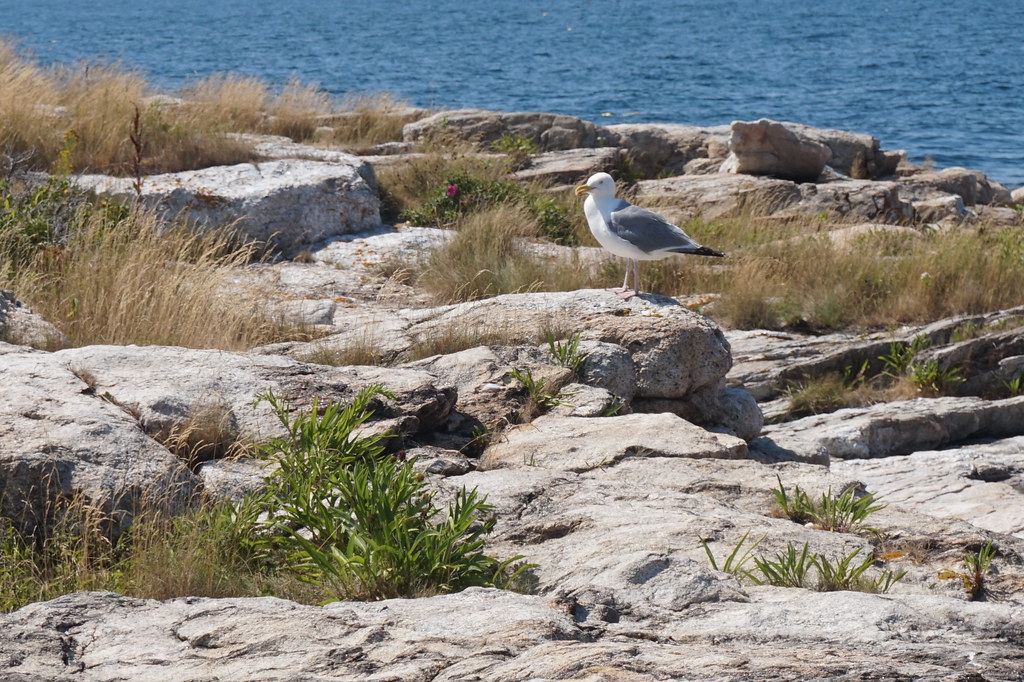
Across the lonely beach we flit, / One little sandpiper and I - Celia Thaxter

2016.07.22-DSC08209Across the lonely beach we flit,
One little sandpiper and I,
And fast I gather, but by bit,
The scattered drift-wood, bleached and dry.
The wild waves reach their hands for it,
The wild wind raves, the tide runs high,
As up and down the beach we flit,
One little sandpiper and I.
- From "The Sandpiper"

(NOTE: the bird at the right is not a sandpiper)

Celia Laighton Thaxter (June 29, 1835 – August 25, 1894) was an American writer of poetry and stories born in Portsmouth, New Hampshire. Thaxter grew up in the Isles of Shoals, first on White Island, where her father, Thomas Laighton, was a lighthouse keeper, and then on Smuttynose and Appledore Islands. (Wikipedia)

Sweet sounds on rocky shores the distant rote; / O could we float forever, little boat, / Under the blissful sky drifting alone! - C Thaxter

"Off Shore"

Rock, little boat, beneath the quiet sky,
Only the stars behold us where we lie, -
Only the stars and yonder brightening moon

2016.07.22-DSC08216 2016.07.22-DSC08215 2016.07.22-DSC08212

On the wide sea to-night alone are we;
The sweet, bright summer day dies silently,
Its glowing sunset will have faded soon.

Rock softly, little boat, the while I mark
The far off gliding sails, distinct and dark,
Across the west pass steadily and slow.

But on the eastern waters sad, they change
And vanish, dream-like, gray, and cold, and strange
And no one knoweth whither they may go.

We care not, we, drifting with wind and tide,
While glad waves darken upon either side,
Save where the moon sends silver sparkles down

And yonder slender stream of changing light,
Now white, now crimson, tremulously bright,
Where dark the lighthouse stands, with fiery crown.

Thick falls the dew, soundless on sea and shore:
It shines on little boat and idle oar,
Wherever moonbeams touch with tranquil glow.

The waves are full of whispers wild and sweet;
They call to me, - incessantly they beat
Along the boat from stern to curvéd prow

Comes the careering wind, blows back my hair,
All damp with dew, to kiss me unaware,
Murmuring "Thee I love," and passes on.

Sweet sounds on rocky shores the distant rote;
O could we float forever, little boat,
Under the blissful sky drifting alone!
-- "Off Shore"

Celia Laighton Thaxter (June 29, 1835 – August 25, 1894) was an American writer of poetry and stories born in Portsmouth, New Hampshire. Thaxter grew up in the Isles of Shoals, first on White Island, where her father, Thomas Laighton, was a lighthouse keeper, and then on Smuttynose and Appledore Islands. (Wikipedia)

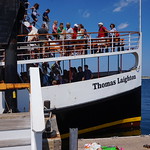
Sarah Orne Jewett's "On Star Island" ... and being on Star Island (Isles of Shoals)

I'd read Jewett's Country of the Pointed Firs (often considered her best work) a number of years ago. A significant figure in American regionalist literature, she lived and worked in Maine, just across the water from Portsmouth, NH where I'm spending some summer vacation.
2016.07.22-DSC08155 IMG_20160722_143938 IMG_20160722_145152

Sarah Orne Jewett (September 3, 1849 – June 24, 1909) was an American novelist, short story writer and poet, best known for her local color works set along or near the southern seacoast of Maine. (Wikipedia).

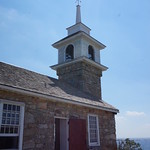
I took a short day trip out to Star Island and Jewett pretty much captured the experience, from the little chapel, the little graveyard, the clusters of people on holiday,

Here's Jewett's poem, "On Star Island":

 High on the lichened ledges, like
    A lonely sea-fowl on its perch,
Blown by the cold sea winds, it stands,
    Old Gosport's quaint, forsaken church.

No sign is left of all the town
    Except a few forgotten graves;
But to and fro the white sails go
    Slowly across the glittering waves.

IMG_20160722_145505 IMG_20160722_150239 IMG_20160722_143407

And summer idlers stray about
    With curious questions of the lost
And vanished village, and its men,
    Whose boats by these same waves were tossed.

I wonder if the old church dreams
    About its parish, and the days
The fisher people came to hear
    The preaching and the songs of praise!

Rough-handed, browned by sun and wind,
    Heedless of fashion or of creed,
They listened to the parson's words --
    Their pilot heavenward indeed.

2016.07.22-DSC08205 2016.07.22-DSC08166 2016.07.22-DSC08182

Their eyes on week-days sought the church,
    Their surest landmark, and the guide
That led them in from far at sea,
    Until they anchored safe beside

The harbor-wall that braved the storm
    With its resistless strength of stone.
Those busy fishers all are gone --
    The church is standing here alone.

But still I hear their voices strange,
    And still I see the people go
Over the ledges to their homes:
    The bent old women's footsteps slow;

The faithful parson stop to give
    Some timely word to one astray;
The little children hurrying on
    Together, chattering of their play.

I know the blue sea covered some,
    And others in the rocky ground
Found narrow lodgings for their bones --
    God grant their rest is sweet and sound!

I saw the worn rope idle hang
    Beside me in the belfry brown.
I gave the bell a solemn toll --
    I rang the knell for Gosport town. 2016.07.22-DSC08165

Friday, August 07, 2015

So long Dexter's Inn, Sunapee, NH

"On summer day that shone here, When we were all alone here" the poetry of John Hay #QotD

2015.08.05-DSC02454
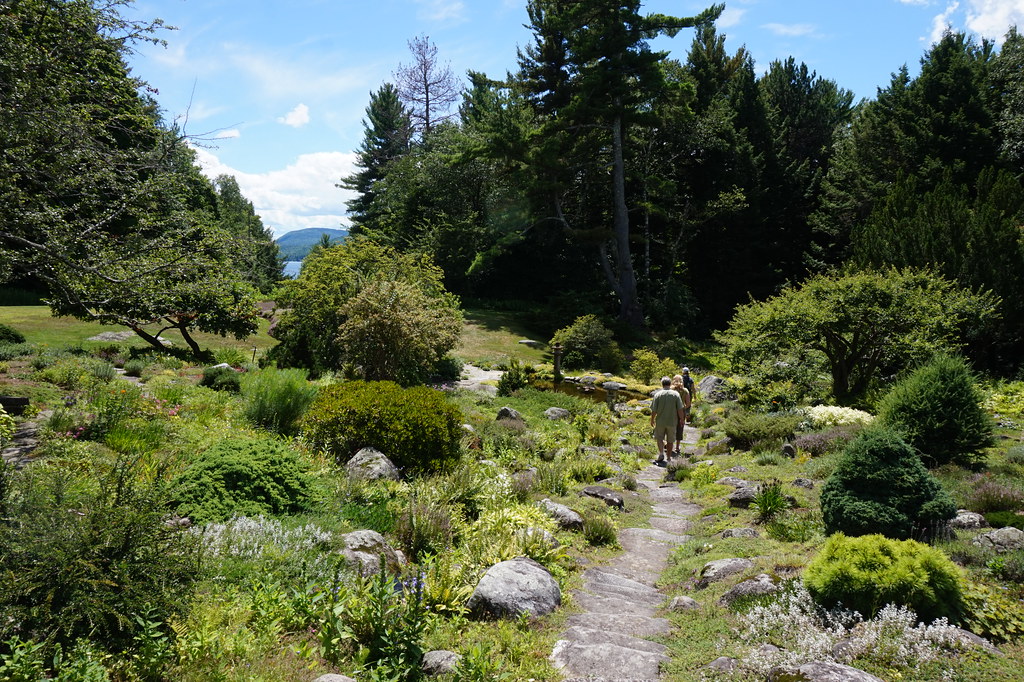
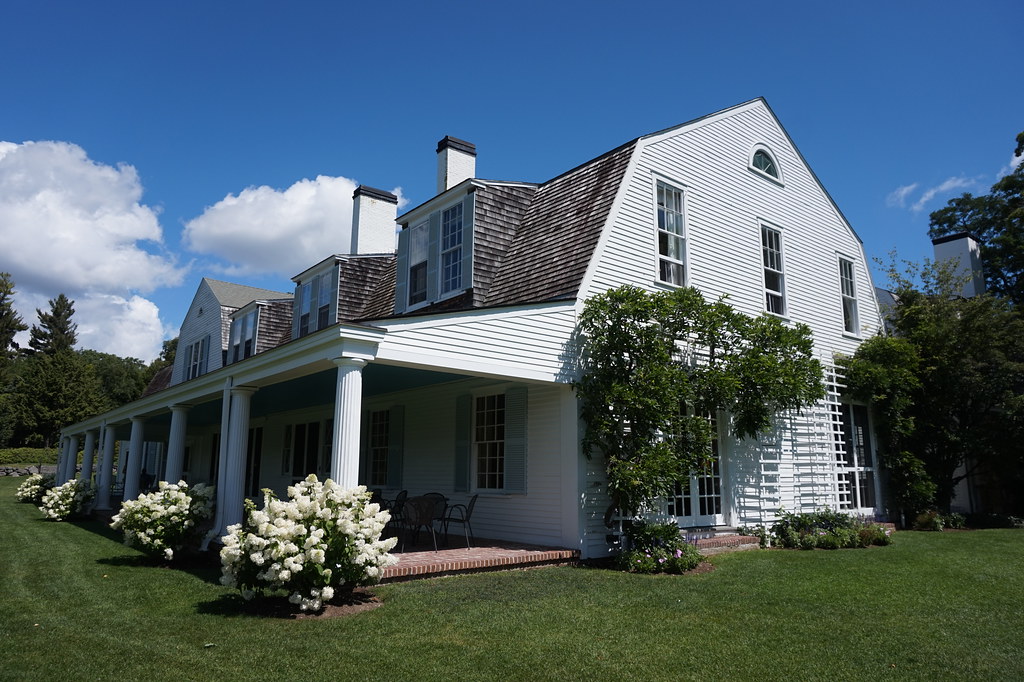
While in New Hampshire, I had the chance to visit The Fells, the summer home of three generations of the Hay family, starting with the great statesman, John Hay.

In addition to his political work, he was also a quite popular poet; an example of his work is below ... not quite to our current tastes, perhaps!

On the Bluff

Oh grandly flowing River!
   O silver-gliding River!
Thy springing willows shiver
   In the sunset as of old;
   They shiver in the silence
Of the willow-whitened islands,
While the sun-bars and the sand-bars
   Fill air and wave with gold.

O gay, oblivious River!
O sunset-kindled River!
Do you remember ever
   The eyes and skies so blue

On a summer day that shone here,
When we were all alone here,
And the blue eyes were too wise
   To speak the love they knew?

O stern impassive River !
O still unanswering River !
The shivering willows quiver
   As the night-winds moan and rave.
From the past a voice is calling,
From heaven a star is falling,
And dew swells in the bluebells
   Above her hillside grave.

Pike County ballads and other pieces by John Hay (full text)
Published 1871
Publisher Boston, J.R. Osgood and company

Henry Adams on John Hay ... pictures from the Hay summer home, The Fells (2 of 2)

2015.08.05-DSC02446
The Fells, summer home of John Hay
While in New Hampshire, I had the chance to visit The Fells, the summer home of three generations of the Hay family, starting with the great statesman, John Hay.

"He felt quite well satisfied to look on, and from time to time he thought he might risk a criticism of the players; but though he found his own position regular, he never quite understood that of John Hay. The Republican leaders treated Hay as one of themselves; they asked his services and took his money with a freedom that staggered even a hardened observer; but they never needed him in equivalent office. In Washington Hay was the only competent man in the party for diplomatic work. He corresponded in his powers of usefulness exactly with Lord Granville in London, who had been for forty years the saving grace of every Liberal administration in turn. Had usefulness to the public service been ever a question, Hay should have had a first-class mission under Hayes; should have been placed in the Cabinet by Garfield, and should have been restored to it by Harrison. These gentlemen were always using him; always invited his services, and always took his money." - The Education of Henry Adams by Henry Adams

More on John Hay by Henry Adams and a photo of The Fells (1 of 2)

2015.08.05-DSC02448
The Fells, summer home of John Hay
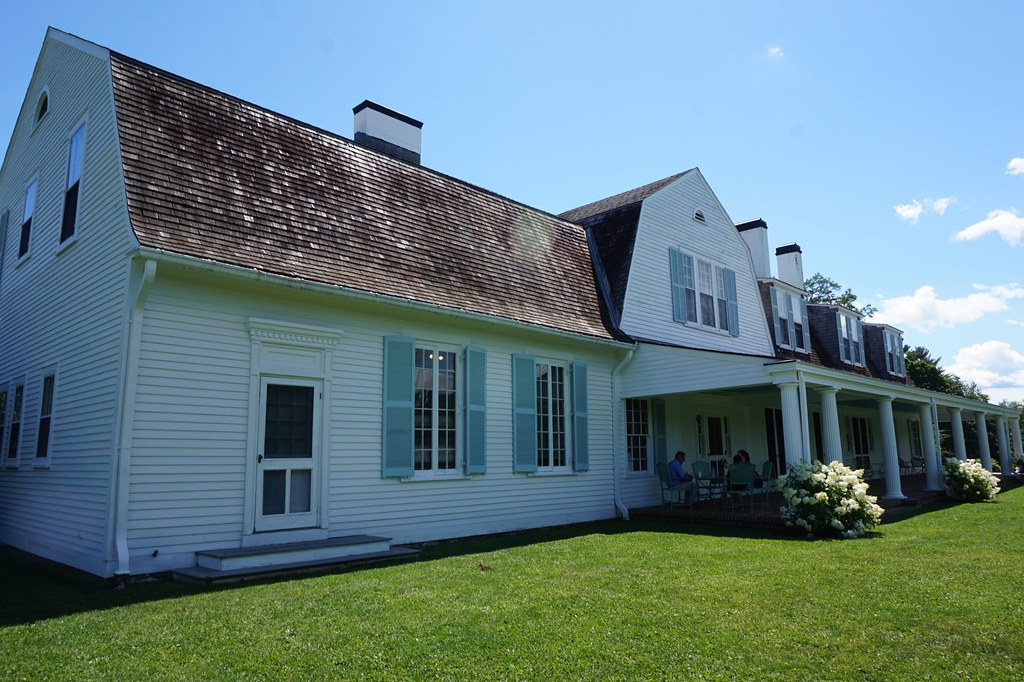
While in New Hampshire, I had the chance to visit The Fells, the summer home of three generations of the Hay family, starting with the great statesman, John Hay.

John Hay was as strange to the Mississippi River as though he had not been bred on its shores, and the city of St. Louis had turned its back on the noblest work of nature, leaving it bankrupt between its own banks. The new American showed his parentage proudly; he was the child of steam and the brother of the dynamo, and already, within less than thirty years, this mass of mixed humanities, brought together by steam, was squeezed and welded into approach to shape; a product of so much mechanical power, and bearing no distinctive marks but that of its pressure. The new American, like the new European, was the servant of the powerhouse, as the European of the twelfth century was the servant of the Church, and the features would follow the parentage. - The Education of Henry Adams by Henry Adams


Monday, February 16, 2015

Happy Presidents' Day ... this year, I honor Calvin Coolidge and Franklin Pierce

2014.08.03-IMG_1085
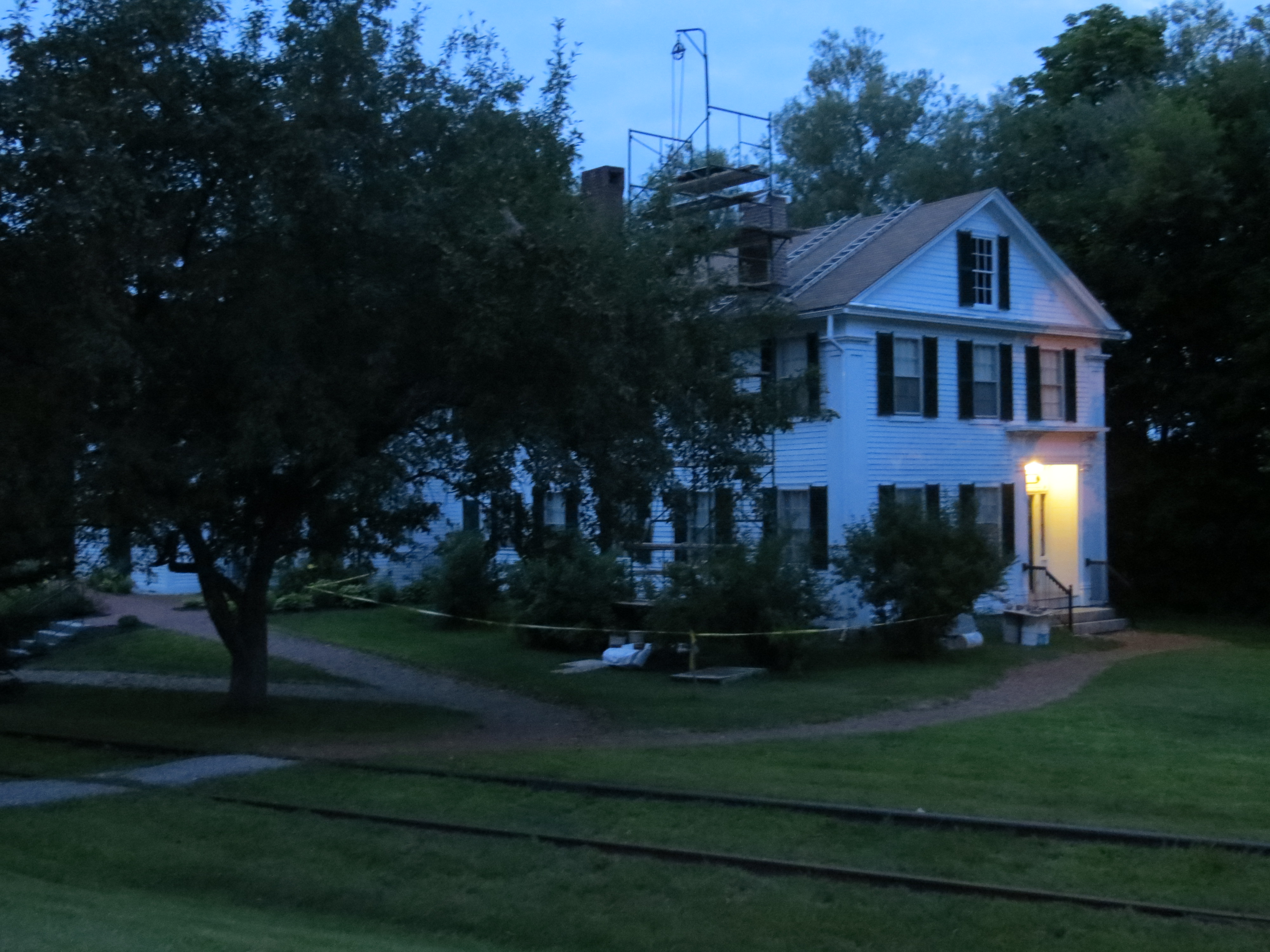
Pierce Manse
Last summer, I visited New Hampshire and Vermont -- homes to this year's Presidents. So, in honor of Franklin Pierce and Calvin Coolidge, I dedicate this Presidents' Day.

First, I stopped in Concord, NH and, in addition to visiting the State Capitol, stopped to see the Pierce Manse. Sadly, it wasn't open, but I did get to walk around a bit. As an interesting side note, in elementary school (4th and 5th grade), one of my classmates claimed to be descended from Franklin Pierce. Who knows?

From New Hampshire, we drove on to Vermont and spent some time in the Rutland area. Before driving back to Manchester, we took a side trip to Plymouth Notch, the home and birthplace of Calvin Coolidge. The historic site was quite interesting.

So, what about the two Presidents? Pierce was certainly one of the worst (despite having his biography being written by Nathaniel Hawthorne! Coolidge probably somewhere in the middle.

2014.08.09-IMG_1376
Coolidge Birthplace (and birthroom)