Showing posts with label William Faulkner. Show all posts

Wednesday, November 18, 2015

New Orleans ... a courtesan whose hold is strong upon the mature, to whose charm the young must respond. - Faulkner #QotD

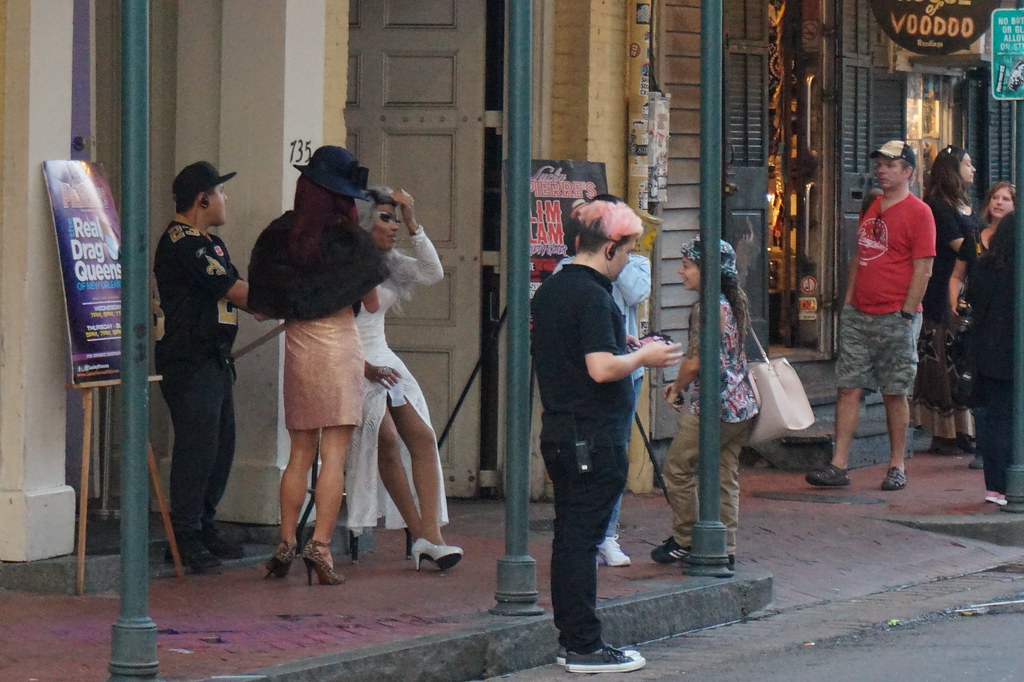
2015.11.15-DSC04822NEW ORLEANS. A courtesan, not old and yet no longer young, who shuns the sunlight that the illusion of her former glory be preserved. The mirrors in her house are dim and the frames are tarnished; all her house is dim and beautiful with age. She reclines gracefully upon a dull brocaded chaise-longue, there is the scent of incense about her, and her draperies are arranged in formal folds. She lives in an atmosphere of a bygone and more gracious age. And those whom she receives are few in number, and they come to her through an eternal twilight. She does not talk much herself, yet she seems to dominate the conversation, versation, which is low-toned but never dull, artificial but not brilliant. And those who are not of the elect must stand forever without her portals. New Orleans . . . a courtesan whose hold is strong upon the mature, to whose charm the young must respond. And all who leave her, seeking the virgin's un-brown, brown, ungold hair and her blanched and icy breast where no lover has died, return to her when she smiles across her languid fan.... New Orleans. 

William Faulkner. "New Orleans," New Orleans Sketches

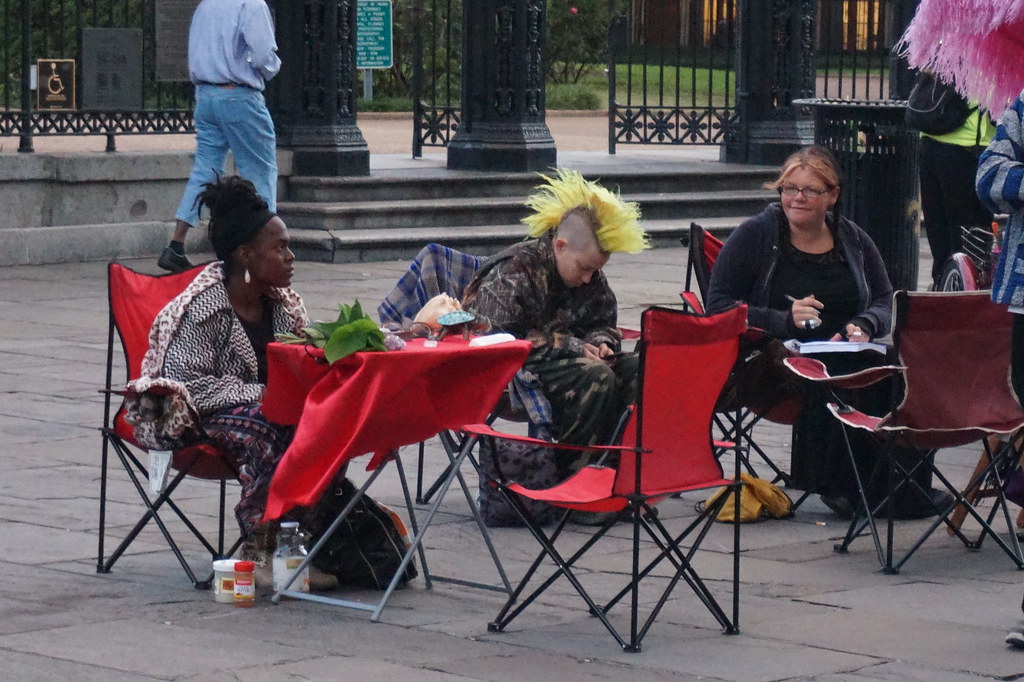
Now, you lay off our New Orleans bohemian life - Faulkner #QotD

2015.11.15-DSC04835Fairchild laughed. “Now, you lay off our New Orleans bohemian life; stay away from us if you don’t like it. I like it, myself: there is a kind of charming futility about it, like—” “Like a country club where they play croquet instead of golf,” the other supplied for him. “Well, yes,” Fairchild agreed. “Something like that.”

 William Faulkner, Mosquitoes (1927)

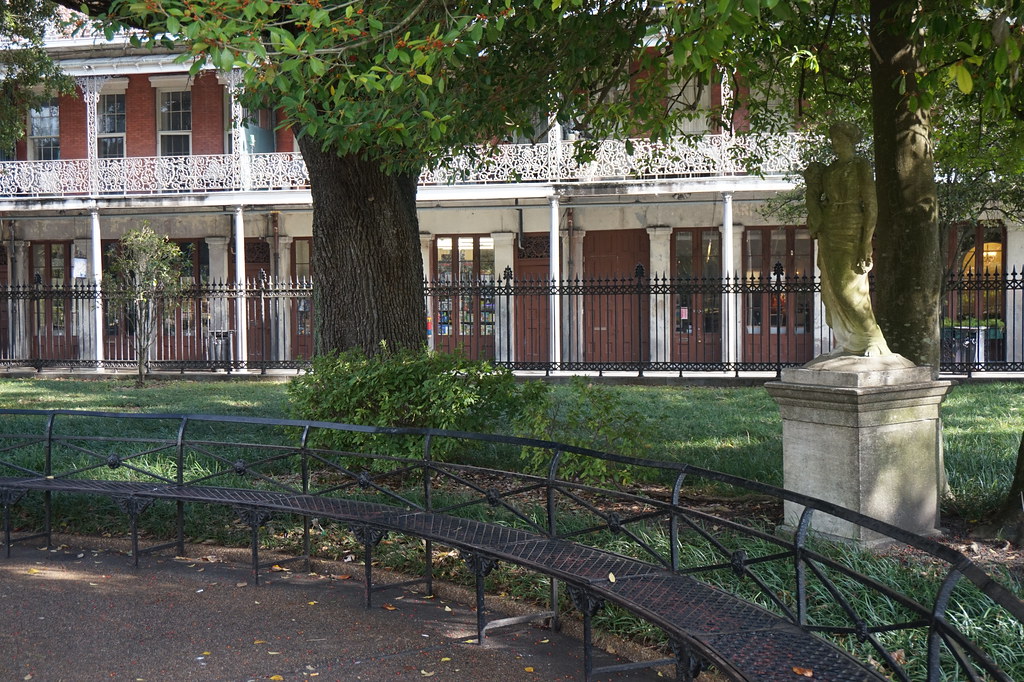
I looked at the faces of old men sitting patiently on iron benches - Faulkner #QotD

2015.11.17-DSC04884The iron benches of Jackson Square were empty this morning ... but the old men are there in spirit.

"I looked at the faces of old men sitting patiently on iron benches as we slowly paced-men who had learned that living is not only not passionate or joyous, but is not even especially sorrowful."

"Out of Nazareth", William Faulkner, New Orleans Sketches (circa 1925)

Tuesday, November 17, 2015

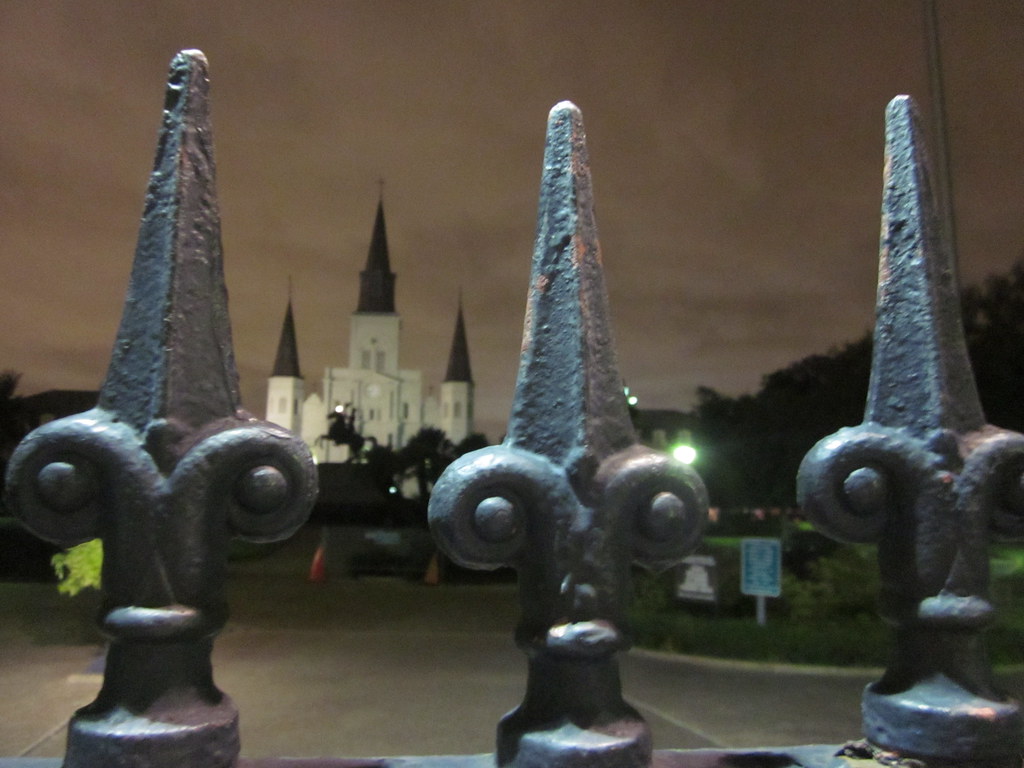
Looking through the tall pickets into Jackson square was like looking into an aquarium - Faulkner #QotD

2011.10.18-IMG_4505There was a moon, low in the sky and worn, thumbed partly away like an old coin, and he went on. Above banana and palm the cathedral spires soared without perspective on the hot sky. Looking through the tall pickets into Jackson square was like looking into an aquarium—a moist and motionless absinthe—cloudy green of all shades from ink black to a thin and rigid feathering of silver on pomegranate and mimosa—like coral in a tideless sea, amid which globular lights hung dull and unstraying as jellyfish, incandescent yet without seeming to emanate light; and in the center of it Andrew’s baroque plunging stasis nimbused about with thin gleams as though he too were recently wetted.

William Faulkner, Mosquitoes (1927)

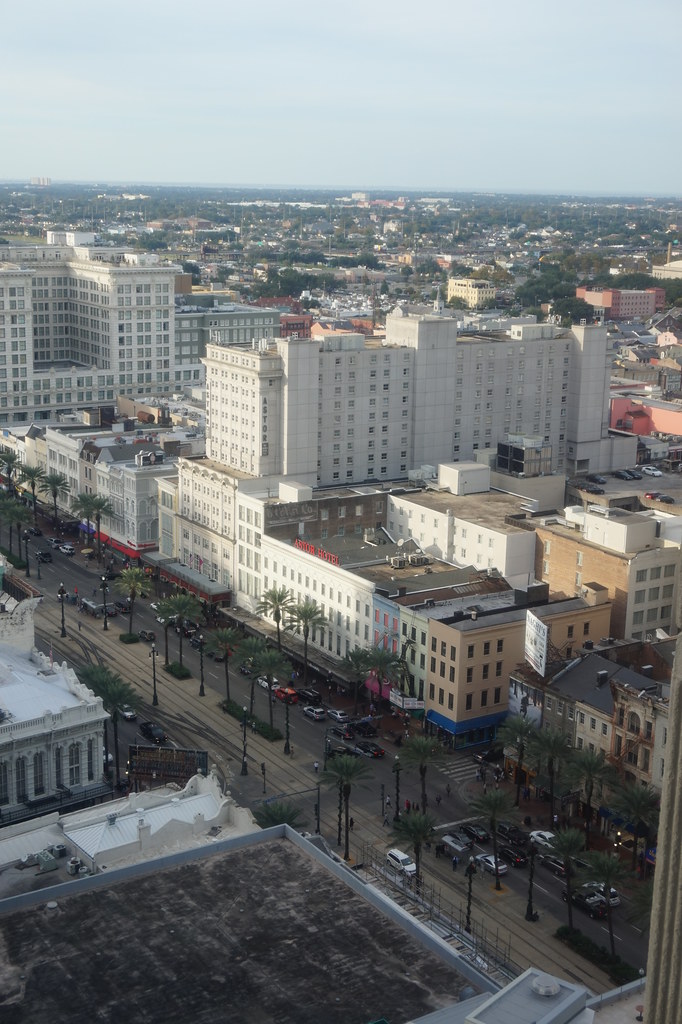
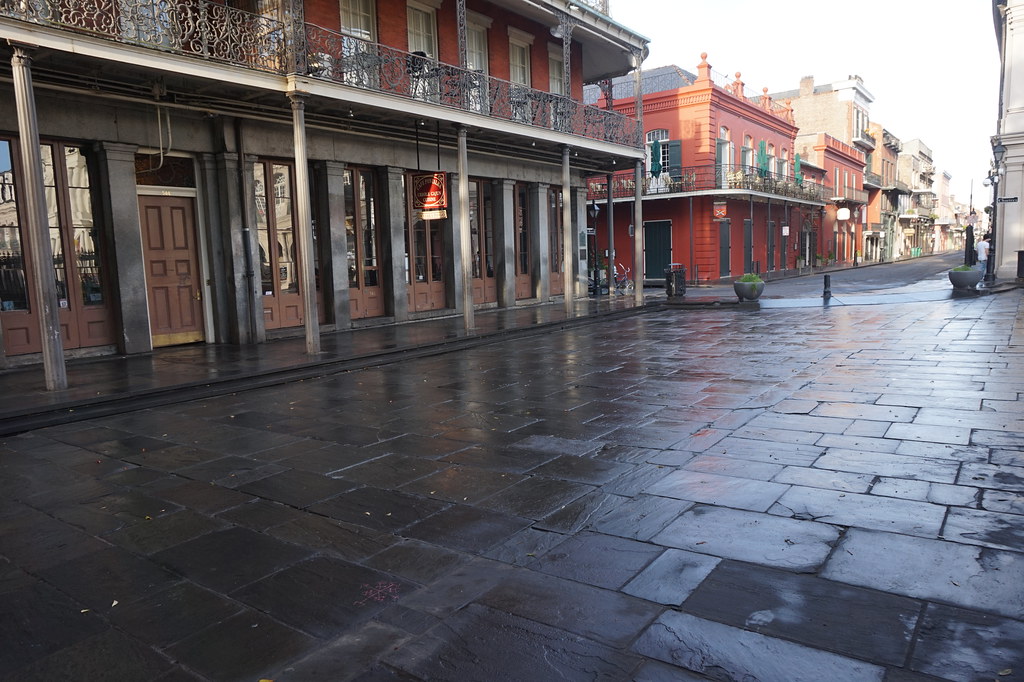
Outside the window New Orleans, the vieux carré, brooded in a faintly tarnished languor like an aging yet still beautiful courtesan - Faulkner #QotD

2015.11.15-DSC04788Outside the window New Orleans, the vieux carré, brooded in a faintly tarnished languor like an aging yet still beautiful courtesan in a smokefilled room, avid yet weary too of ardent ways. Above the city summer was hushed warmly into the bowled weary passion of the sky.

William Faulkner, Mosquitoes (1927)

Pontalba and cathedral were cut from black paper and pasted flat on a green sky - Faulkner #QotD

2015.11.16-DSC04847The violet dusk held in soft suspension lights slow as bell-strokes, Jackson square was now a green and quiet lake in which abode lights round as jellyfish, feathering with silver mimosa and pomegranate and hibiscus beneath which lantana and cannas bled and bled. Pontalba and cathedral were cut from black paper and pasted flat on a green sky; above them taller palms were fixed in black and soundless explosions. The street was empty, but from Royal street there came the hum of a trolley that rose to a staggering clatter, passed on and away leaving an interval filled with the gracious sound of inflated rubber on asphalt, like a tearing of endless silk.

William Faulkner, Mosquitoes (1927)

2015.11.16-DSC04844

Monday, November 16, 2015

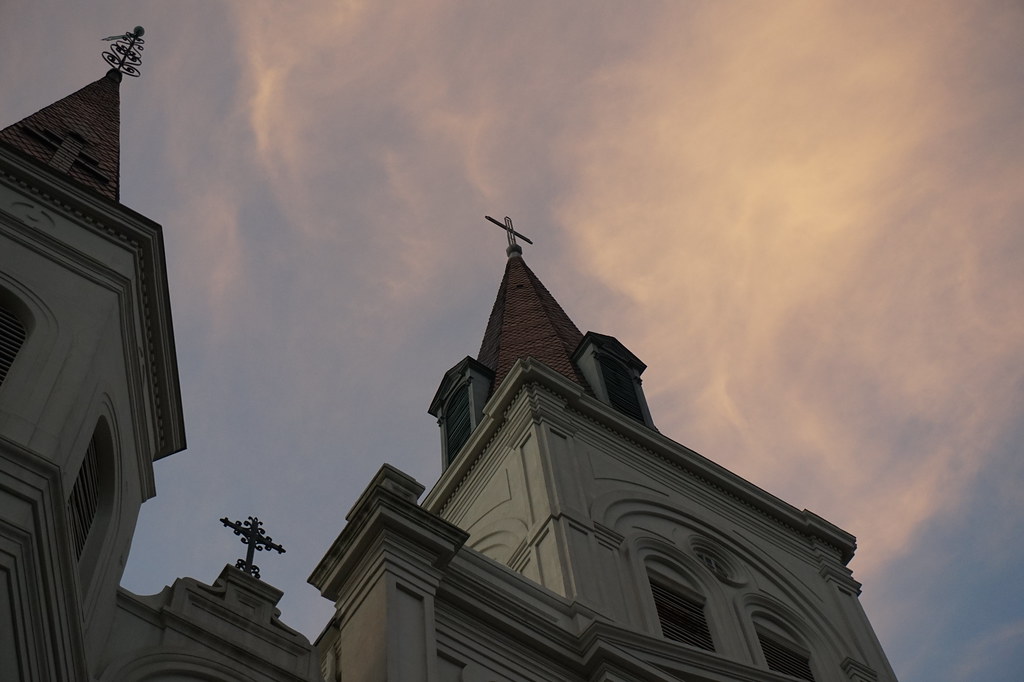
Above banana and palm the cathedral spires soared without perspective on the hot sky. - Faulkner #QotD

2015.11.15-DSC04836There was a moon, low in the sky and worn, thumbed partly away like an old coin, and he went on. Above banana and palm the cathedral spires soared without perspective on the hot sky. Looking through the tall pickets into Jackson square was like looking into an aquarium—a moist and motionless absinthe—cloudy green of all shades from ink black to a thin and rigid feathering of silver on pomegranate and mimosa—like coral in a tideless sea, amid which globular lights hung dull and unstraying as jellyfish, incandescent yet without seeming to emanate light; and in the center of it Andrew’s baroque plunging stasis nimbused about with thin gleams as though he too were recently wetted.

William Faulkner, Mosquitoes (1927)


2015.11.15-DSC04800

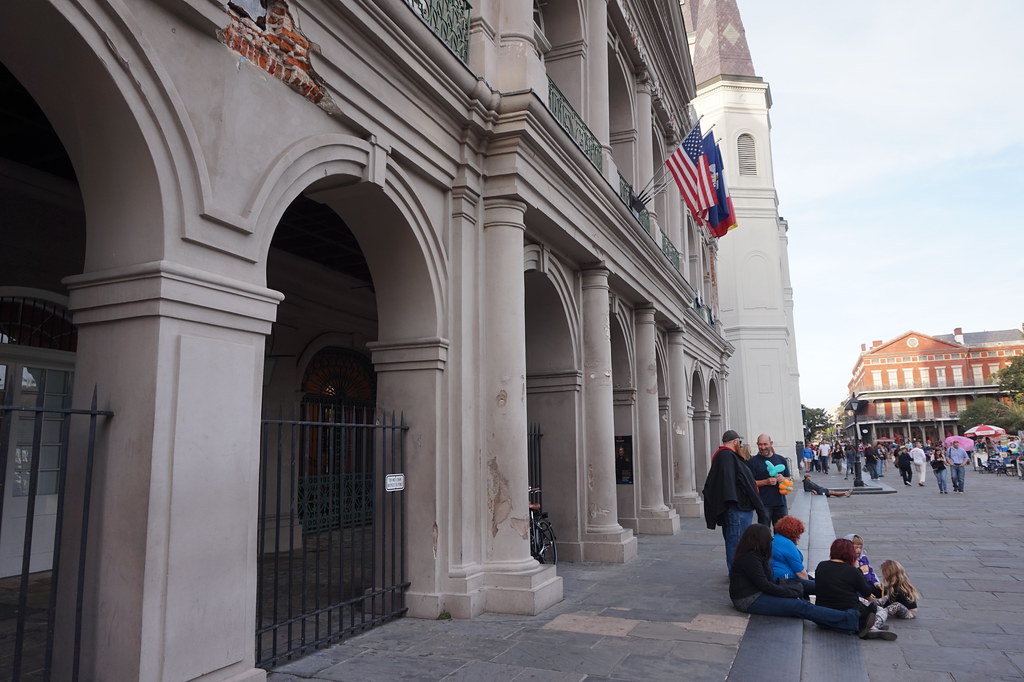
... why a building as old and ugly could have any value; and second, if it were valuable, why they let it become so shabby - Faulkner #QotD

2015.11.15-DSC04793THE CABILDO, a squat Don who wears his hat in the king's presence, not for the sake of his own integer vitae, but because some cannot, gloomed in sinister derision of an ancient joke; within the portals Iowa wondered aloud first, why a building as old and ugly could have any value; and second, if it were valuable, why they let it become so shabby.

"Damon and Pythias Unlimited", William Faulkner, New Orleans Sketches (circa 1925)

2015.11.15-DSC04795

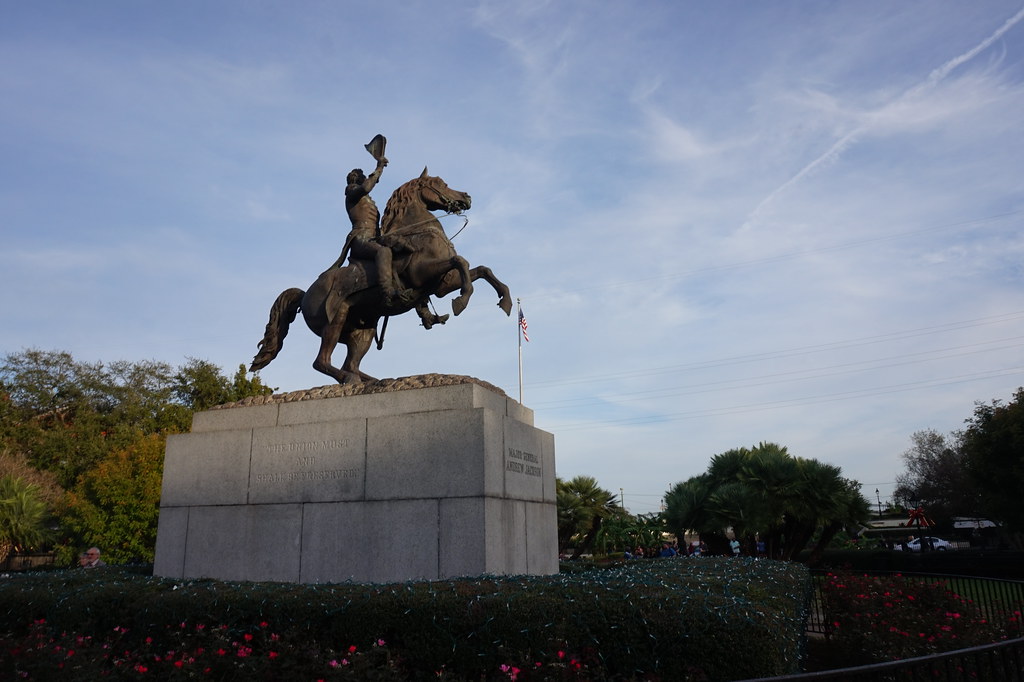
Sparrows were upon Andrew Jackson's head as, childishly conceived, he bestrode his curly horse in terrific arrested motion. - Faulker #QotD

2015.11.15-DSC04803BENEATH the immaculate shapes of lamps we passed, between ancient softly greenish gates, and here was Jackson park. Sparrows were upon Andrew Jackson's head as, childishly conceived, he bestrode his curly horse in terrific arrested motion. Beneath his remote stare people gaped and a voice was saying: "Greatest piece of statuary in the world: made entirely of bronze, weighing two and a half tons, and balanced on its hind feet."

"Out of Nazareth", William Faulkner, New Orleans Sketches (circa 1925)

Sunday, August 14, 2011

QotD: Through the fence, between the curling flower spaces, I could see them hitting

2011.08.14-IMG_3889
Through the fence, between the curling flower spaces, I could see them hitting.They were coming toward where the flag was and I went along the fence. Luster was hunting in the grass by the flower tree. They took the flag out, and they were hitting. They put the flag back and they went to the table, and he hit and the other hit. (William Faulkner, The Sound and the Fury, 1929).

Starting a little vacation time in Brewster, Mass. One of the benefits is that I look out right over a golf course (too bad I don't play golf). So this morning, at 6:04 a.m. they were out mowing the grass ("greens"?) and such. Shortly after they finished, I heard the "pock, pock" of the driving. The sound made me think to that wonderful opening scene of Faulkner's The Sound and the Fury where Luster is out with Benjy hunting for golf balls on the side of the course that was the land that properly belonged to Benjy had not the weight of being a Compson crushed down the that which was the being of Caddie and Jason, and Quentin, yes, even Quentin; Quentin that was not even Quentin. That weight, which, some would say was not the weight of being a Compson, but rather was the weight of dirt and blood that was what it was to mean The South at that point in time, or was it truly all times and only that which causes us to rail at the moil and tumult of stirrings, that causes us to think of the tomorrow and tomorrows that exist only to wreak upon us frailties of the todays and yesterday?