Showing posts with label Nairobi. Show all posts

Tuesday, May 30, 2017

Promoting Scholarly Publication Data and the Biodiversity Heritage Library in Kenya with a Special Presentation at the U.S. Embassy, Nairobi


In May 2017, while attending the XXI Congress of the Association for the Taxonomic Study of the Flora of Tropical Africa (AETFAT), Smithsonian Libraries' (SIL) staff Martin R. Kalfatovic and Carolyn A. Sheffield received a speaking invitation from the Embassy of the United States of America, Nairobi, Kenya from Tatum Albertine (Environment, Science, Technology & Health Officer).

The Embassy is located in Gigiri, north of the Nairobi central business district, about a two hour drive in Nairobi traffic from the Karen neighborhood where the AETFAT Congress was being held. The program was held in the American Reference Center (ARC) on the Embassy campus. The ARC serves students, teachers, researchers, journalists, business professionals and individuals simply interested in broadening their horizons on any topic.

The purpose of the talk was to provide a wider Kenyan community with information about the Biodiversity Heritage Library and services provided by Smithsonian Libraries to Smithsonian researchers that could serve as a model or inspiration for similar services to the broader research community in Kenya. There were invited guests from National Museums of Kenya, the Kenya Wildlife Service, Nature Kenya: The East African Natural History Society, and the National Commission for Science, Technology and Innovation (NACOSTI). In addition, Albertine worked with ARC Deputy Director Nashon Akello to publicize the program widely with the university community and faculty and students from both Kenyatta University and the Technical University of Kenya.

Smithsonian Libraries Associate Director Martin R. Kalfatovic presentation, "Managing Scholarly Research Output: The Smithsonian Institution Experience: An Introduction to Smithsonian Research Online (SRO)" covered key components of the Smithsonian Libraries' SRO program of bibliographic data collection, data analysis for metrics and reporting, and communications to administrators, researchers, and the public. The presentation, based on previous presentations of SIL staff Alvin Hutchinson and Richard Naples and with input from Suzanne C. Pilsk. A representative of NACOSTI in attendance commented:
Information management and data analysis towards scholarly publications is very important indicator of a nation's development and reflects the potential of a nation to harness its human resource in solving problems of mankind. It also broadens the horizons of policy thinking and in addressing many critical issues the government faces. As a policy making institutions, scholarly publications will be very important in advising the government accurately. Therefore, your invitation of our institution was timely because this is one of the areas needed to be harnessed in advising the government by policy directions using real data.
As Scott Miller, Deputy Under Secretary for Collections and Interdisciplinary Support, who facilitated the planning for the program, noted:
Most research organizations in Kenya, as well as agencies who regulate research, are struggling with the challenges of tracking and making available the results of research.  The tools that Smithsonian Research Online have used could be readily adapted for use by some of these organizations.
Given the overlap of interests of many organizations in biodiversity research in Kenya, I also hope these presentations catalyze discussion of the possibility of a multi-organization collaboration to create a centralized data archive that has multiple portals to serve different users.
Carolyn A. Sheffield, BHL Program Manager, presented on "Inspiring Discovery Through Free Access to Biodiversity Knowledge: The Biodiversity Heritage Library (BHL)." Sheffield covered a general introduction of the BHL as well as recent accomplishments and metrics related to Kenya and Africa. BHL Africa colleagues, Asha Owono and Ben Nakitare were in attendance and provided additional support in relation to Kenyan participation in the BHL during the question and answer period. A participant from the Kenya Wildlife Service noted: "The lecture and demonstration were very encouraging and I have the feeling that this if pursued  more vigorously can enhance information sharing within the conservation field in this country and the world at large."

Kalfatovic, Albertine, Sheffield
Again, as Dr. Miller commented during the planning for this presentation, "This program is important for several reasons beyond helping users understand how to use the Biodiversity Heritage Library (which is important in itself). Kenya is poised to make significant additions to the BHL.  As was discussed at the Laikipia landscape workshop in February, there is a rich history of 'grey literature' in East Africa on agriculture, wildlife, public health, etc., that is not available to most people today."

The ARC was filled to capacity with sixty attendees. The Embassy social media team led by Amos Rono also presented the program as a Facebook Live broadcast as well as live streaming it to other U.S. Embassies in East Africa (see link below). Smithsonian Libraries and Biodiversity Heritage Library social media team also promoted the event.

Thanks to ARC Director George Kamau and ARC Deputy Director Nashon Akello for hosting the program in their space and Dan Travis (Public Affairs Officer), Megan Larson-Kone (Cultural Affairs Officer), Alka Bhatnagar (Information Resource Specialist), and Pushpinder Dhillon (Economic Section Chief) on the U.S. Embassy staff who worked to make this program a success.

View the Facebook Live presentation: 

Thursday, October 08, 2015

Recap of visit to Kenya, meetings, workshops, and safari

IMG_20150923_160621175_HDR
BHL Africa Workshop (24-26 September)
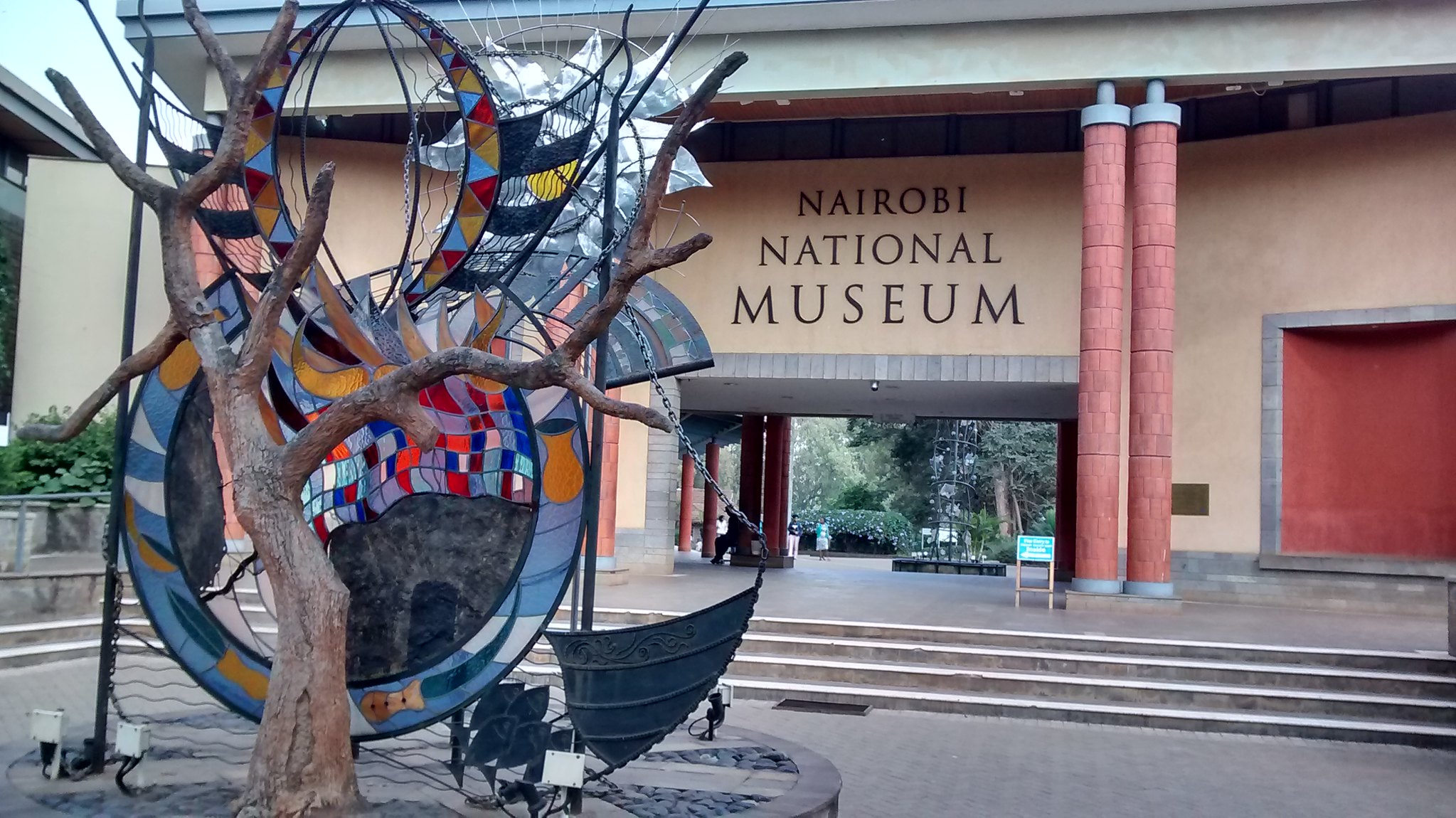
SIL staff were hosted and funded by BHL Africa (via the JRS Foundation) to conduct a full BHL training workshop for staff from participating BHL Africa institutions. A total of 15 people attended the three day session and represented South Africa, Uganda, and Kenya. SIL staff were assisted by Anne-Lise Fourie (BHL Africa/South Africa) and Lawrence Monda (Nationa Museums of Kenya, NMK). The workshop included an earlier set up day; we were able to tour the grounds of the Nairobi National Museum (location of the workshop and HQ for the National Museums of Kenya) where we ran into Scott Miller. Dr. Mzalendo Kibunjia (Director General of the NMK) and Geoffrey Mwachala  (Director Research and Collections, NMK) opened the sessions and welcome the group to the NMK. 

Security throughout Nairobi was oppressive. There were car checks before entering facilities such as hotels, shopping malls and the museum. You also had to pass through a metal detector before entering the hotel and run bags through an x-ray machine. Likewise, in all shops, you went through a metal detector and physical pat down before entering. Traffic was horrendous with a 1-2 km trip often taking 30-45 minutes.  

Attending from the Smithsonian Libraries were: Martin Kalfatovic, Carolyn Sheffield, Grace Costantino, and Jackie Chapman. 

* * * * * 

2015.09.27-DSC03214Amboseli National Park (27-28 September)
After the BHL Africa Workshop, Smithsonian staff and Anne-Lise Fourie (BHL Africa) took two days leave to visit the Amboseli National Park in far Western Kenya. Amboseli is on the Tanzanian border at the foot of Mt. Kilimanjaro and known for its elephant herds. There is a lake/swamp at Amboseli and we were able to see the elephants bathing and playing in the water. In addition to elephants, we saw lions (including a post-kill zebra feast), wildebeast, water buffalo, hyenas, zebras, giraffes, antelope, impalla, warthogs, ostriches, secretary birds, and various other horned herbivores. 
* * * * * 

IMG_20150930_091157TDWG 2015 Report (28 September - 1 October)
We had a very successful TDWG this year. Overall, the program was very well run. The conference was held at the Windsor Hotel and Golf Resort, about a 30 minute drive from the Central Business District. The complex was very secure with armed guards and car checks anywhere inside the walls. The SIL group had a multi-room cottage on the grounds overlooking the golf course and were visited by a troop of monkeys in the morning and evening. The BHL symposium was held on the last day of the conference as the very last session. Normally this isn't a great spot, but since it was a very captive audience, we had nearly 100% attendance with about 137 people in the audience. Participating in the BHL symposium (in addition to the SIL staff) were William Ulate (BHL Technical Director) and Anne-Lise Fourie (BHL Africa) TDWG Chair, Cyndy Parr (now at NAL formerly of EOL) told me afterwards that one of the board members of the hotel did a day registration just to attend the BHL session. The hotel is very eco-friendly and has an actively managed environmental program. 

Jackie Chapman presented the poster that she and Robin Everly had done for the recent fern conference at the Smithsonian and it was well received.

At the request of Scott Miller, Carolyn Sheffield and I took a side trip to meet with IBM Research Kenya. The research facility was located about an hour drive from the Windsor on the other side of Nairobi. We spent about an hour with the engineering and project staff (25 people) from IBM Research discussing possible collaborations and research projects that the IBM team might work on. 

Attending from the Smithsonian Libraries were: Martin Kalfatovic, Carolyn Sheffield, and Jackie Chapman. 

Friday, September 25, 2015

A few quotes on Nairobi from Happy Valley: The Story of the English in Kenya (1979) by Nicholas Best

IMG_20150923_164001846_HDRA few quotes from:

2015.09.23-IMG_5071 Today the stepping stones form part of Museum Bridge at the head of the Uhuru Highway, Nairobi City’s most prestigious tree-lined boulevard.

* * *

There was no thought of making Nairobi anything more than just a halt on the line. It was far too unhealthy, for one thing. The swamp extended from the present Boulevard Hotel to Racecourse Road and was a strong breeding ground for malaria.

* * *

Ainsworth chose a site now occupied by the National Museum on the hill above the tribal stepping stones. With his American wife Ina he took up residence on the spot filled since the 1970s by a full-sized fibreglass model of Ahmed, Kenya’s most famous elephant.

IMG_20150923_160703

It has been ... the fashion to speak of Nairobi as an ugly little town ... It is not true now. - S.E. White #QotD

IMG_20150923_115637913_HDR
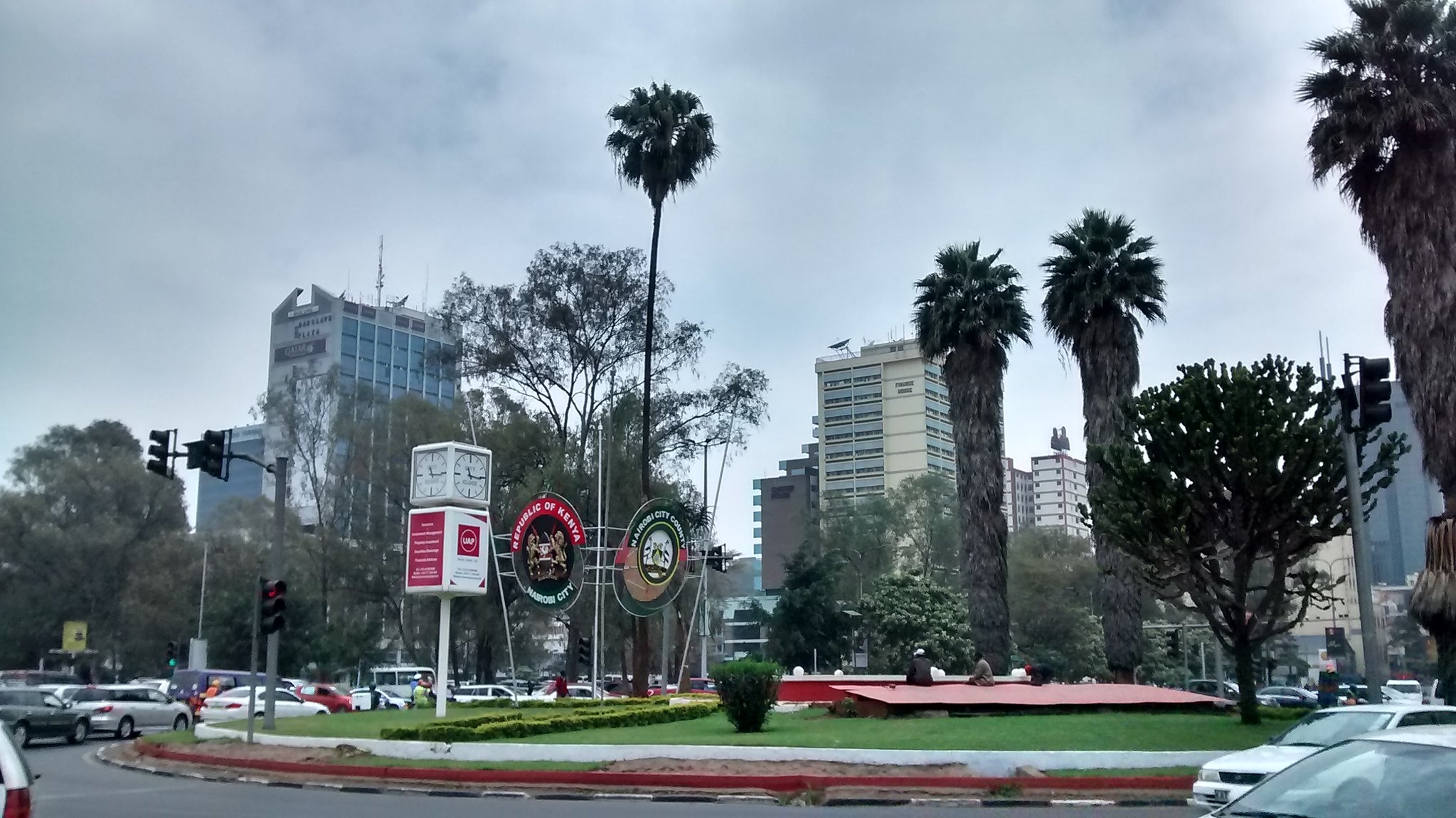
It has been, as I have said, the fashion to speak of Nairobi as an ugly little town. This was probably true when the first corrugated iron houses huddled unrelieved near the railway station. It is not true now. The lower part of town is well planted, and is always picturesque as long as its people are astir. The white population have built in the wooded hills some charming bungalows surrounded by bright flowers or lost amid the trunks of great trees. From the heights on which is Government House one can, with a glass, watch the game herds feeding on the plains. Two clubs, with the usual games of golf, polo, tennis — especially tennis — football and cricket; a weekly hunt, with jackals instead of foxes ; a bungalow town club on the slope of a hill ; an electric light system; a race track; a rifle range; frilly parasols and the latest fluffiest summer toilettes from London and Paris — I mention a few of the refinements of civilization that offer to the traveller some of the most piquant of contrasts. (pp. 133-34) From: African Camp Fires (1914) by Stewart E. White

IMG_20150923_110205

Generally I and Nairobi were in very good understanding ... and thought: There is no world without Nairobi’s streets. #QotD

IMG_20150924_174859993Generally I and Nairobi were in very good understanding, and at one time I drove through the town and thought: There is no world without Nairobi’s streets.

Out of Africa & Shadows on the Grass (1937, 1960) by Issak Dinesen

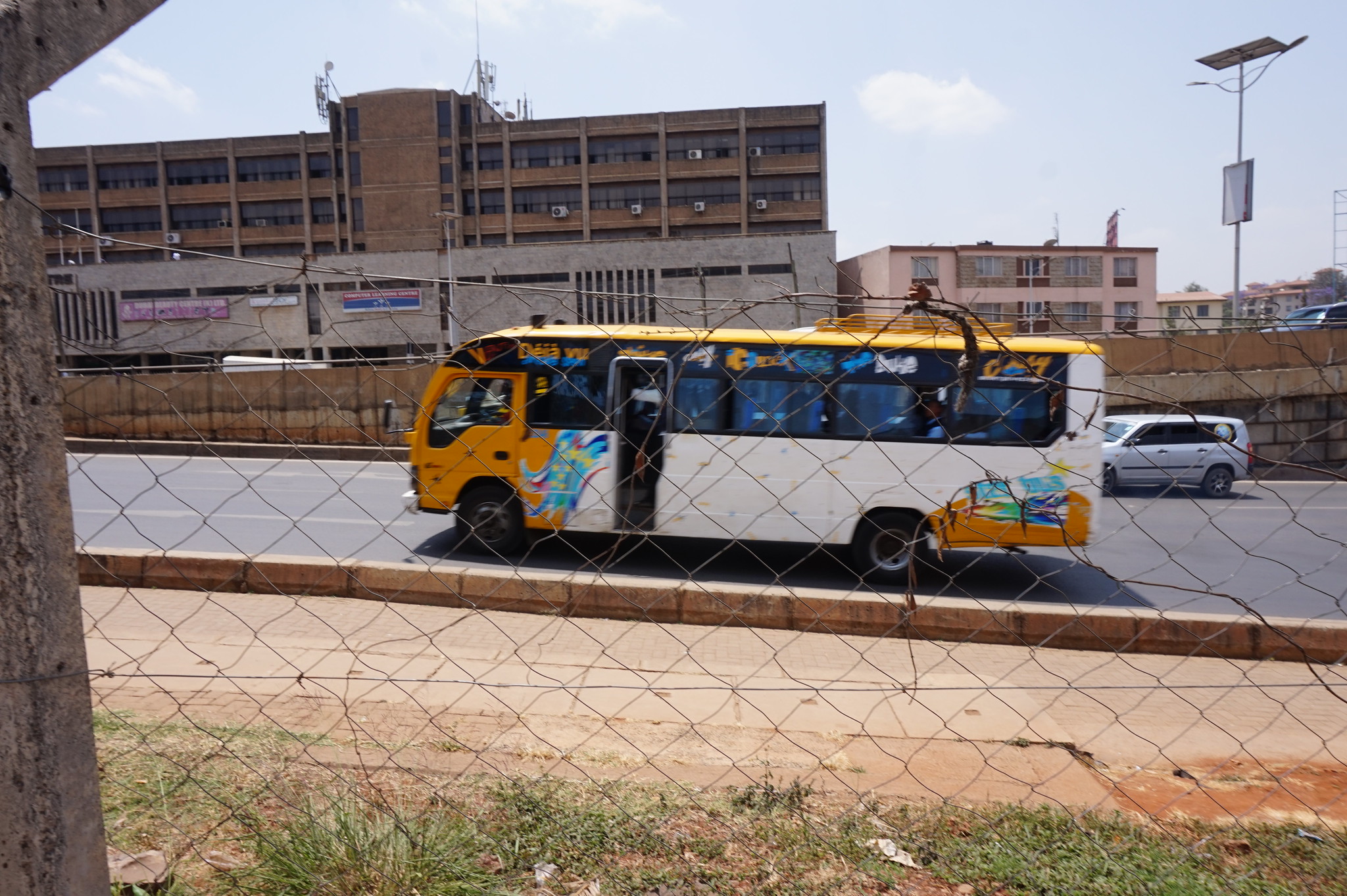
"Nairobi has burst out of itself ... Around us are matatus, those brash, garish public transport vehicles" @BinyavangaW #QotD

2015.09.24-DSC02762
From around Museum Hill, Nairobi, Kenya
From: One Day I Will Write About This Place: A Memoir (2011) by Binyavanga Wainaina 
I am nervous. Nairobi has burst out of itself, like a rotting fruit, and I don’t think I like it. The taxi drives from the airport into the city center. Around us are matatus, those brash, garish public transport vehicles. Manambas conduct the movement of the matatu, hanging out of the open doors, performing all kinds of gymnastics as they call their routes, announce openings in the traffic, and communicate with the driver through a series of bangs on the roof that manage to be heard above the music.

The town of Nairobi, the capital of the East Africa Protectorate, stands on the base of wooded hills at the three hundred and twenty-seventh mile of the railroad. #QotD

IMG_20150923_111633502_HDRMy African journey by Winston Churchill (1909)
The town of Nairobi, the capital of the East Africa Protectorate, stands on the base of wooded hills at the three hundred and twenty-seventh mile of the railroad. Originally chosen as a convenient place for assembling the extensive depots and shops necessary to the construction and maintenance of the railway, it enjoys no advantages as a residential site. The ground on which the town is built is low and swampy. The supply of water is indifferent, and the situation generally unhealthy. A mile farther on, however, upon the rising ground a finer position could have been found, and this quarter is already being occupied sparsely by Government buildings, hospitals, and barracks. It is now too late to change, and thus lack of foresight and of a comprehensive view leaves its permanent imprint upon the countenance of a new country. (p. 19)

Live from the USA! @FabLadyB at the @BiodivLibrary #BHLAfrica workshop