Showing posts with label poets. Show all posts

Sunday, June 19, 2016

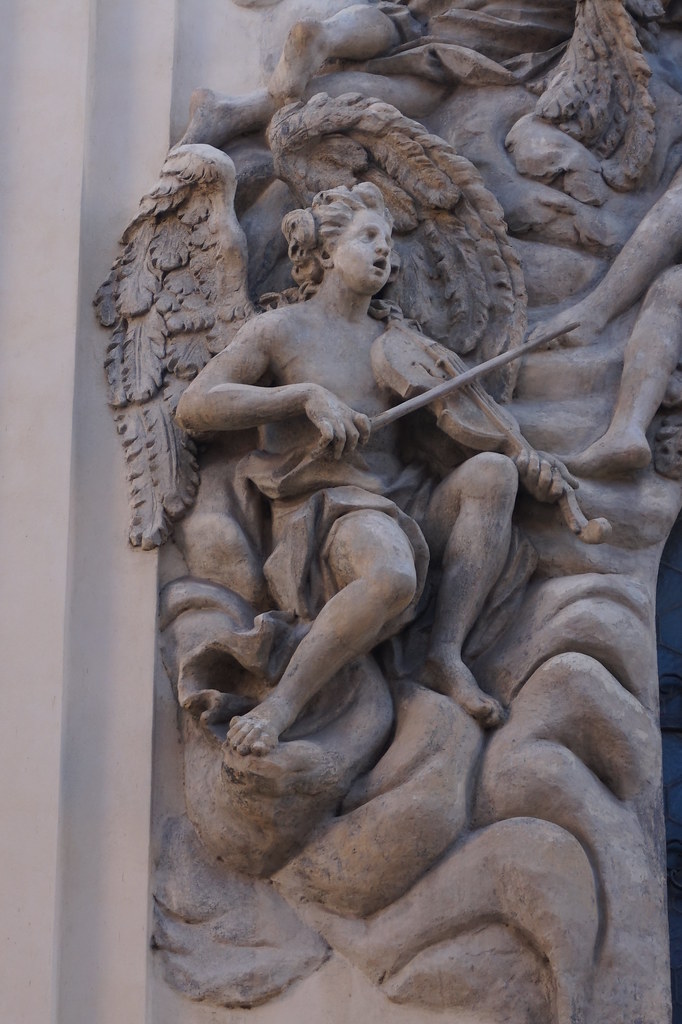
"Angel, if there were a place we don't know ..." R.M. Rilke

2016.06.18-DSC06864Fifth Elegy (extract)

Angel, if there were a place we don't know, and there
on some ineffable carpet, the lovers who never
could bring off their feats here, could show
their bold lofty figures of heart-swings,
their towers of ecstasy, their pyramids
that long since, where there was no standing-ground,
were tremblingly propped together--could succeed
before the spectators around them, the innumerable silent dead:
would not these then throw their last, ever-hoarded,
ever-hidden, unkknown to us, eternally
valid coins of happiness
before that pair with the finally genuine smile
on the assuaged carpet?

From the Duino Elegies by Rainer Maria Rilke (Trans. C.F. MacIntyre)

Rilke wrote The Duino Elegies (German: Duineser Elegien), a collection of ten elegies begun 1912 while he was a guest of Princess Marie von Thurn und Taxis (1855–1934) at Duino Castle, near Trieste on the Adriatic Sea. The series took nearly 10 years to complete and were dedicated to the the Princess when published in 1923.

Friday, June 17, 2016

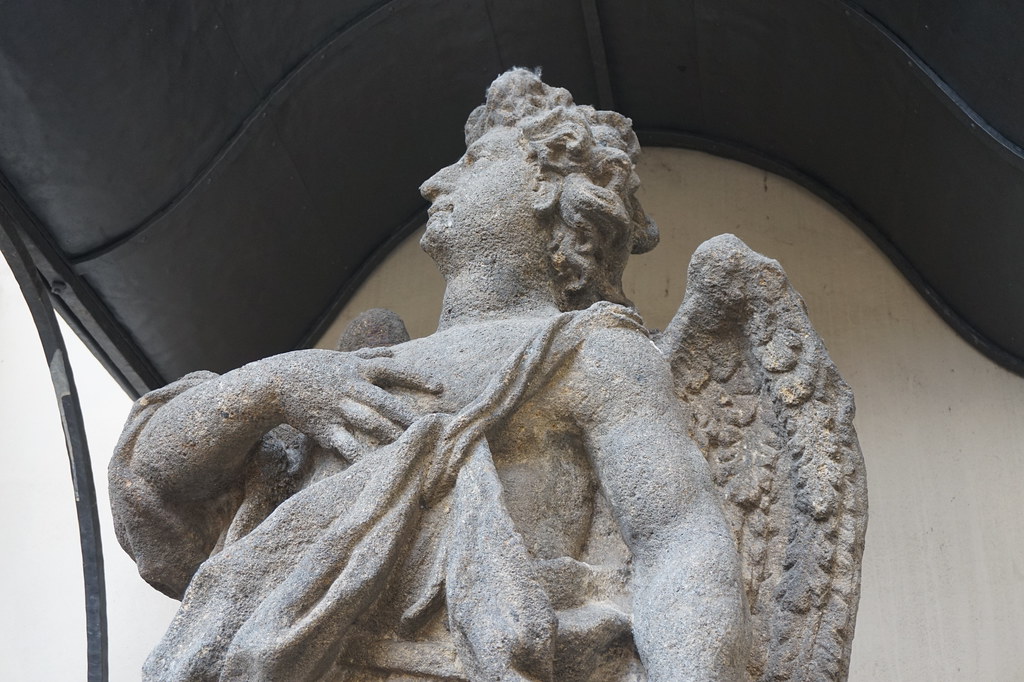
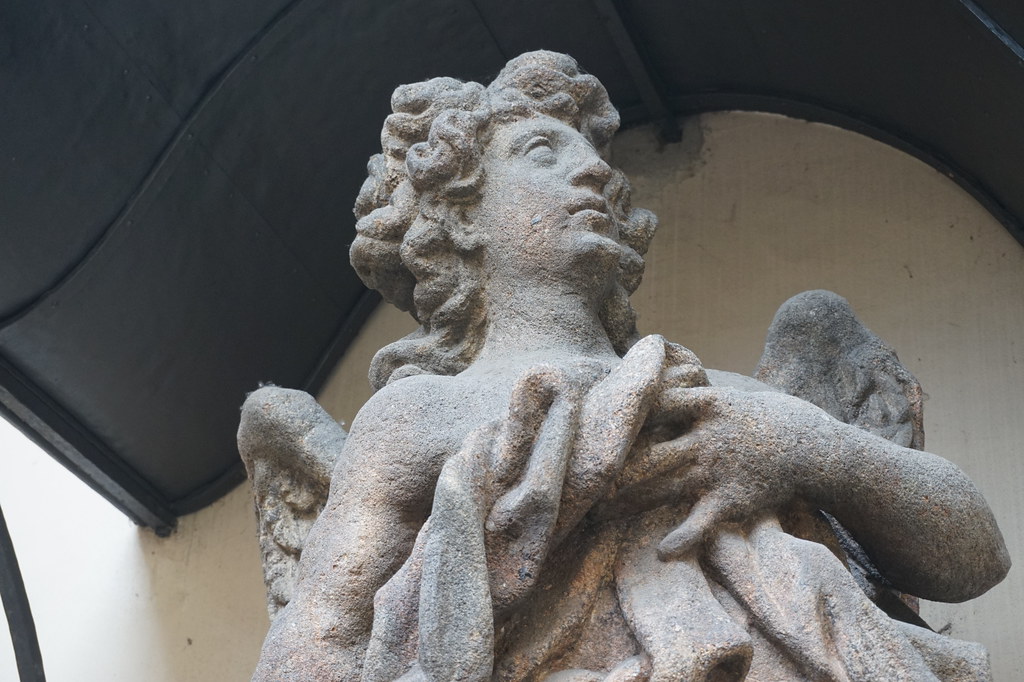
"Ein jeder Engel ist schrecklich" -- Every angel is terrible, from Rilke's Duino Elegies #QotD (2 of 2)

2016.06.16-DSC06767
Angel from Svatý Josef, Prague
From the Duino Elegies by Rainer Maria Rilke (Trans. C.F. MacIntyre)

Rilke wrote The Duino Elegies (German: Duineser Elegien), a collection of ten elegies begun 1912 while he was a guest of Princess Marie von Thurn und Taxis (1855–1934) at Duino Castle, near Trieste on the Adriatic Sea. The series took nearly 10 years to complete and were dedicated to the the Princess when published in 1923.

* * * * * * *

Sixth Elegy (extract)
For the hero went storming through the lodgings of love,
and every well-meaning heart-throb thrust him upward and on;
already turning, he stoood at the end of smiles, another.

* * * * *

Seventh Elegy (extract)
Wooing no more, not wooing, but the voice from it,
be the purport of your cry; though your call pure as a bird's,
when the upheaving season lifts him, almost forgetting
that he's a troubled thing, not merely a single heart
tossed by spring to the cheerful tender sky.
Like him, no less, you want to be after some yet unseen
mate who'll be aware of you silently,
in whom an answer slowly awakens and warms itself by listening,
to the glowing companion of your high-mettled feeling.

* * *

This stood once among men,
stood in the middle of fate, the annihilator,
in the center of Not-knowing-whither, as if it existed
and bent the stars from the established skies
toward it. I show it you, angel, still there.
Stand, rescued at last, in your gaze, and finally upright
Columns, pylons, the Sphinx, the upward striving
of the cathedral, gray, from a foreign or dying city
Was it not miracle? Oh, marvel, angel, because
it is we, O mighty one, we; announce that we did it,
I've not breath enough to hold out for such praising
So then, we haven't neglected these spaces of ours.
(How terribly vast they must be if thousands of years
of our feeling have not overfilled them.) But a tower was tall
was it not? O angel, it was that -- great, even beside you?
Chartres was great -- and music reached still farther upward.
and soared beyond us. But even one loving girl,
alone at night, by the window ...
didn't she reach to your knee?

Don't think I am wooing.
Angel, and, if I were, you wouldn't come.
For my appeal is always full of refusal.
You cannot stride against so strong a flood.

Like an outstretched arm is my call. And its grasping
upward open hand stays before you,
open, as safeguard and warning,
you unseizable one, wide open.

* * * * *

Eighth  Elegy (extract)
If the animal moving toward us so securely
in a different direction had our kind of
consciousness–, it would wrench us around and drag us
along its path. But it feels its life as boundless,
unfathomable, and without regard
to its own condition: pure, like its outward gaze.
And where we see the future, it sees all time
and itself within all time, forever healed.
Yet in the alert, warm animal there lies
the pain and burden of an enormous sadness.

And we: spectators, always, everywhere,
turned toward the world of objects, never outward.
It fills us. We arrange it. It breaks down.
We rearrange it, then break down ourselves.

Who has twisted us around like this, so that
no matter what we do, we are in the posture
of someone going away? Just as, upon
the farthest hill, which shows him his whole valley

one last time, he turns, stops, lingers–,
so we live here, forever taking leave.

"Ein jeder Engel ist schrecklich" -- Every angel is terrible, from Rilke's Duino Elegies #QotD (1 of 2)

2016.06.16-DSC06770
Angel, Svatý Josef, Prague
From the Duino Elegies by Rainer Maria Rilke (Trans. C.F. MacIntyre)

Rilke wrote The Duino Elegies (German: Duineser Elegien), a collection of ten elegies begun 1912 while he was a guest of Princess Marie von Thurn und Taxis (1855–1934) at Duino Castle, near Trieste on the Adriatic Sea. The series took nearly 10 years to complete and were dedicated to the the Princess when published in 1923.

* * * * * * *

First Elegy (extract)

For beauty is nothing
but the beginning of terror we can just barely endure,
and we admire it so because it calmly disdains
to destroy us. Every angel is terrible
And so I restrain myself and swallow the luring call
of dark sobbing. Ah, whom can we use then?
Not angels, not men, and the shrewd animals
notice that we're not very much at home
in the world we've expounded.

Is night more eacy on lovers? Ah, they only
hide their fate from themselves by using each other.
Don't you know that yet? Throw the emptiness from your arms
into the spaces we breathe, so maybe the birds
can feel the expanded air, more ardently flying.

Often angels (it's said) don't know if they move
among the quick or the dead. The eternal current
hurtles all ages along with it forever
through both realms and drowns their voices in both.

* * * * *

Second Elegy (extract)

Lovers, if they knew it, could speak strangely
in the night air. Fir it seems that everything
is keeping us a secret. Look: the trees are;
the houses we live in still stand. Only we go
past everything like a bartering of the breeze.
And everything conspires to silence us,
half as shame, perhaps, and half as unspeakable hope.

* * * * *

Fourth Elegy (extract)
When I'm in the humor to watch the marionettes, no,
but to gaze so hard that at last, to balance my gazing,
an angel must come as a player to quicken the puppet.
Angel and marionette: then at last there's a show.

Look: must not the dying
guess how full of subterfuge is all we achieve here?
Nothing is anything.

* * * * *

Fifth Elegy (extract)
And suddenly in this tedious Nowhere, suddenly
the ineffable place where pure dearth
is inconceivably transmuted--changes
into this empy surfeit.
Where the reckoning of many columns
totals zero.

Angel, if there were a place we don't know, and there
on some ineffable carpet, the lovers who never
could bring off their feats here, could show
their bold lofty figures of heart-swings,
their towers of ecstasy, their pyramids
that long since, where there was no standing-ground,
were tremblingly propped together--could succeed
before the spectators around them, the innumerable silent dead:
would not these then throw their last, ever-hoarded,
ever-hidden, unkknow to us, eternally
valid coins of happiness
before that pair with the finally genuine smile
on the assuaged carpet?

Thursday, June 16, 2016

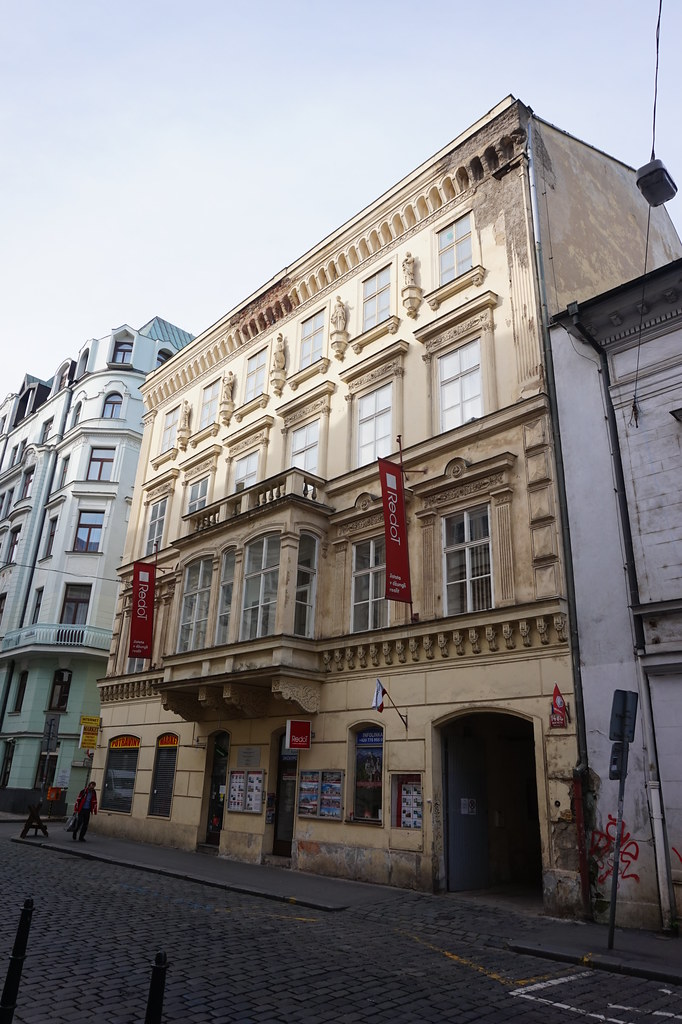
Childhood haunts of Rainer Maria Rilke in Prague

2016.06.16-DSC06735
House on Panská
Rainer Maria Rilke (4 December 1875 – 29 December 1926) was a Bohemian-Austrian poet and novelist, "widely recognized as one of the most lyrically intense German-language poets", writing in both verse and highly lyrical prose. He was born in Prague, capital of Bohemia (then part of Austria-Hungary, now the Czech Republic). His childhood and youth in Prague were not especially happy. His father, Josef Rilke (1838–1906), became a railway official after an unsuccessful military career. His mother, Sophie ("Phia") Entz (1851–1931), came from a well-to-do Prague family, the Entz-Kinzelbergers, who lived in a house on the Herrengasse (Panská) 8, where René also spent many of his early years. (extracted from Wikipedia)


2016.06.16-DSC06732
Jindřišská 888/19