Thursday, January 02, 2020

2019: The Year in Books (and Technical Reports)

Strand Bookstore, New York City
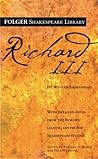
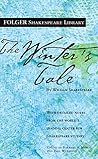
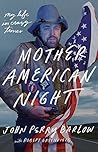
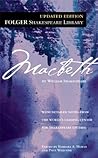
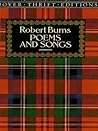
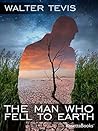
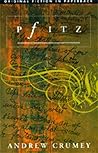
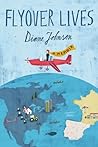
I started off my reading for 2019 with a charming autobiography by novelist Diane Johnson (Flyover Lives, 2014). I've long admired Johnson's work and this memoir was a nice background to that work (there were two other autobiographies on the list, the late John Perry Barlow's Mother American Night and The Autobiography of Malcolm X). From there, it was an eclectic year with various themes (easy to see if one delves deeply enough) the most obvious one was rereading many books from the past (Nabokov, Woolf, Bradbury, Crumey, McEwan, Voltaire, Camus, Shakespeare, Ibsen, Orwell, Dos Passos, Tevis, Philip K. Dick).

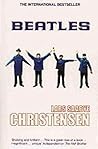
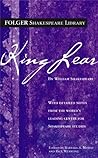
There was a lot of re-reading Shakespeare and Ibsen; a number of books about Scotland (or by Scots authors such as highly recommended Andrew Crumey) for a trip to Scotland in the summer; books about Norway or by Norwegian authors (the highlight being Beatles by by Lars Saabye Christensen).

It also seemed like a good year to re-read The Autobiography of Malcolm X (1965) by Malcolm X with Alex Haley.

Mercer Street Books & Records, New York City
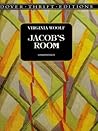
I also revisited much of the non-fiction work of Virginia Woolf as well as the novels Jacob's Room and the brilliant and transcendent Mrs. Dalloway. Among new discoveries for me was Ted Chiang and his Stories of Your Life and Others (2002).

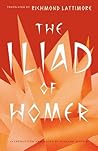
My year-long book was a re-read of Homer's Illiad (in the Richmond Lattimore translation) finished just as December was coming to a close. Left unfinished, in what may be a 10 year-long read, was yet another attempt at William Gaddis' The Recognitions (1955) (I did complete the posthumous essay collection, The Rush for Second Place: Essays and Occasional Writings, 2002).

And of course a busy year of professional reading which you can see intermixed below and read more about here).

* * * * * 
Here's the list (in reverse order of reading):

2019: The Year in Review of Professional Reading

Here's a list of the material that I read over the course of 2019 to keep up with developments in the profession (see my 2018 Reading List  for last year).

I'd like to point out a few highlights of the year. Topping that list is our own Alvin Hutchinson's Science Libraries in the Self Service Age (2019). Alvin gives a cogent account of changes in library profession and directions forward. Other highlights included the late John Perry Barlow's autobiography, Mother American Night (2018); though you may know Barlow as a lyricist for the Grateful Dead, he was also a proponent of cyber-freedom (as a founder of the Electronic Frontier Foundation) and, over a number of years, co-conspirator at activities/events at the Internet Archive.

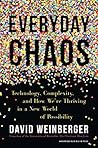
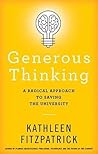
Two additional not-quite library science highlights from my professional network were Generous Thinking: A Radical Approach to Saving the University (2019) by Kathleen Fitzpatrick. Kathleen's thoughtful approach to the challenges (and opportunities) faced by higher education in the U.S. are also transferable to the library profession. Likewise, David Weinberger's Everyday Chaos (2019) explores issues of artificial intelligence, machine learning, big data, and related topics which will have significant impacts on libraries going forward.

Many items on the list are related to biodiversity and technical reports from organization working in that area. Headlines are increasingly covering the perilous state of biodiversity on our planet and the science behind these headlines is important for all of us to understand.

So, without further ado, here's my 2019 professional reading list:


Here's a longer list that also includes most of the library and information science items above as well as a number of shorter articles and reports.

Allen, Stephanie, Sofía Becerra-Licha, Kenn Bicknell, Jacqueline E. Chapman, Genna Duplisea, M. Alison Eisendrath, Joe Filapek, Jan Levinson Hebbard, James Himphill, Jeffrey Inscho, Susan M. Irwin, Elizabeth Joffrion, Stephanie Baltzer Kom, Melissa Levine, Christina E. Newton, Dr. Mega Subramaniam, Gina Watkinson, and Darla Wegener. (2017). Collective Wisdom: An Exploration of Library, Archives and Museum Cultures. Dublin, Ohio: OCLC Research. http:// www.oclc.org/content/dam/research/publications/2017/collective-wisdom-white-paper.pdf.

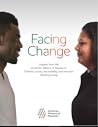
American Alliance of Museums. (2018). Facing Change: Insights from the American Alliance of Museum’s Diversity, Equity, Accessibility, and Inclusion Working Group. AAM. https://www.aam-us.org/wp-content/uploads/2018/04/AAM-DEAI-Working-Group-Full-Report-2018.pdf


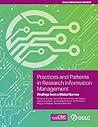
Bryant, Rebecca, Anna Clements, Pablo de Castro, Joanne Cantrell, Annette Dortmund, Jan Fransen, Peggy Gallagher, and Michele Mennielli. 2018. Practices and Patterns in Research Information Management: Findings from a Global Survey. Dublin, OH: OCLC Research. https://doi.org/10.25333/BGFG-D241

Courant, Paul N., ed. (2008). No Brief Candle: Reconceiving Research Libraries for the 21st Century. Council on Library and Information Resources. http://www.clir.org/pubs/reports/pub142

Daniel, Katherine, Joseph Esposito, Roger C. Schonfeld. (2019). Library Acquisition Patterns. Ithaka S+R. DOI: https://doi.org/10.18665/sr.310937

Dooley, Jackie. (2015). The Archival Advantage: Integrating Archival Expertise into Management of Born-digital Library Materials. Dublin, Ohio: OCLC Research. http://www.oclc.org/content/dam/research/publications/2015/oclcresearch-archivaladvantage-2015.pdf

Doucet, Michelle. (2007). Library and Archives Canada: A Case Study of a National Library, Archives, and Museum Merger. RBM: A Journal of Rare Books, Manuscripts, and Cultural Heritage. DOI:10.5860/rbm.8.1.278

Duff, Wendy, Carter, Jennifer, Cherry, Joan, MacNeil, Heather, Howarth, Lynne (2013). From coexistence to convergence: Studying partnerships and collaboration among libraries, archives, and museums. Information Research. http://informationr.net/ir/18-3/paper585.html#.XYzA2ShKjmY

Kirchner, Joy, José Diaz, Geneva Henry, Susan Fliss, John Culshaw, Heather Gendron, and Jon E. Cawthorne. (2015). The Center of Excellence Model for Information Services. Council on Library and Information Resources. https://www.clir.org/pubs/reports/pub163/

Dempsey, Lorcan, Constance Malpas, and Mark Sandler. (2019). Operationalizing the BIG Collective Collection: A Case Study of Consolidation vs Autonomy. Dublin, OH: OCLC Research. https://doi.org/10.25333/jbz3-jy57.

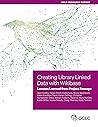
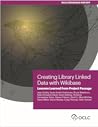
Godby, Jean, Karen Smith-Yoshimura, Bruce Washburn, Kalan Knudson Davis, Karen Detling, Christine Fernsebner Eslao, Steven Folsom, Xiaoli Li, Marc McGee, Karen Miller, Honor Moody, Craig Thomas, and Holly Tomren. (2019). Creating Library Linked Data with Wikibase: Lessons Learned from Project Passage. Dublin, OH: OCLC Research. https://doi.org/10.25333/faq3-ax08

Kotter, John P. (1995). Leading Change: Why Transformation Efforts Fail. Harvard Business Review. May-June 1995. https://hbr.org/1995/05/leading-change-why-transformation-efforts-fail-2

Malpas, Constance, and Merrilee Proffitt. (2017). The Transformation of Academic Library Collecting: A Synthesis of the Harvard Library’s Hazen Memorial Symposium. Dublin, OH: OCLC Research. doi:10.25333/C3J04Z

Marcum, Deanna. (2016). Library Leadership for the Digital Age. Ithaka S+R. DOI: https://doi.org/10.18665/sr.277583
Morgan, Kendra, and Merrilee Proffitt. (2017). Advancing the National Digital Platform: The State of Digitization in US Public and State Libraries. Dublin, Ohio: OCLC Research. http://www.oclc.org/content/dam/research/publications/2017/oclcresearch-advancing-the-national -digital-platform-2017.pdf

New York University. Division of Libraries. (2012). Strategic Plan 2013-2017: Mapping the Library for the Global Network University. https://s3.amazonaws.com/nyulibraries-www-assets/nyu-libraries-strategic-plan.pdf

Olson, D., Meyerson, J., Parsons, M., Castro, J., Lassere, M., Wright, D., ... Acker, A. (2019). Information Maintenance as a Practice of Care. DOI: https://doi.org/10.5281/zenodo.3236410

Pinfield, Stephen, Andrew M. Cox, and Sophie Rutter (2017). Mapping the Future of Academic Libraries: A Report for SCONUL.

Ruttenberg, Judy and Elizabeth A. Waraksa. (2019). “Why Does Research Data Management Need Radical Collaboration?” Research Library Issues, no. 296: 3–5. https://publications.arl.org/rli296/

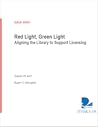
Schonfeld, Roger C. (2016). Organizing the Work of the Research Library. Ithaka S+R. DOI: https://doi.org/10.18665/sr.283717

Schonfeld, Roger C. and Liam Sweeney. (2017). Inclusion, Diversity, and Equity: Members of the
Association of Research Libraries Employee Demographics and Director Perspective. Ithaka S+R. DOI: https://doi.org/10.18665/sr.304524


Monday, September 09, 2019

TPDL 2019 Poster: The Biodiversity Heritage Library: Unveiling a World of Knowledge About Life on Earth

The Biodiversity Heritage Library: Unveiling a World of Knowledge About Life on Earth

Presented at: 
  • TPDL 2019: 23rd International Conference on Theory and Practice of Digital Libraries [full paper here]
Authors:
Abstract
The Biodiversity Heritage Library (BHL) is an international consortium making research literature openly available to the world as part of a global biodiversity community. Through its extensive network of Members, Affiliates, and Reciprocal Partners, over 56 million pages of biodiversity literature are openly available through the BHL portal. Created in 2006, the BHL was a direct response to the needs of the taxonomic community for access to early literature. The original BHL organizational model, based on United States and United Kingdom partners, provided a template for what is now over 80 global partners. In the international digital library world, BHL collaborates with, and aggregates content to national and pan-national digital libraries including Europeana and the Digital Public Library of America. 

Now a cornerstone of biodiversity infrastructure, BHL is integral to key databases and data aggregators (e.g. World Registry of Marine Species, Tropicos, Global Biodiversity Information Facility, and the Encyclopedia of Life), and has engaged the research community in tool development and content reuse. Data contained in the Biodiversity Heritage Library (BHL) describes collections held in the world's major museums and botanical garden libraries. Finding those collections data, however, remains a challenge. BHL is actively engaging in incorporating tools and services (including digital object identifiers, full-text-search, and application programming interface) to make finding and linking to collection specimen information better.